黑龙江省水稻品种资源对水稻细菌性褐斑病的抗性鉴定
2020-08-25张瑶宋爽杨明秀彭莉莉张俊华
张瑶 宋爽 杨明秀 彭莉莉 张俊华
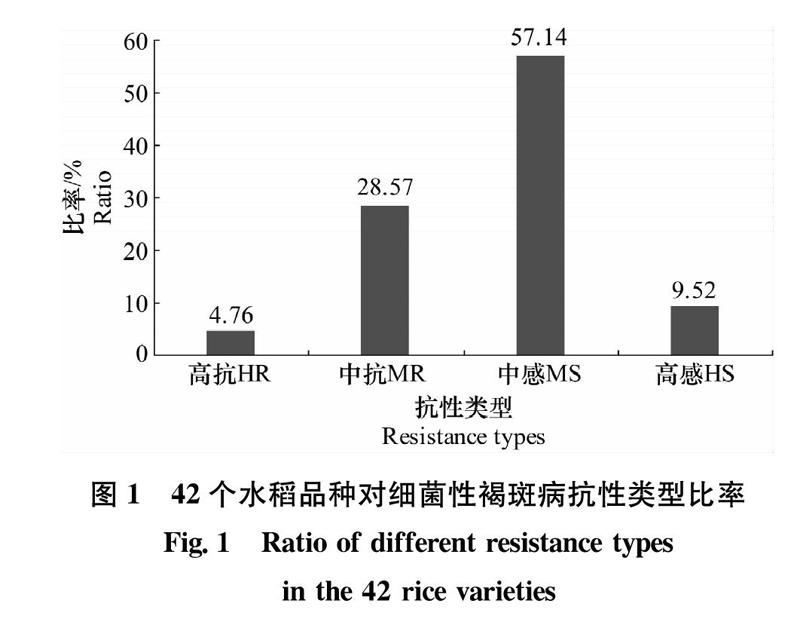
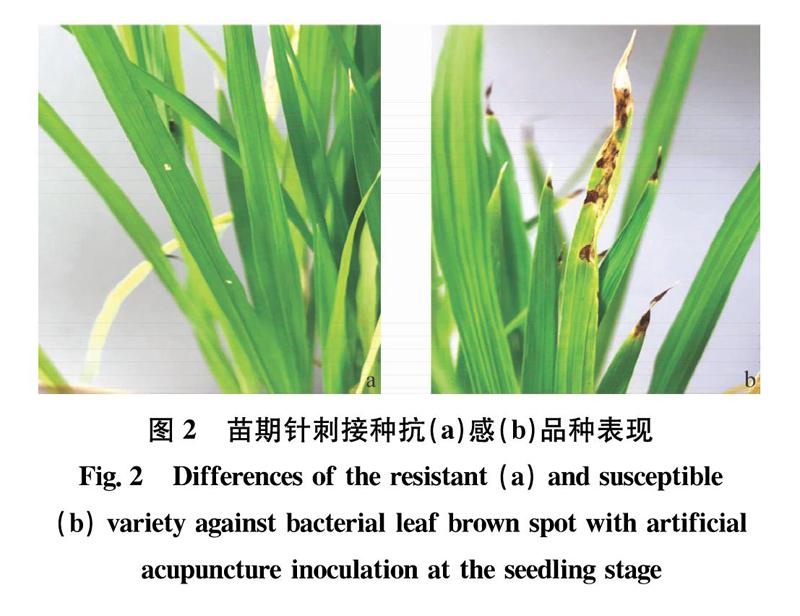
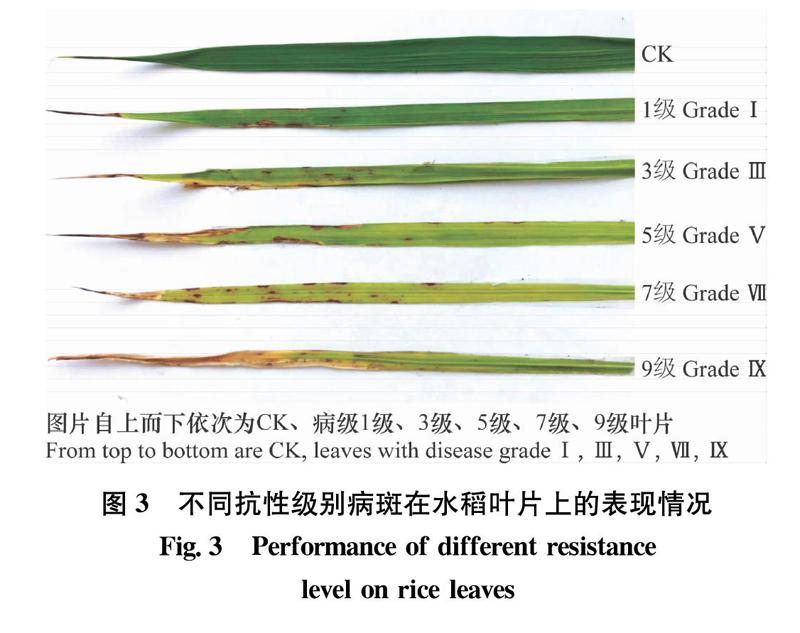
摘要 选育和应用抗病品种是防治水稻细菌性病害最经济有效的措施。本研究采用苗期喷雾法和针刺法对黑龙江省42个水稻主栽品种进行抗性鉴定。结果表明,利用针刺法鉴定的各水稻品种中表现中抗以上的品种有14个,其中高抗品种2个,对接种水稻品种病斑长度进行差异显著性分析,42个水稻主栽品种间抗性存在显著差异;利用喷雾法鉴定各品种,病级表现1级的品种有7个,占16.7%。对数据进行比较分析,针刺法和喷雾法对抗病品种鉴定的结果基本一致。本研究鉴定的2个高抗稻种资源对于抗细菌性褐斑病生产实践提供重要价值。因此,加大对水稻品种资源的深入研究,对实现水稻细菌性褐斑病的可持续控制有着重要意义。
关键词 主栽水稻品种; 细菌性褐斑病; 抗性鉴定
中图分类号: S 435.111.4
文献标识码: A
DOI: 10.16688/j.zwbh.2019155
Resistance identification of rice varieties to bacterial leaf brown spot diseases in Heilongjiang
ZHANG Yao, SONG Shuang, YANG Mingxiu, PENG Lili, ZHANG Junhua*
(College of Agriculture, Northeast Agricultural University, Harbin 150030, China)
Abstract
Breeding resistant varieties is one of the most economical and efficient measure which can prevent rice bacterial leaf brown diseases. Two methods were conducted to test 42 leading rice varieties in Heilongjiang province for identification of resistance. The result of inoculating all these rice varieties by artificial acupuncture illustrated that only 14 varieties showed medium to high resistance, of which two varieties showed high resistance levels. Significant difference analysis on the length of lesions inoculated with rice varieties demonstrated that there were obvious differences among 42 leading rice varieties. Spraying inoculation test indicated that seven of these rice varieties showed Grade I susceptibility, accounting for 16.7%. Comparing and analyzing these data, we found that two inoculation methods had basically consistent results. Particularly, two high resistance varieties found in this study are of important significance for the production practice of bacterial leaf brown spot diseases. Therefore, further research on rice germplasm resources has the profound influence for the sustainable control of rice bacterial leaf brown spot diseases.
Key words
leading rice variety; bacterial leaf brown spot disease; identification of resistance
水稻細菌性褐斑病是由丁香假单胞菌丁香致病变种Pseudomonas syringae pv. syringae引起的一种重要的水稻细菌性病害[1]。该病1955年在匈牙利发现,1960年在我国首次报道。水稻细菌性褐斑病在我国东三省地区较为常见,自水稻苗期至成熟期都有发生,主要为害水稻叶片。低温潮湿条件下水稻易感病。发病初期水稻叶片上产生水渍状病斑,后病斑逐渐扩大,形成褐色坏死斑[2]。近年来,该病在黑龙江省不同地区一直有不同程度的发生,影响了水稻品质及产量。该病的发生和流行除受到菌源与环境因素影响外,还与品种的抗病性密切相关,因此,利用抗病品种来控制病害流行是最经济有效的措施[3-4]。……
