螺旋藻多糖提高小白菜抗盐能力
2020-05-21程宇娇刘哲臧敦秀马浩天季春丽张春辉岳爱琴李润植崔红利
程宇娇 刘哲 臧敦秀 马浩天 季春丽 张春辉 岳爱琴 李润植 崔红利
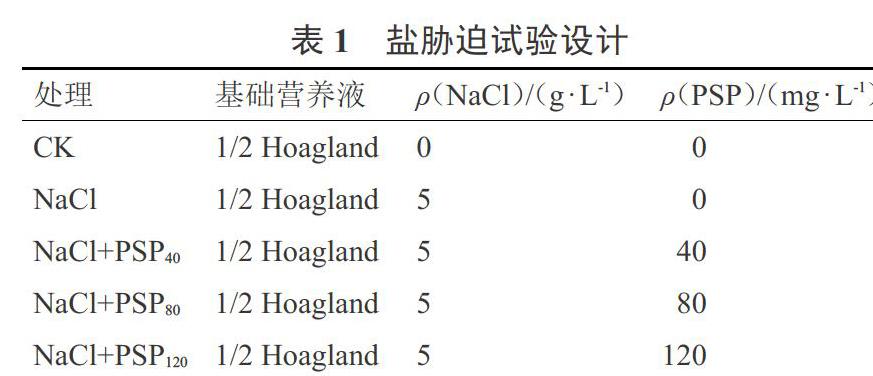
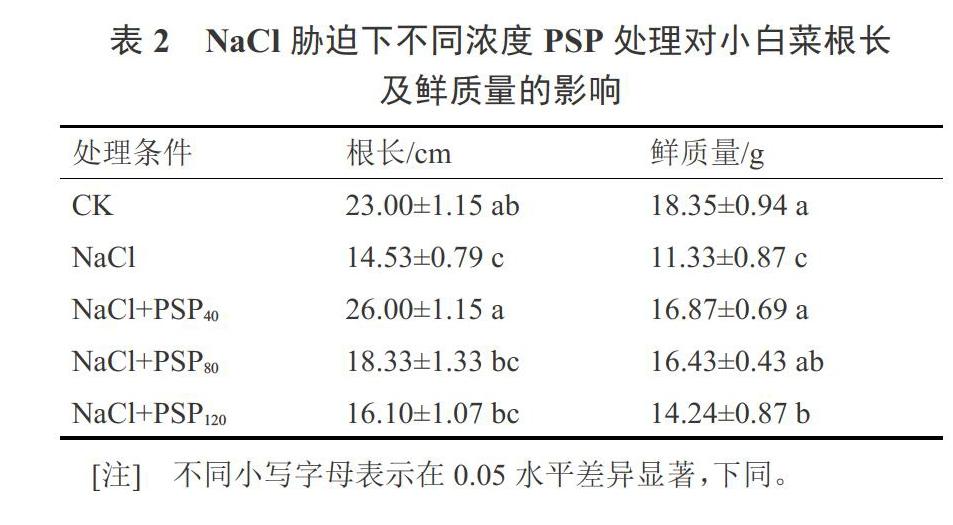
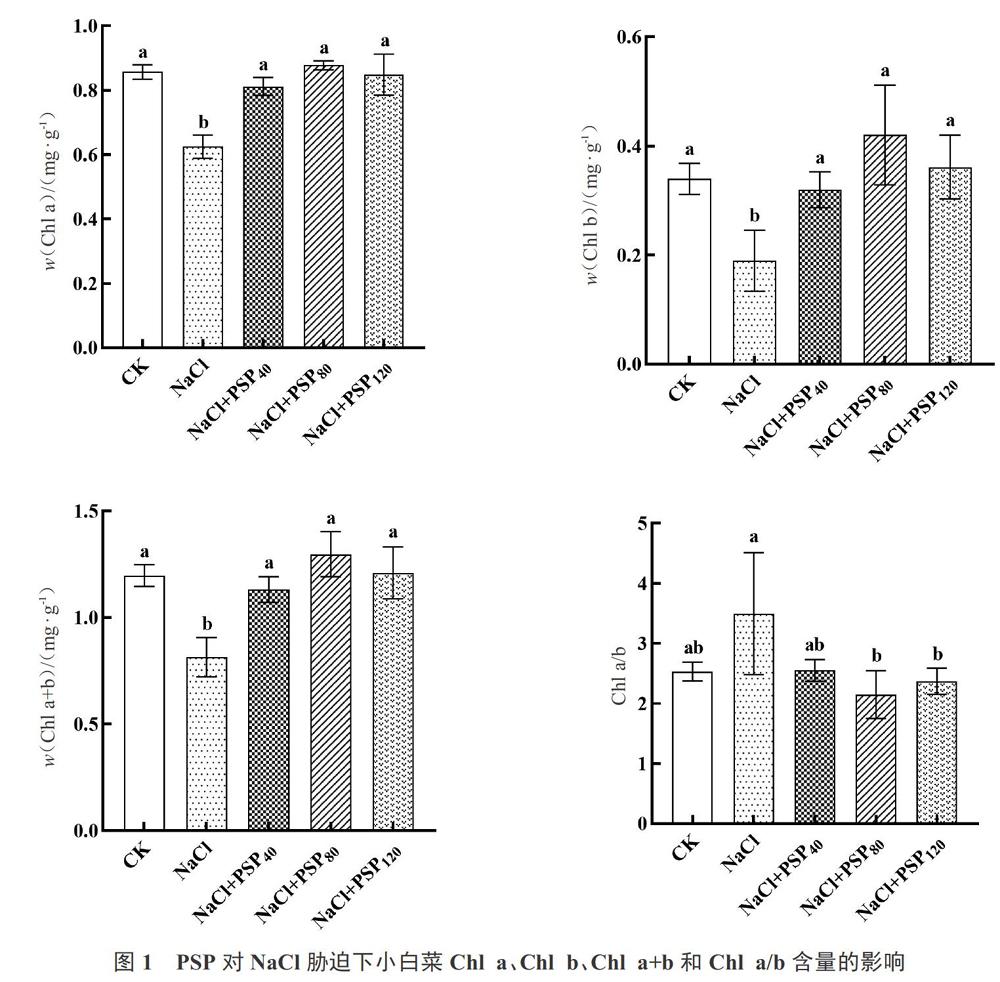
摘 要: 在水培条件下探究不同浓度的PSP(螺旋藻多糖)能否提高‘奶油四季小白菜的抗盐性。生理生化检测显示,NaCl(5 g·L-1)胁迫显著抑制小白菜根长和鲜质量,且造成严重的生理伤害。水培液中添加PSP使得小白菜根长、鲜质量和叶绿素含量增加。PSP处理提高了小白菜体内超氧化物岐化酶(SOD)、过氧化物酶(POD)和过氧化氢酶(CAT)的活性,增加了抗坏血酸、类胡萝卜素和脯氨酸含量。然而,PSP处理明显降低了小白菜体内MDA和H2O2含量。研究结果表明,PSP可通过提高盐胁迫下小白菜抗氧化酶活性、非酶类抗氧化物质含量以及积累渗透调节物质,有效清除过量的活性氧和缓解氧化损伤,进而增强小白菜抗盐胁迫的能力。作为一种绿色的植物生长促进剂,PSP可用于高值蔬菜的有机生产。
关键词: 小白菜;螺旋藻多糖;NaCl胁迫;生理特性;抗氧化性
中图分类号:S634.3 文献标志码:A 文章编号:1673-2871(2020)04-043-07
Abstract: In this study, polysaccharide from Spirulina platensis (PSP) was used as a biostimulant. The effect of PSP with different concentration on salt resistance of pakchoi (Brassica chinensis L.) under hydroponics was investigated. Physiological and biochemical analysis showed that NaCl stress (5 g·L-1) significantly inhibited the root length and fresh weight of pakchoi plants and caused severe physiological damage. Adding different dosages of PSP in hydroponic solution resulted in the enhancement in root length, fresh weight, and chlorophyll content of pakchoi. Moreover, PSP treatments increased the activities of superoxide dismutase (SOD), peroxidase (POD) and catalase (CAT) in pakchoi, together with the elevated levels in the contents of ascorbic acid, carotenoid and proline, but reduction in MDA and H2O2. These results indicated that PSP could increase antioxidant enzyme activities, the content of non-enzyme antioxidants, and the accumulation of osmotic adjustment substances, and consequently result in the effective remove of excess reactive oxygen species and alleviation of oxidative damages caused by salt stress, leading to improvement in salt stress resistance of pakchoi plants. As a green growth-promoting regulator, PSP has potential application in the organic cultivation of high-value vegetables.
Key words: Pakchoi; Polysaccharide from Spirulina platensis; NaCl stress; Physiological characteristics; Antioxidant ability
隨着现代农业生产强度的增加,土壤盐渍化逐渐成为一个全球性的生态问题[1]。全球约20%的耕地和50%的灌溉土地受到了不同程度的威胁,且盐渍化土地面积仍在逐年增加[2],给农业生产带来了巨大的挑战。盐胁迫也成为抑制植物生长、降低农作物产量的主要环境因素之一。土壤中高浓度的盐会降低植物根系的吸水能力,严重影响植物新陈代谢[3]。盐胁迫会使植物体内产生大量活性氧(ROS),引起氧化胁迫,导致细胞损伤甚至死亡,最终造成植物产量或品质降低[4]。……