京杭运河营运船舶能效限值标准的适应性分析
2018-03-22叶江波翁方勇
叶江波 翁方勇
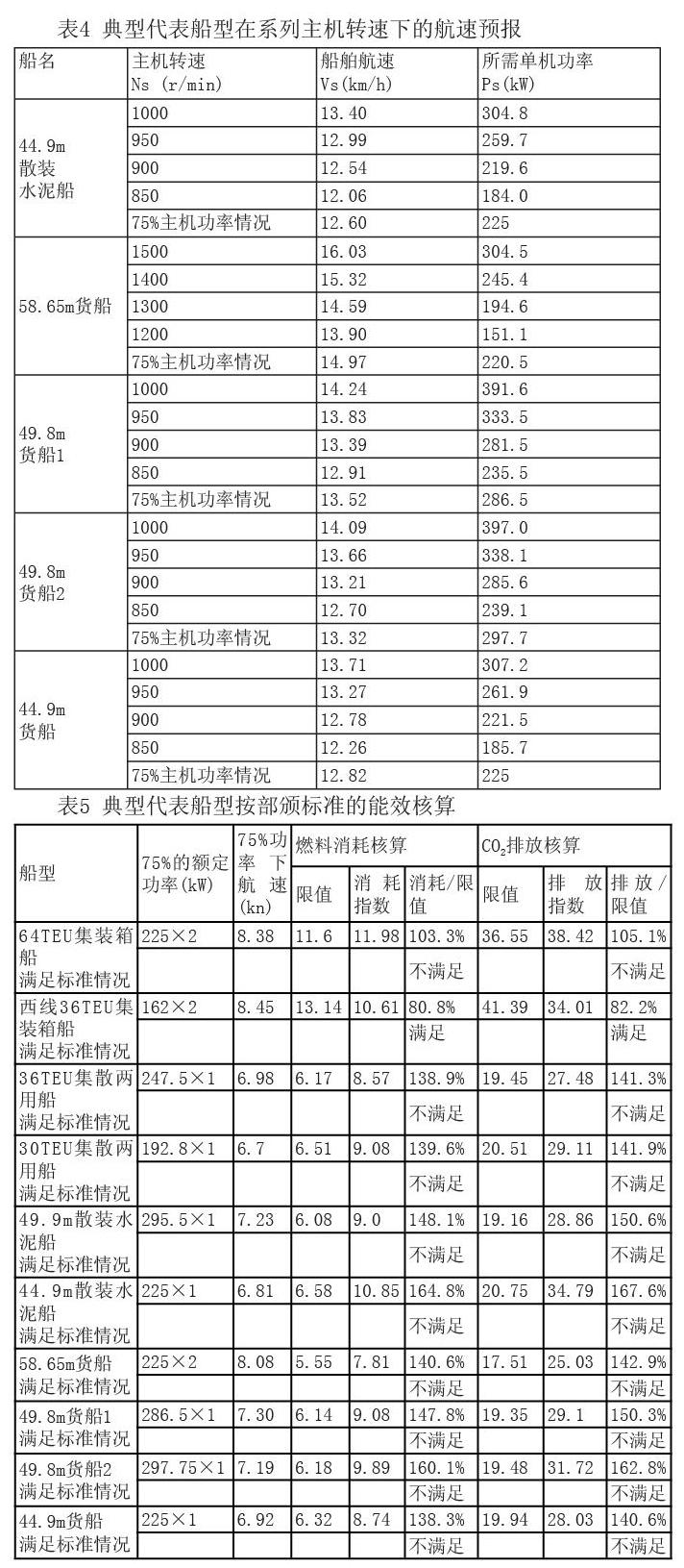

摘要:受通航环境的限制,京杭运河船舶的长宽比小、方型系数大,阻力和推进性能较差,船舶的燃料消耗及CO2排放指标难以达到《内河运输船舶标准船型指标体系》的强制性要求。根据船舶能效限值评估方法,计算京杭运河典型代表船型的功率航速、燃油消耗及CO2排放指标,分析京杭运河船舶现行能效限值标准存在的问题,提出建立标准船型指标体系动态维护机制的建议。
关键词:京杭运河;标准船型;指标体系;能效限值;燃油消耗;CO2排放
Adaptability analysis of the energy efficiency limit standard for operating vessels on Beijing-Hangzhou Canal
Abstract: Restricted by the navigable environment,the vessels on Beijing-Hangzhou Canal present the condition of small aspect ratio,large square coefficient, poor resistance and propulsion performance,so the fuel consumption and CO2 emission index can not meet the mandatory requirements of the standard ship type index system for inland vessels.Calculating the power speed,fuel consumption and CO2 emission indicators of the typical representative vessels on Beijing-Hangzhou Canal according to the evaluation method of energy efficiency limit and analyzing the existing problems of current energy efficiency limit standard,to propose the dynamic maintenance mechanism of standard ship type index system.
Key words: Beijing-Hangzhou Canal; Standard Ship Type; Index System; Energy Efficiency Limit; Fuel Consumption; CO2 Emission
一、引言
2012年交通運输部公布了《内河运输船舶标准船型指标体系》,对新建400总吨以上的内河干散货船、集装箱船、油船的燃料消耗及CO2排放指标提出了强制性要求,并规定按照中国船级社发布的《内河船舶能效设计指数(EEDI)评估指南》进行计算评估。京杭运河作为我国“两横一纵”水运大动脉中的“一纵”,在内河航运中占有重要的地位。运河船舶因受航道和桥梁的限制,其长宽比小、方型系数大,船型呈短肥特征,故阻力性能和推进性能较差,导致燃油消耗及CO2排放水平难以达到能效限值标准,既影响船东新建船舶,也影响船检机构的执法,因此需要进行适应性分析。
二、典型代表船型
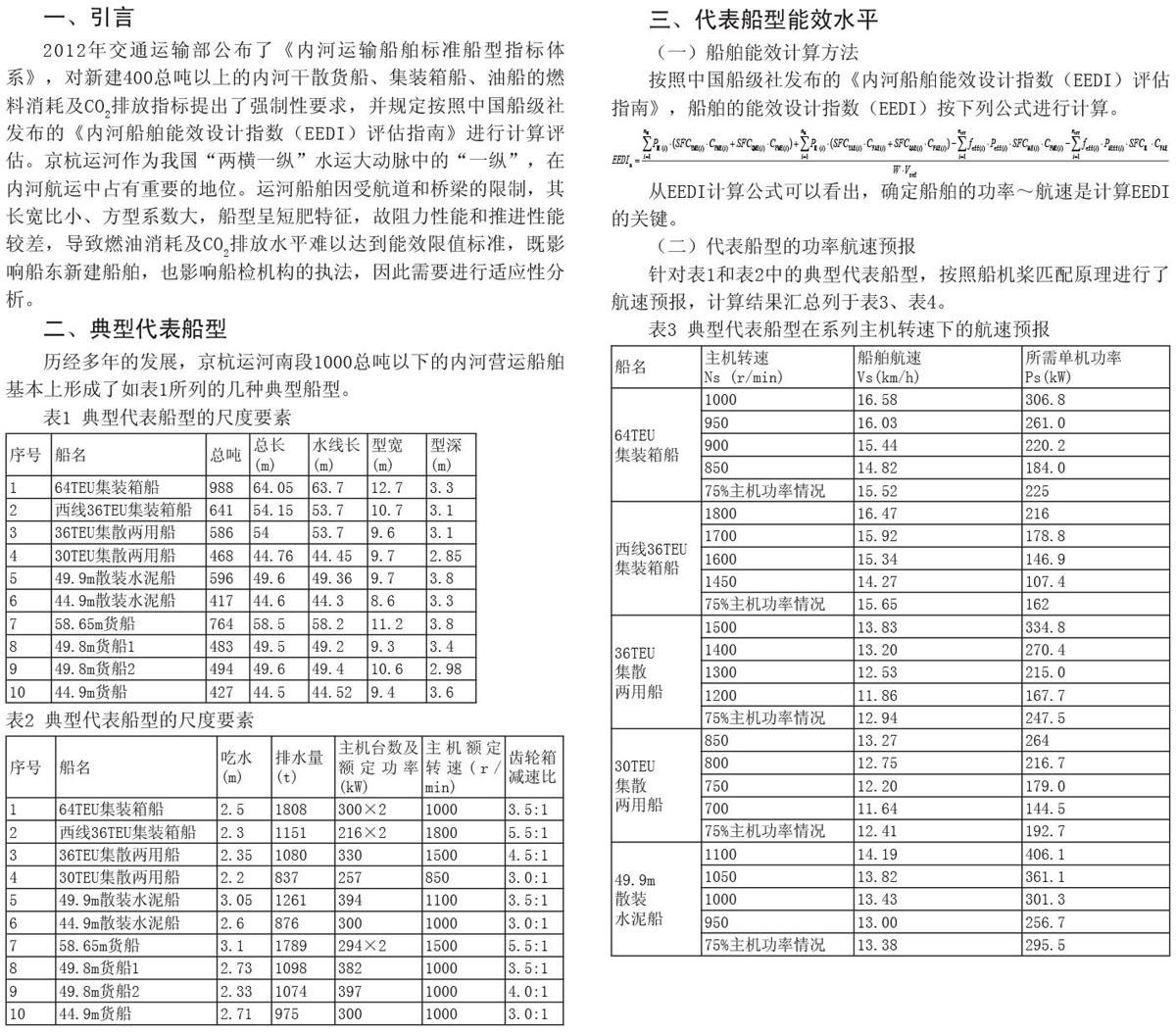
历经多年的发展,京杭运河南段1000总吨以下的内河营运船舶基本上形成了如表1所列的几种典型船型。
三、代表船型能效水平
(一)船舶能效计算方法
按照中国船级社发布的《内河船舶能效设计指数(EEDI)评估指南》,船舶的能效设计指数(EEDI)按下列公式进行计算。……