上海某街道老年女性骨质疏松症的相关因素分析
2018-01-13季敏
季敏
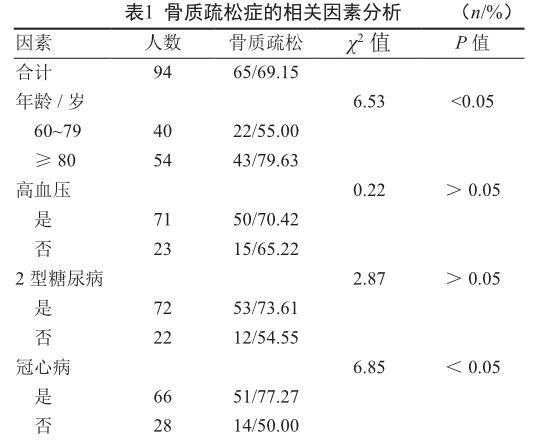
摘 要 目的:探讨上海虹桥街道老年女性骨质疏松症与高血压病、2型糖尿病、冠状动脉粥样硬化性心脏病之间的关系。方法:对上海市长宁区虹桥街道94名老年女性(≥60岁)进行高血压病、2型糖尿病、冠状动脉粥样硬化性心脏病等疾病的调查,并检测骨密度判断骨质疏松情况。结果:在94名老年女性中检出骨质疏松症69例,检出率69.15%。80岁及以上女性的骨质疏松症检出率高于80岁以下女性,差异有统计学意义(P<0.05)。有无高血压和2型糖尿病的老年女性骨质疏松症差异无统计学意义(P>0.05)。有冠心病的老年女性骨质疏松症检出率高于无冠心病的女性,差异有统计学意义(P<0.05)。结论:年龄和冠心病与老年女性的骨质疏松症存在相关性。
关键词 骨质疏松症;老年女性;因素
中图分类号:R681 文献标志码:A 文章编号:1006-1533(2018)24-0050-03
Analysis of related factors of osteoporosis in elderly women in a community in Shanghai
JI Min
(Ward of Hongqiao Community Health Service Center of Changning District, Shanghai 200051, China)
ABSTRACT Objective: To explore the relationship between osteoporosis and hypertension, type 2 diabetes mellitus and coronary atherosclerotic heart disease in elderly women in Hongqiao Community, Shanghai. Methods: Ninety-four elderly women(≥ 60 years old) in Hongqiao Community of Changning District, Shanghai were investigated for hypertension, type 2 diabetes mellitus, coronary atherosclerotic heart disease and other diseases and the bone density was measured to determine the osteoporosis. Results: Osteoporosis was detected in 69 out of 94 elderly women, with a detection rate of 69.15%. The detection rate of osteoporosis in women aged 80 years and over was higher than that in women under 80 years old, and the difference was statistically significant(P<0.05). There was no significant difference in osteoporosis between elderly women with and without hypertension and type 2 diabetes mellitus(P>0.05). The detection rate of osteoporosis in elderly women with coronary heart disease was higher than that in women without coronary heart disease(P<0.05). Conclusion: Age and coronary heart disease are associated with osteoporosis in elderly women.
KEY WORDS osteoporosis; elderly women; factor
隨着社会老龄化的发展,骨质疏松症已经成为影响老年人生活质量的主要疾病之一。既往研究已经证明中老年女性骨密度情况与遗传、年龄、体重、月经史、绝经年龄、运动、营养、激素水平等有关[1,2]。本文旨在探讨社区老年女性骨质疏松症与年龄、高血压、2型糖尿病和冠状动脉粥样硬化性心脏病的关系。
1 资料与方法
1.1 资料
选取在上海市长宁区虹桥社区卫生服务中心门诊及病房就诊的年龄60岁及以上老年女性94名,平均年龄(81±8.4)岁,其中80岁以下老年女性有40名,80岁及以上老年女性有54名。所有研究对象均无骨关节疾病及肢体疼痛,同时排除影响继发性骨质疏松的疾病,如营养性疾病、遗传性疾病、慢性肝肾疾病、药物性疾病、肿瘤及某些代谢性疾病等。
1.2 方法
采用SAHARA跟骨超声BMD仪测定研究对象右足的骨密度(BMD),BMD用T值(T-Score)来表示,T值=(测定值-骨峰值)/正常人BMD标准差[3]。……