假单胞菌趋化性研究概述
2017-08-11李涛
李涛

摘 要:趋化是生物体朝向或远离化学物质的一种运动形式。假单胞菌可感受周围化学物质浓度变化,通过极性鞭毛、菌毛驱动表现其群体趋化行为。已知假单胞菌趋化主要是由鞭毛介导和假定菌毛介导两种,本文主要阐述这两种趋化信号转导途径,总结了研究趋化行为的各种定性和定量的常规方法及新方法,以期为假单胞菌趋化性研究提供参考。
关键词:趋化;假单胞菌;信号转导
中图分类号:Q939.11+2 文献标识码:A DOI 编码:10.3969/j.issn.1006-6500.2017.08.02
Abstract: Chemotaxis was a form of motion in which organisms move toward or away from chemicals. Pseudomonads could sense changes in the concentration of surrounding chemicals, and exhibit a chemotaxis mediated by flagella or pili. Two kinds of chemotaxis pathways has been described in this review, a flagella-mediated pathway and a putative pili-mediated system. This article mainly introduced the two kinds of chemotaxis signal transduction pathway, and summarized the conventional and new methods of qualitative and quantitative assay on chemotaxis, in order to provide a reference for pseudomonas chemotaxis research.
Key words: chemotaxis, Pseudomonads, signal transduction
1 趨化作用及细菌趋化介绍
趋化是生物体朝向或远离化学物质的一种运动形式,这一现象普遍存在于动物、植物及微生物中[1]。趋化作用是生物体为适应周围环境变化,方便其从环境中摄取食物并躲避危害,从而使自身具备生存优势的重要行为。
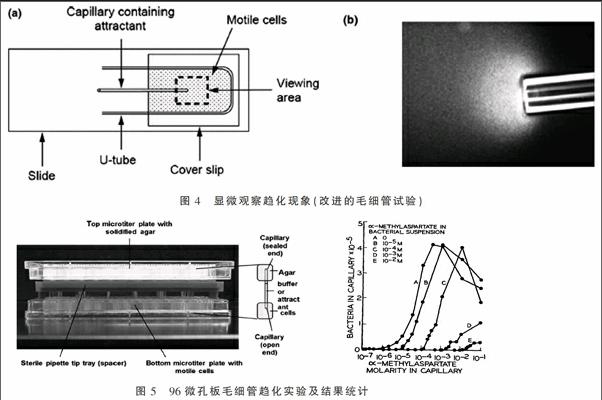
运动细菌作为微生物中的典型代表,同样具有趋向某些化学引诱剂的正趋化及远离某些化学驱逐剂的负趋化行为[2]。19世纪末,Engelmann等生物学家即发现了细菌向氧气、矿物质及有机营养物质的趋化。他们在显微镜下观察到细菌菌液趋向或远离气泡及化学物质的现象。早期的研究主要集中于趋化现象的观察,对于细菌趋化机制的了解少之又少。直至1969年Adler[3]通过大量实验证实细菌的趋化作用是由趋化物质直接刺激引发,而且是由趋化特异性受体所介导的。自此开始,各国科学家纷纷采用各种技术手段如:平板点滴实验(Drop assay)、游动平板法(Swarm plate assay)、毛细管法(Capillary assay)、数量分析法(Quantification assay)[4]等,分析细菌的趋化行为,并在分子生物学水平上研究参与细菌趋化作用的基因决定簇,阐明其趋化机制。……