泌尿外科术后感染特点与药物选择
2017-07-27李莉霞李永洋
李莉霞++李永洋
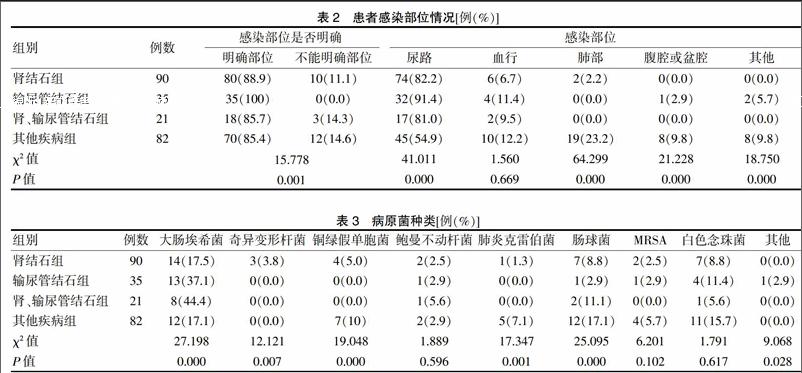
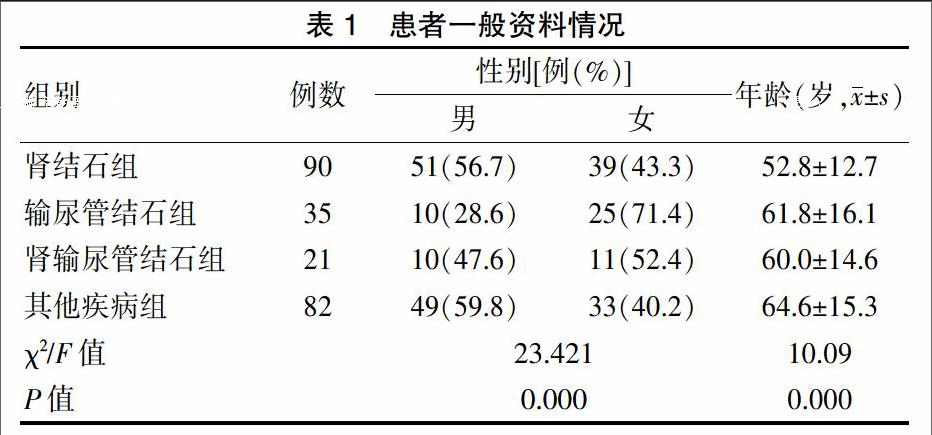
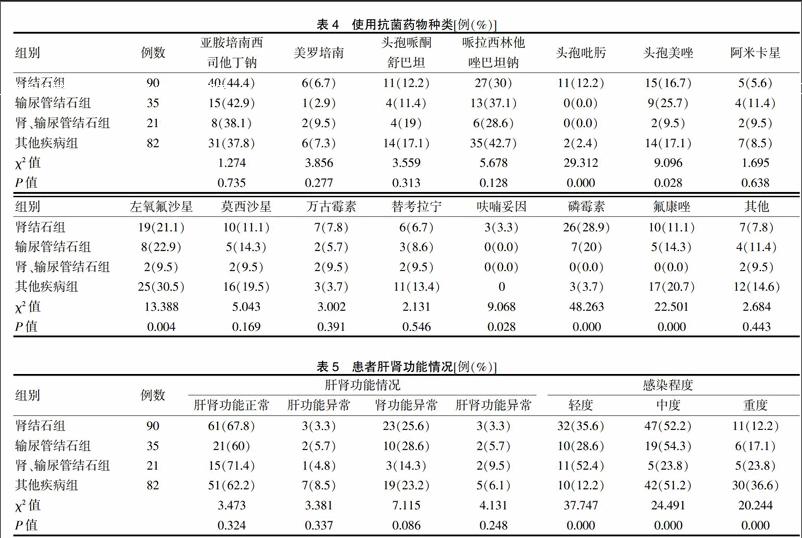
[摘要] 目的 分析臨床药师会诊泌尿外科术后感染病例特点及变化趋势,为临床药师进一步开展工作提供参考。 方法 回顾性分析2010年1月~2015年12月上海交通大学医学院附属新华医院泌尿外科术后感染药学会诊病例228例,按疾病分为四组包括肾结石组(90例)、输尿管结石组(35例)、肾输尿管结石组(21例)及其他疾病组(82例),对患者感染部位、病原菌种类、抗感染治疗方案、治疗转归等分析。 结果 感染部位以尿路、血液、肺部为主,除血液感染外,其余感染部位的发生率四组比较,差异有高度统计学意义(P < 0.01)。大肠埃希菌检出率最高,四组比较差异有高度统计学意义(P < 0.01),其次是白色念珠菌,肠球菌位居第三。亚胺培南西司他丁使用率最高,其次是哌拉西林他唑巴坦。47%的患者治愈,50.9%的患者好转,各组患者病愈率比较,差异有统计学意义(P < 0.05)。 结论 临床药师分析术后感染常见的部位、病原菌、有效的抗感染治疗方案,为控制术后感染及减少病死率发挥了积极作用。
[关键词] 泌尿外科;术后感染;病原菌;抗菌药物;临床药师
[中图分类号] R699.4 [文献标识码] A [文章编号] 1673-7210(2017)06(b)-0134-04
1.Department of Pharmaceutical, Xinhua Hospital Affiliated to Shanghai Jiaotong University School of Medicine, Shanghai 200092, China; 2.Department of General surgery, East Campus of Sixth People's Hospital Affiliated to Shanghai Jiaotong University, Shanghai 201306, China
[Abstract] Objective To analyze the characteristics and trends of urology surgical postoperative infection, in order to provide references for clinical pharmacists. Methods From January 2010 to December 2015, in Xinhua Hospital Affiliated to Shanghai Jiaotong University School of Medicine, 228 urology surgical postoperative infection patients with clinical pharmacists were consulted were analyzed retrospectively. According to these diseases categories, they were divided into four groups, kidney stone group (n = 90), ureteral calculus group (n = 35), kidney and ureteral calculus group (n = 21) and other disease group (n = 82). The infection sites, bacterial categories, anti-infection treatment schedules, and treatment outcome were analyzed individually. Results The infection sites were mainly urinary tract, blood system or lungs. Except for the blood system infection, the difference of incidence rate of the other infection sites among the four groups was statistically significant (P < 0.01). E. coli had the highest detection rate, and the difference of its infection rate among four groups was statistically significant (P < 0.01). Candida albicans had the second highest infection rate, and Enterococcus had the third highest infection rate. Imipenem had the highest usage rate, and Piperacillin-Tazobactam had the second highest usage rate. 47% patients were cured, 50.9% patients were improved. the difference of recovery rate among the four groups was statistically significant (P < 0.05). Conclusion Clinical pharmacists analyze the common infection sites, pathogens and effective anti-infection treatment schedules, and take an active role in curing infection and reducing infection mortality rate.
[Key words] Urology Surgery; Postoperative infection; Pathogenic bacteria; Antibacterial agents; Clinical pharmacists
随着上尿路微创取石术[经皮肾镜取石术(PCNL)和经输尿管镜取石术(URL)]的开展,其较高的术后感染并发症引起了广泛的重视,特别是尿脓毒症致死率极高[1-2]。据报道,PCNL相关尿源性脓毒症的发病率为0.2%~1.5%,病死率为20%~40%[3],可见,泌尿系统术后感染的治疗非常重要。临床药师分析总结术后感染特点和治疗经验,为以后有效诊治泌尿外科术后感染提供参考。
1 资料与方法
1.1 一般资料
回顾性分析2010年1月~2015年12月上海交通大学医学院附属新华医院泌尿外科术后228例患者药学会诊记录。按疾病种类分四组,包括肾结石组、输尿管结石组、肾输尿管结石组及其他疾病组,大部分结石患者采用PCNL或URL,DJ管置入术等,其他疾病组为泌尿系统肿瘤及其他疾病的术后患者,所有患者均有术后感染。
1.2 方法