基于建构主义的跨专业协同教学模式改革
2017-05-30刘琳
刘琳
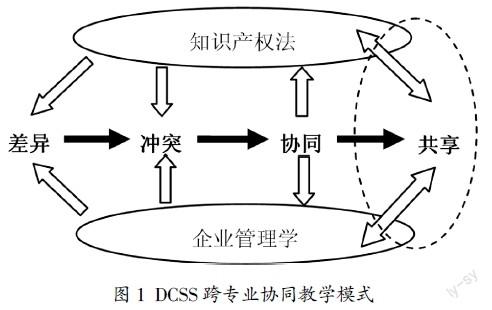
摘 要:创新型人才成为企业知识产权管理的迫切需要。文章基于建构主义理论视角,以创新型专业人才培养为导向,结合企业知识产权管理课程学科交叉和实践性强特点,针对现行教学实践中所存在问题,提出跨专业协同教学模式——DCCS模型。通过改革课程设置,营造跨专业“双生同堂”环境,变跨学科知识结构差异为学习驱动力,学习者在解决认知冲突的同时,完成自身知识架构的重建,产生教学协同效应。
关键词:创新导向;跨专业协同;企业知识产权管理
中图分类号:C961 文献标志码:A 文章编号:2096-000X(2017)16-0028-04
Abstract: Innovation has been the urgent need for management of intellectual property in enterprises. Basing on constructivism theory and the innovation-orientated direction, this paper analyzes the problems in the course of teaching practice of management of intellectual property in enterprises. A trans-disciplinary synergy teaching model - DCCS is proposed. We manage to reform the courses setting, and establish a special teaching environment with students from two different majors taking part in the class simultaneously. The difference between different disciplinary will stimulate the cognitive conflicts significantly. In the process of solving the conflicts, the learners reconstruct their inner knowledge system. The synergetic effects come out.
Keywords: innovation oriented; trans-disciplinary synergism; management of intellectual property in enterprises
在互联网加知识经济时代,知识产权成为企业最重要的战略资源,企业知识产权管理的地位被提升到战略层面。企业为了获取竞争优势,最大限度发挥知识产权的价值,促进技术创新,需要更加有效地开展知识产权创造、运用和保护工作。新时代背景下,社会人才需求结构升级,尤其是对创新型和复合型人才的需求十分迫切,由此对我国高校课程建设及教学改革提出了更高要求。
一、建构主义在创新型人才培养中的适用性
建构主义理论(Constructivism)于20世纪80年代组建形成,是在行为主义心理学和认知心理学理论的基础上发展起来的,它的代表人物包括皮亚杰、维果斯基、布鲁纳和奥苏伯尔等认知发展领域的哲学家和心理学家。[1]建构主义认为学习是学习者主动建构知识的过程,这个过程具有不可替代性。[2]建构主义十分关注以原有经验、心理结构和信念为基础来建构知识,强调学习的主动性、社会性和情景性。……