基于政府不同策略普通/低碳产品制造商竞争机理研究
2017-05-26夏西强
夏西强
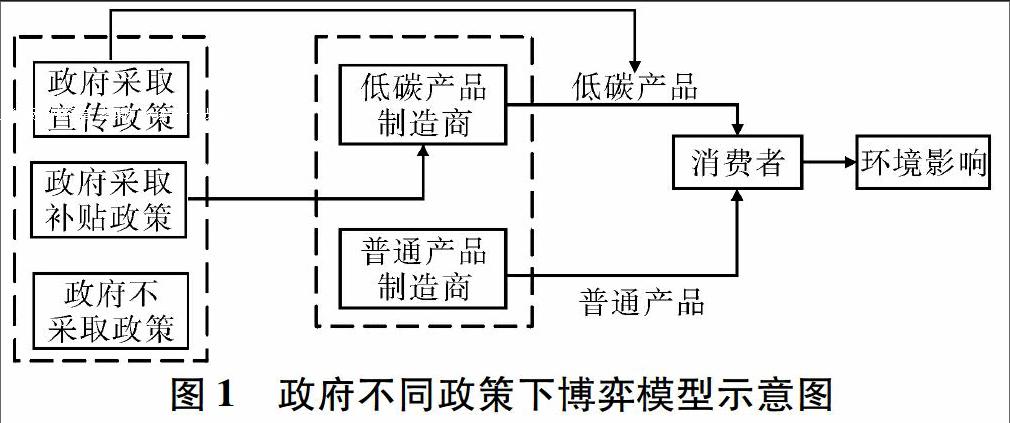
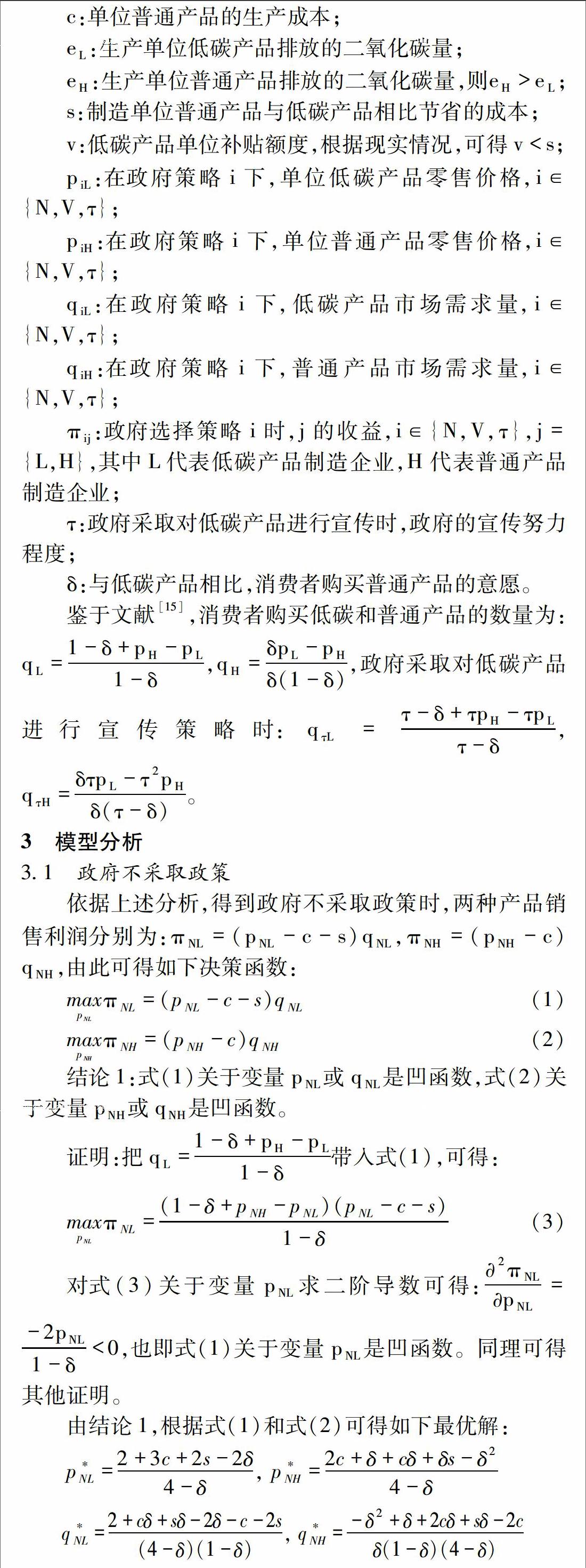
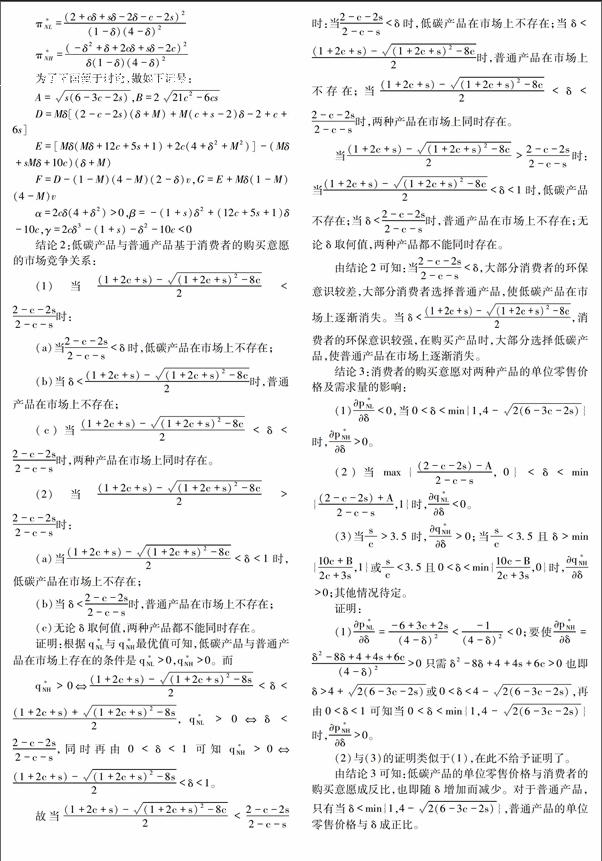
摘要:基于消费者的购买意愿,建立了低碳产品制造商与普通产品制造商的博弈模型。基于此博弈模型,分析了政府补贴和政府宣传对低碳产品、普通产品的单位零售价格、销售量、销售利润及环境影响。研究表明:低碳产品的单位零售价格、普通产品的零售价格及需求量与政府补贴负相关,低碳产品的需求量与政府补贴正相关;低碳产品的单位零售价格与政府努力程度正相关,在政府宣传努力程度大于某一定值时,普通产品的单位零售价格与政府宣传努力程度负相关;政府采取宣传政策时,低碳产品的销售量还与生产单位低碳产品所增加的费用有关;政府采取不同策略时,对环境的影响大小与政府补贴、政府宣传努力程度及生产单位低碳产品所增加费用有关。
关键词:政府补贴;政府宣传;低碳产品;普通产品;博弈模型
DOI:10.13956/j.ss.1001-8409.2017.04.30
中图分类号:F273.2;F224.32 文献标识码:A 文章编号:1001-8409(2017)04-0139-06
Abstract:Based on consumers purchase willingness, this paper establishes a game model between low carbon products manufacturers and ordinary products manufacturers. It analyzes the influence of government subsidies and government propaganda on retail price, sales profit and the sales volume of lowcarbon products and ordinary products. Results show that, the unit retail price of low carbon product and common products is negatively related to the government subsidies, demand of common products is negatively related to the government subsidies and demand of low carbon products is positively related to the government subsidies; the unit retail price of low carbon product is positively related to the degree of efforts with the government propaganda, the unit retail price of common products is negatively related to the government propaganda when the the degree of efforts with the government propaganda is small than some value; sales of lowcarbon products is relate to the increased cost of production units low carbon products when government adopts propaganda policy; the size of environmental impact is relate to government subsidies, the degree of efforts with government propaganda and the increased cost of production units low carbon products when the government takes different strategies.
Key words:government subsidies; government propaganda; low carbon products; general products;the Game mode
根据联合国气候变化专门委员会(IPCC)研究可知:全球气候逐渐变暖虽然大自然本身发生改变是其一部分原因,但是最主要的原因还是人类的各种活动造成的,尤其是与人类活动产生的二氧化碳量密切相关。在人类活动中,造成环境影响最大的是家庭消费,约占30%~40%,但是,人类停止家庭消费是不可能的,因此,改变原来的家庭消费观念才是解决问题的核心,也即进行低碳消费[1]。
目前,各国为了推动低碳消费,对生产低碳产品的企业或购买低碳产品的消费者给予补贴。……