基于关键事件技术的消费者不安全感研究
2017-05-26毕楠银成钺
毕楠+银成钺
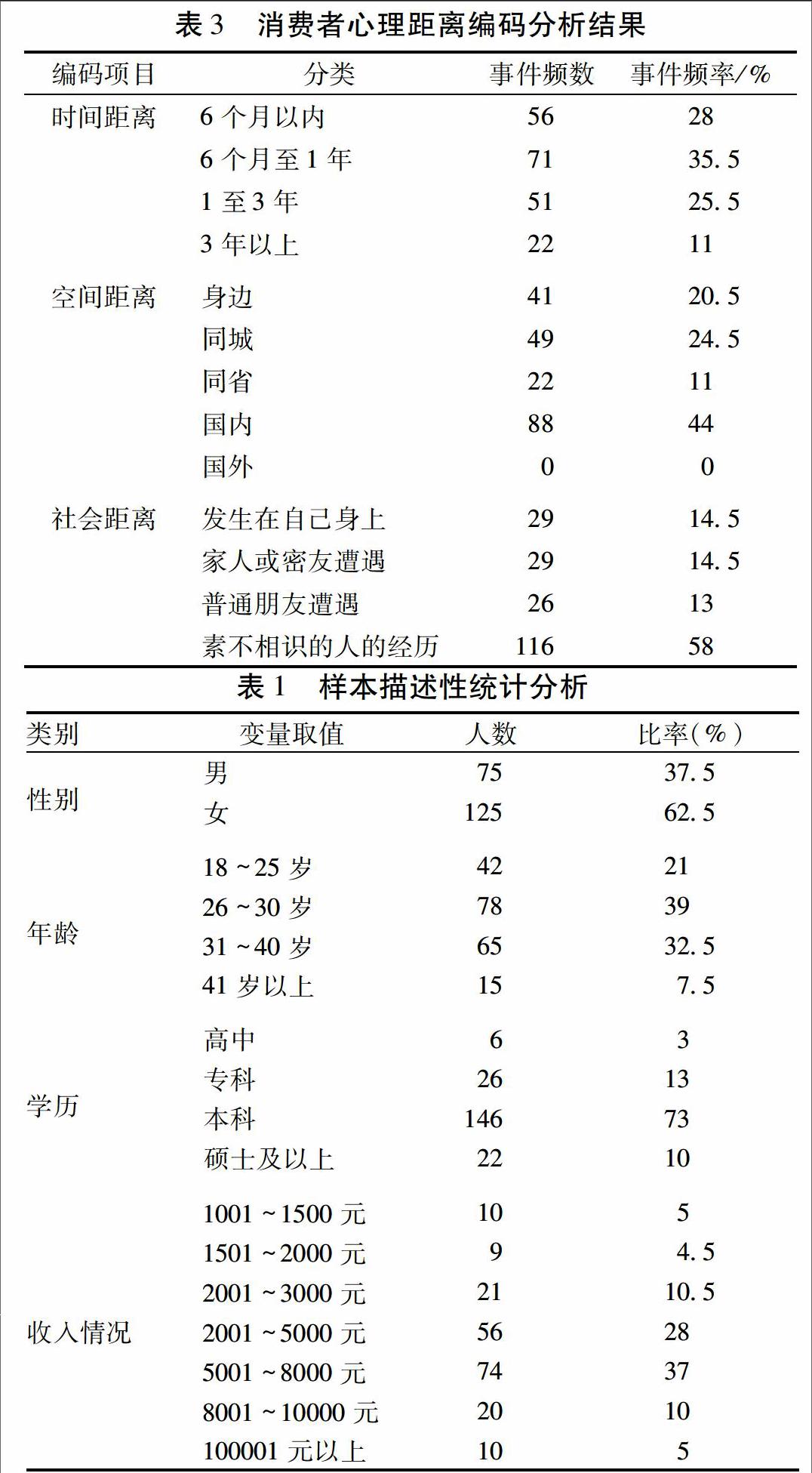

摘要:采用关键事件技术(CIT)对我国消费者的不安全感进行了分类,通过对200个关键事件的内容分析发现,中国消费者不安全感可以分为四种类型,分别为:存在的不安全感、生活的不安全感、发展的不安全感及社会和自我的不安全感,而中国消费者最为担心的则是食品安全问题。研究还对这些关键事件的消费者责任归因和心理距离进行了探讨,最后讨论了管理启示与研究局限。
关键词:消费者不安全感;责任归因;心理距离;关键事件技术
DOI:10.13956/j.ss.1001-8409.2017.04.28
中图分类号:F274;F713.55 文献标识码:A 文章编号:1001-8409(2017)04-0128-04
Abstract: This paper classifies Chinese consumer insecurity by critical incident technique and analyzes the content of 200 critical events. Results show that, Chinese consumer insecurity can be classified into four types, there are existential insecurity, daily life insecurity, development insecurity and societyinsecurity and selfinsecurity. Chinese consumers are now most concerned with the food safety. It also studies the consumers attribution of responsibility and psychological distance of these critical events, and discusses the management implications and research limitations.
Key words:consumer insecurity; attribution of responsibility; psychological distance; critical incident technique
不安全感是人类普遍具有的基础心理特征,当其发展到超出自我控制时,会表现为焦虑、恐惧、多疑、自我强迫等。然而,中国人的不安全感近年来似乎呈现出一种病态的爆发趋势,从四处抢购黄金的“中国大妈”,到日本核泄漏后的“抢盐大战”,不安全感似乎已经成为国人的集体潜意识。这种主观的心理感知影响着消费者的客观行为,一边是高居不下的居民储蓄存款,明白地表达着中国人不敢消费的担忧;另一面又是中国人海外狂购奢侈品的消息屡屡见诸报端,让我们对国人的消费行为困惑的看不懂……这些无不与中国消费者的不安全感有着密不可分的关系,反映出中国消费者在消费过程中纠结的现状。
而对于消费者不安全感的学术研究却明显滞后于现实的困境,现有研究多从维护消费者权益的视角研究法律法规问题,而鲜有从消费者角度出发,深刻认识消费者不安全感从何而来、受何影响、有哪些后果、如何降低等等。