海南岛木薯主产区产量差及限制因素分析
2016-05-30梁海波黄洁韩全辉陈冬冬肖鑫辉安飞飞薛茂富
梁海波 黄洁 韩全辉 陈冬冬 肖鑫辉 安飞飞 薛茂富
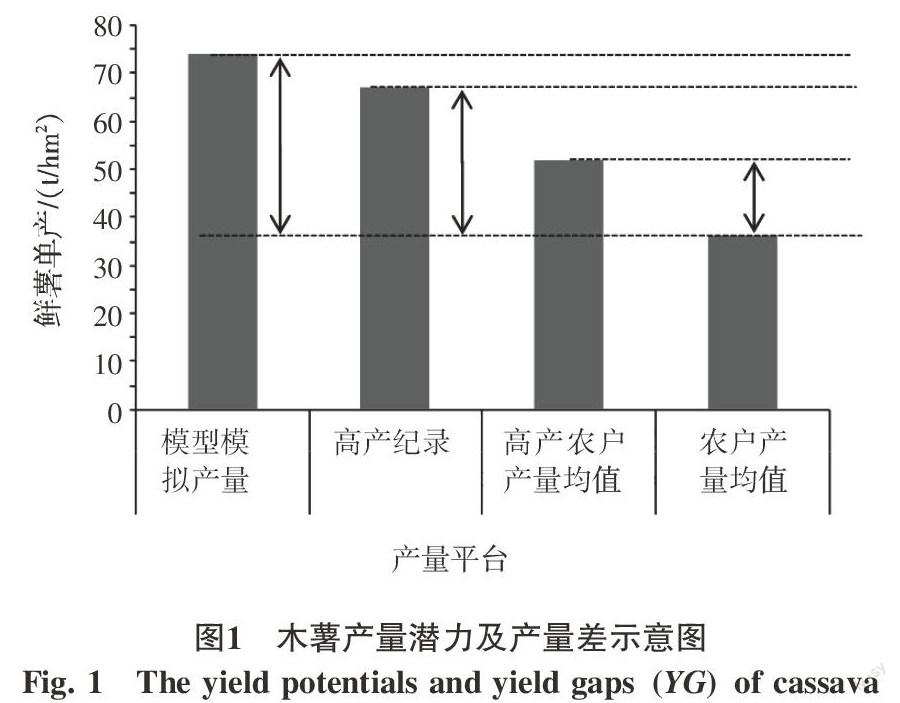
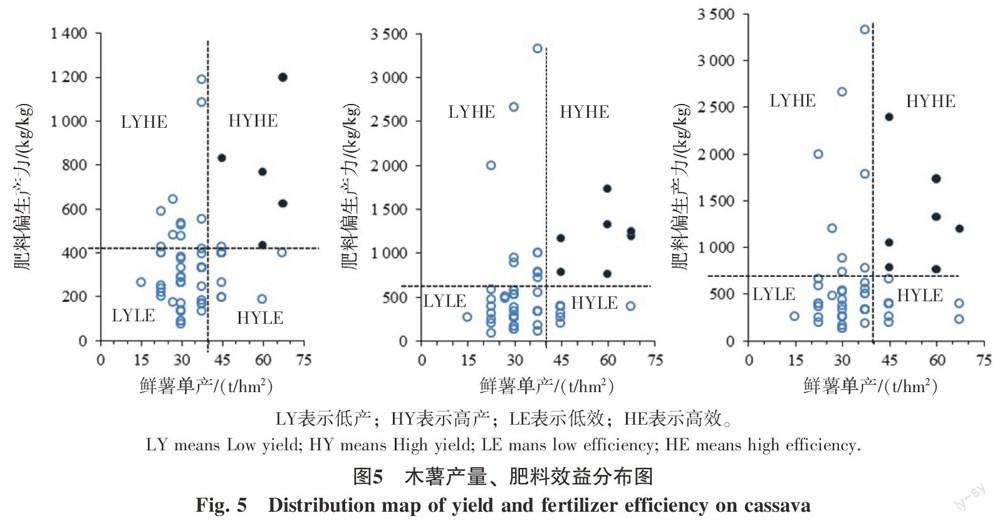
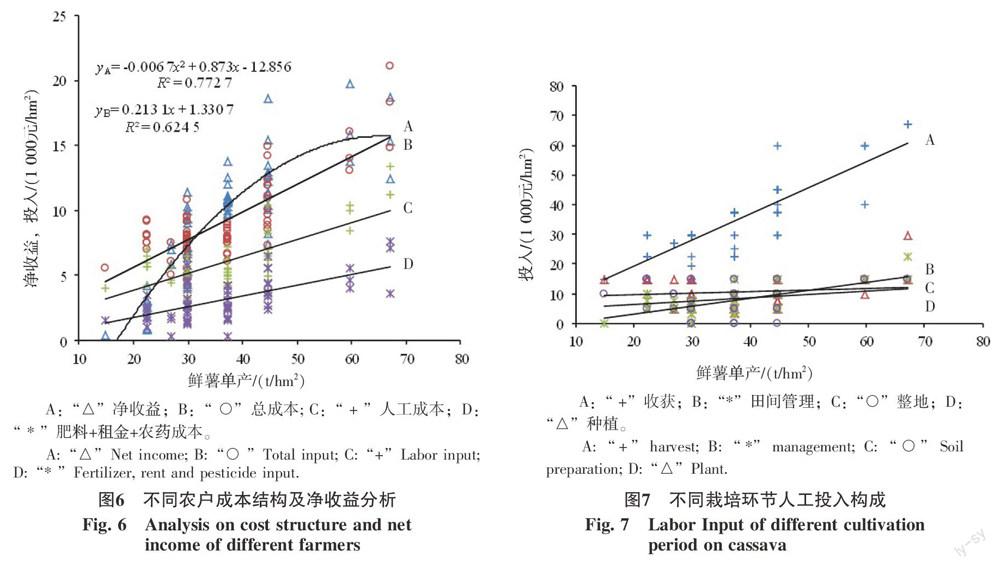
摘 要 为分析海南岛木薯主产区产量的限制因素,找出缩减产量差的途径。研究调查海南岛木薯主产区典型乡村木薯种植管理情况,确定各级木薯产量差,从种植密度、连作年数、养分管理、产投结构等方面分析产量差的贡献因素。结果显示:不同产量等级间木薯产量差异显著,基于高产农户的产量差YGT、高产纪录的产量差YGB、模型模拟的产量差YGM分别为15.59、30.98、37.82 t/hm2;25%最低产农户平均种植密度和连作年数均高于其余农户,其K2O总施用量、基肥中N、K2O的施用量及追肥中K2O的施用量均低于其余农户;现有管理水平条件下,N、P2O5、K2O对产量差的贡献率分别为6.3%、11.0%、6.3%,达到高产高效施肥水平的农户仅4.69%~6.45%;产投结构中,产量达到65.15 t/hm2时产投比最大,此后随产量增加,报酬递减,人工成本尤其收获成本是最大限制因素。缩减木薯产量差的途径为合理密植,减少连作年数,增施钾肥,调整基追肥比例,增施氮钾基肥,追肥增钾,为节约劳动力成本,推广全程机械化,尤其是收获环节。
关键词 木薯;海南岛;产量差;种植密度;连作年数;养分管理;产投结构
中图分类号 S533 文献标识码 A
Abstract This study aims to analyze the limiting factors on cassava yield and find measures to decrease its yield gap in the main growing regions of Hainan Island. Based on the investigation of the cassava cultivation in typical villages in the major cassava producing areas, different levels of yield gap were calculated, and then the main contribution to yield gap was analyzed from these aspect, including planting density, continuous cropping, nutrient management and economic investment and output. Cassava yield gap was significantly different among the three levels, in which, the high-yield farmers yield gap YGT, best farmers yield gap YGB, modeled yield gap YGM, was 15.59, 30.98, 37.82 t/hm2, respectively. Average planting density and continuous cropping years of 25% the lowest yield farmer were higher than those of other farmers, also its N and K2O amount for basic fertilization, K2O amount for top-dressing fertilization and the total K2O amount were lower than those of other farmers. Under the current management level, contribution rate of N, P2O5 and K2O to the yield gap was 6.3%, 11.0% and 6.3%, respectively, only 4.69%-6.45% of the farmers reached a high yield and high efficiency. In composition of production and investment structure, the yield to investment ratio was maximum when the yield reached 65.15 t/hm2, after that, it showed diminishing returns with the increasing of yield, and the cost of labor, especially spending on the harvest, was the maximum limiting factors on the yield. Reasonable planting density and decreased continuous cropping years, more potassium fertilizer, adjusted the ratio of basic fertilization and top-dressing fertilization, more nitrogen fertilizer and potassium fertilizer for basic fertilization and more potassium fertilizer for top-dressing fertilization, and advanced mechanization replacing for labor should be spread in all cassava production, especially the harvest link.
Key words Cassava; Hainan Island; Yield gap; Planting density; Continuous cropping; Nutrient management;
Production and investment structure
doi 10.3969/j.issn.1000-2561.2016.10.003
木薯(Manihot esculenta Crantz)是热带及亚热带地区重要的粮食及能源作物,也是当地山区低收入农民重要的经济作物[1];作为生产清洁能源木薯燃料乙醇的原料,木薯因其非粮特性正发挥着越来越重要的作用[2]。海南岛地处中国最南端,属热带海洋季风气候,全年光温充足,经济作物十分丰富,是发展热带特色高效农业的天然宝地,具有发展木薯的优越条件,是中国的主要木薯产区[3]。……