基于分层线性模型的流动人口社会融合影响因素研究
2016-05-30薛艳
薛艳

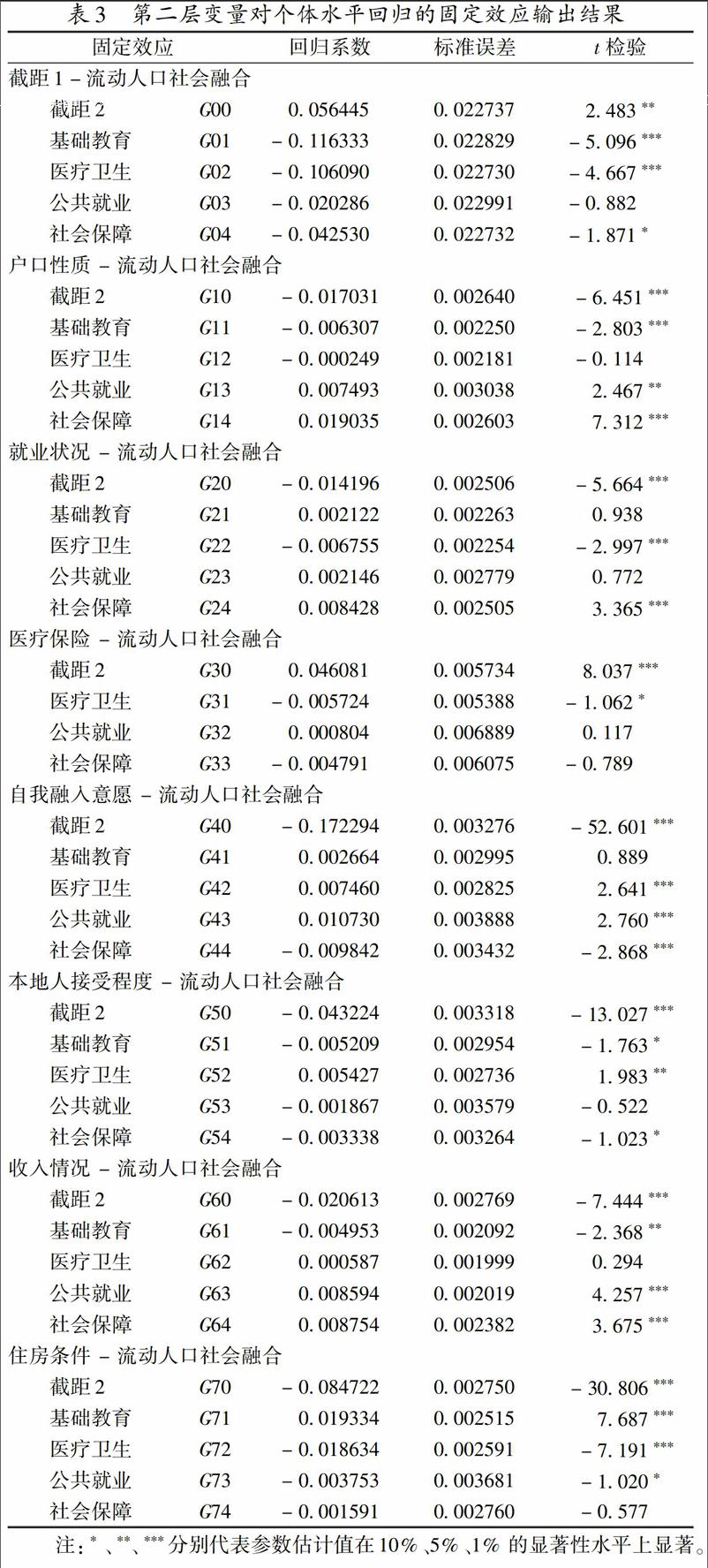
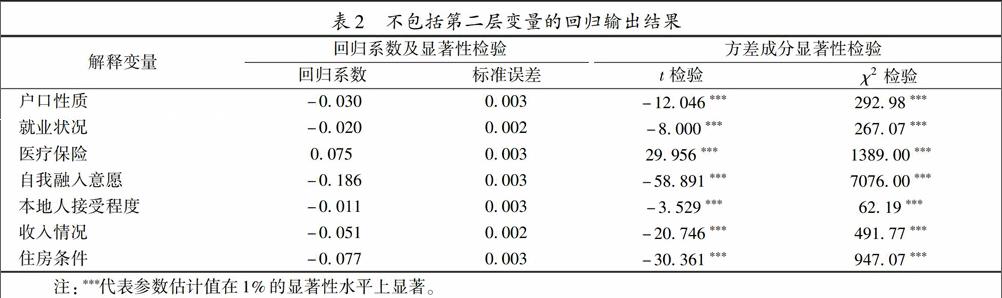
摘 要:根据2012年全国流动人口动态监测结果和反映31个省市基本公共服务均等化的指标数据,建立分层线性模型从流动人口个体和省级层面考察影响流动人口社会融合的影响因素和作用程度的大小。研究发现,流动人口的社会融合不仅与个人因素有关,而且还受地区基本公共服务差异化的影响。个体层面从户口性质、就业状况、医疗保险、自我融入意愿、本地人接受程度、收入情况与住房条件解释流动人口社会融合差异的63.12%;省级层面从基础教育、医疗卫生、公共就业及基本社会保障解释流动人口社会融合的差异为36.83%。最后从政府、公民社会参与角度出发,提出促进流动人口社会融合的措施和建议。
关键词:流动人口;社会融合;分层线性模型;影响因素
中图分类号:C924.24 文献标识码:A 文章编号:1000-4149(2016)03-0062-11
Abstract:Based on the dynamic monitoring of floating population in 2012 and the index data of 31 provinces and cities, this paper investigated the factors and their effect all the social integration of floating population using hierarchical linear model. It is found that the social integration of the floating population is not only related to individual factors, but also to the influence of regional basic public services. At individual level, a series of factors like nature of hukou, employment status, health insurance, self integration, local acceptance, income and housing conditions, are analyzed to explain the differences of 63.12% in social integration of migrant population; at the provincial level, factors like basic education, health care, public employment and basic social barriers are considered to explain the 36.83% of difference in social integration of the floating population. Finally, from the perspective of government and civil society participation, the measures and suggestions of promoting the social integration of floating population are proposed.
Keywords:floating population; social integration; hierarchical linear model; factors
一、研究背景
我国工业化、城镇化的快速推进带来了大规模的流动人口。改革开放以来,我国流动人口数量由1982年的687万增长到2013年的2.45亿,其中接近80%是农村户籍流动人口[1]。目前,我国已经进入了人口发展转变、经济社会转型的新阶段,大规模的人口流动迁移成为推动社会结构变动、利益格局调整、社会组织体系变化的重要因素。流动人口对经济社会发展作出了巨大贡献,也给社会管理和公共服务带来了巨大挑战。在城镇化过程中,如何使流动人口,特别是农业转移人口共享改革发展成果,融入所在城市,是我国经济社会发展中不能忽视的重大战略问题。……