新生代农村流动人口内部生活满意度差异研究
2016-05-30汤爽爽冯建喜
汤爽爽+冯建喜
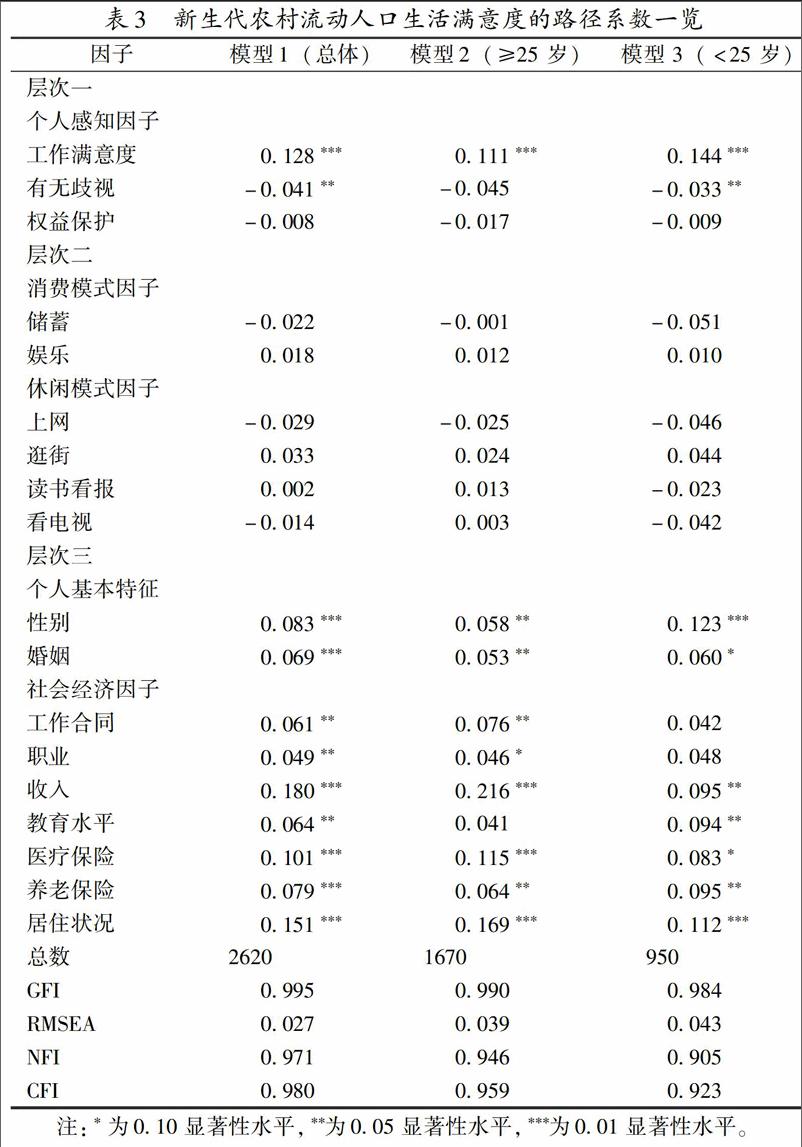
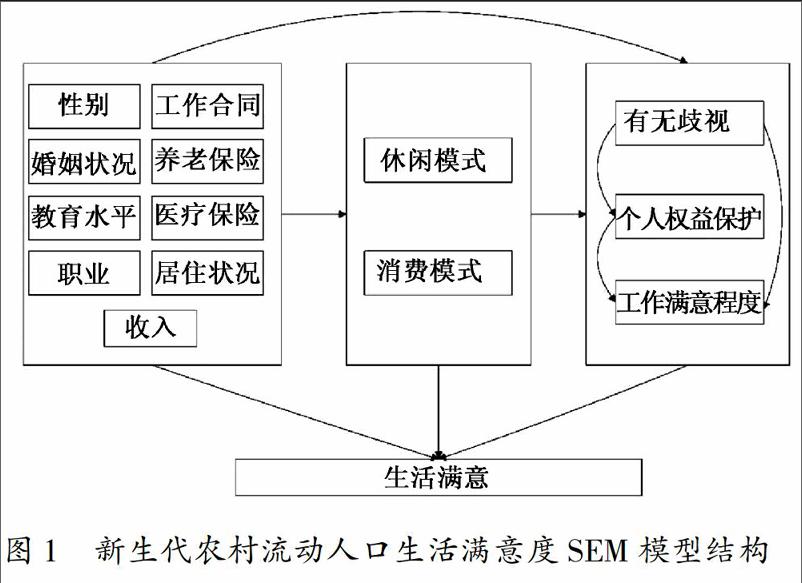
摘 要:新生代农村流动人口正逐渐成为中国农村流动人口的主体。与老一代相比,新生代农村流动人口具有较为不同的客观经济社会属性和主观认知特征,而其生活满意度又将影响其未来的市民化决策。本文基于2012年江苏省外出青年农村流动人口调研,运用结构方程模型研究发现,新生代农村流动人口内部已出现较为明显的年龄差异。对于影响生活满意度的因子,新生代农村流动人口客观属性上的差异主要体现在所处生命周期的不同,而主观认知的不同则更多体现了时代背景的变化。
关键词:新生代农村流动人口;生活满意度;结构方差模型;江苏省
中图分类号:C922 文献标识码:A 文章编号:1000-4149(2016)03-0052-10
Abstract:During the rapidurbanization process in China, the newgeneration of rural migrants have gradually become the main body of the total rural floating population. Compared with the oldgeneration, the new generation has different social economic features as well as subjective characteristics. The life satisfaction of rural migrants would obviously affect their citizenization decisions. Based on the survey data about young rural migrants in Jiangsu province (2012), the paper uses SEM models to explore the influential factors of life satisfaction of the newgeneration of rural migrants in urban. The paper finds that there existed obvious age disparities within the group of the newgeneration. Life cycles impact the cohort differences of objective attributes, whereas the disparities of their subjective perceptions are influenced by the changing context.
Keywords:newgeneration of rural migrant; life satisfaction; SEM model, Jiangsu province
一、引言
伴随着中国的快速城市化进程,新生代农村流动人口
目前通常被定义为生于1980年之后,在城市打工的农民工群体。正逐渐成为农村流动人口的主体。相比于老一代,新生代农村流动人口具有明显不同的社会经济特征、社会认知度和工作生活期望值[1-3]。一些学者认为,生活满意度是新生代农村流动人口市民化的实质驱动力[4]。相对而言,新生代农村流动人口务农的经验较少,不具备充当土地承包经营主体的必要条件,主动或被动地处于农业经营之外。此外,他们不愿留守农村,对乡村的感情和认同感也较弱,但他们渴望融入城市社会,拥有更多对于工作和生活的诉求,具有更强烈的定居城市意愿。并且,一旦他们对城市生活不满,被城市社会所排斥,较容易成为“问题人群”,导致一系列社会问题的产生。……