中国土地利用碳排放演变与影响因素分析
2016-05-14冯杰王涛
冯杰 王涛
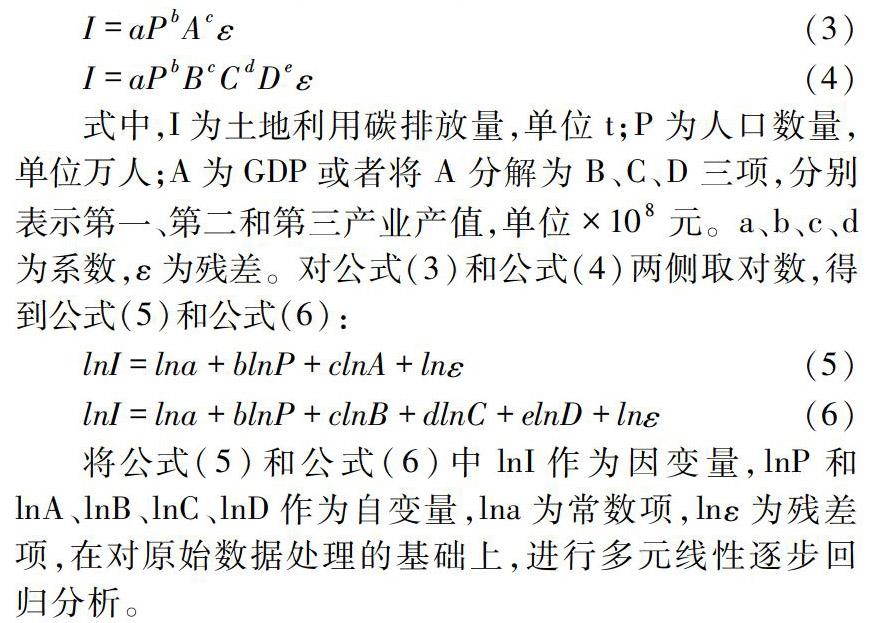

摘要:以1989~2013年中国统计数据为基础,借助土地利用碳排放计算方法和STIRPAT模型,分析土地利用碳排放演变与影响因素,结果表明:①土地利用碳排放量呈增加趋势,其中建设用地碳排放量起主导作用。研究时段土地利用碳汇略有增加,但远不能抵消建设用地碳源作用。②土地利用碳排放过程划分为四个阶段,即1989~1996年碳排放量稳定增加、1997~2001年碳排放量缓慢增加、2002~2007年碳排放量急剧增加、2008~2013年碳排放量快速增加阶段。③研究时段内单位GDP碳排放强度减小,人均碳排放强度增加。④土地利用碳排放与人口数量呈负相关关系,与GDP呈正相关关系。
关键词:建设用地;能源消耗;碳排放;STIRPAT;中国
DOI:10.13956/j.ss.1001-8409.2016.05.19
中图分类号:F301.24;F124.5 文献标识码:A 文章编号:1001-8409(2016)05-0087-04
Abstract:This paper analyzed the evolution and influencing factors of land use carbon emission based on Chinese statistics data from 1989 to 2013 by land use carbon emission calculated method, based on the STIRPAT model. Result showed that land use carbon emission was increase, in which builtup land played a leading role. Land use carbon sinks slightly increased but it could not offset the carbon emission by builtup land. The process of land use carbon emission was divided into 4 stages, which were a steady increasing stage from 1989 to 1996, a slowly increasing stage from 1997 to 2001, a sharp increasing stage from 2002 to 2007 and a rapid increasing stage from 2008 to 2013. Carbon emission intensity of per unit of GDP was decrease while carbon emission intensity of per person increase, which all reflect that the consumption style of fossil energy was change from extensive to intensive gradually, and carbon emission intensity was increase gradually induced by the increasing of personal consumption capacity. Land use carbon emission had negative correlation with population while had positive correlation with GDP.
Key words:builtup land; energy consumption; carbon emission; STIRPAT; China
化石能源使用和土地利用变化是全球气候变暖的重要驱动因素,受到社会广泛关注[1,2]。改革开放以来,中国经济发展迅速,能源消耗量日益增大,城市化进程使土地利用发生巨大变化,中国碳排放量已居于全球各国前列[3]。科学认识中国土地利用碳排放演变过程及影响因素,可为中国碳排放减缓和减少提供理论依据。
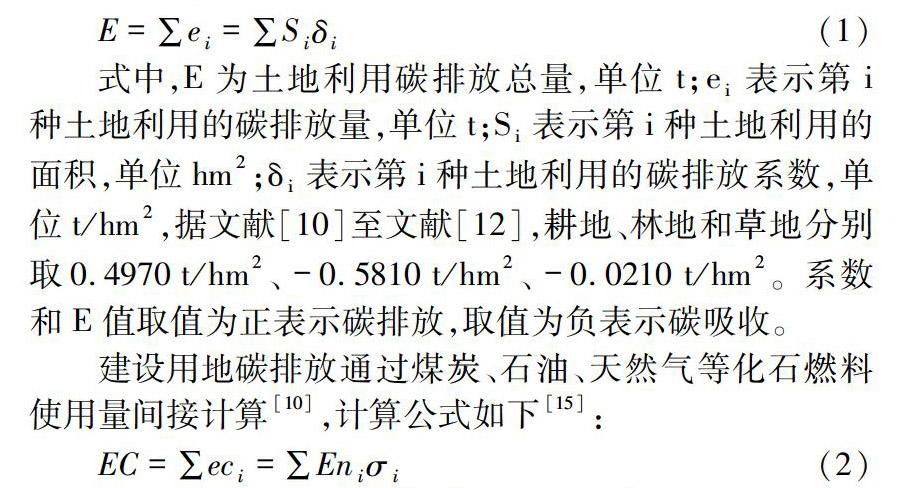
中国碳排放研究内容包括碳排放核算及空间格局[4]、碳排放影响因素分析[5]、国民经济行业碳排放研究[6]、未来碳排放预测研究[7],城市化过程[8]和公民个人碳排放研究[9]。土地利用碳排放计算方法中,耕地、林地、草地和建设用地的碳排放主要依据转换系数,将土地利用面积转化为碳排放量,其中建设用地碳排放通过化石能源的使用量转换为碳排放量进行测算[10,11]。……