经济发展方式与出生性别比下降的路径选择
2016-04-07吴石英江胜名
吴石英++江胜名

[摘 要]我国出生性别比出现罕见的“六连降”,但下降趋势缓慢,出生性别比偏高态势依旧明显。经济发展方式通过影响妇女地位而影响生育决策和生育行为,从而影响出生性别比。经济发展方式落后,对简单劳动力的需求,使得男孩偏好依旧存在,从而导致出生性别比偏高。转变经济发展方式能缩小男女在经济收入、社会保障上的差距,男孩偏好终会减弱,出生性别比也将会回归正常水平。
[关键词]出生性别比;偏高;男孩偏好;经济发展方式
[中图分类号]C92-05 [文献标识码]A [文章编号]1671-8372(2016)01-0116-05
The path choice of economic development pattern and the declining sex ratio at birth
WU Shi-ying1,JIANG Sheng-ming2
(1.School of Economics, Anhui University, Hefei 230601, China; 2.School of Jianghuai, Anhui University,
Hefei 230039, China)
Abstract:Chinas sex ratio at birth shows a rare continuous decline for six years. However the high sex ratio at birth is still obvious and the declining speed is low. By influencing the status of women, economic development pattern affects fertility decisions and fertility behavior, which affects the sex ratio at birth. Because of backward economic development mode, and the demand for simple labor, son preference still exists, which causes high sex ratio at birth. Changing the economic development mode can narrow the gap between the men and the women in the economic income and social security. As a result, the boy preference will abate and the sex ratio at birth will go back to normal levels also.
Key words:sex ratio at birth; on the high side; boy preference; the way of economic development
一、引言
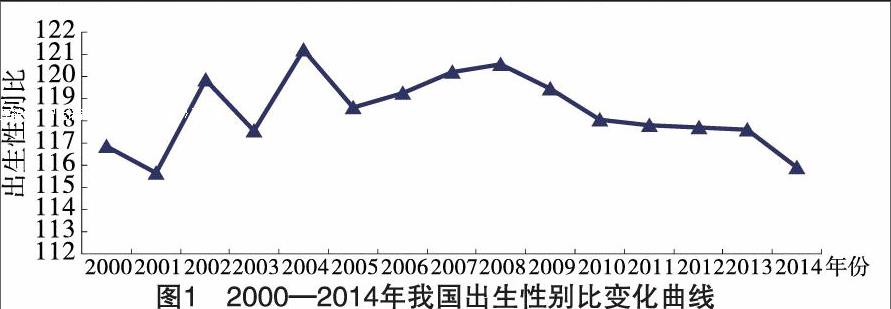
出生性别比是反映人口性别结构的重要指标之一。国际认定的出生性别比的正常值域为102~107,也就是说,每出生100名女婴相对应有102~107名男婴出生,它是一个较为稳定的自然化指标,除人为因素外,很少受到其他外在因素的影响。20世纪70年代开始,我国逐步推行计划生育政策,严格约束人们的生育行为,人口增长速度和规模得到迅速控制,同时也扭转了存在已久的“多子多福”的观念。但由于受各种因素的影响,人们的男孩偏好凸显,选择性别的生育行为渐多。1982年第三次全国人口普查时我国出生性别比为108.47,开始超出正常范围,此后,出生性别比呈现出持续的偏高态势,21世纪以来更是长期处于高位运行,2004年达到121.18,为最高值。经过多年的综合治理,2009年以来出生性别比出现罕见的“六连降”(见图1),由此,普遍认为出生性别比出现 “拐点”[1],出生性别比的持续升高态势已经被初步遏制。……