中国汉族高原肺水肿EPAS1基因多态性研究
2016-01-19杨应忠韵海霞王亚平
杨应忠,韵海霞,王亚平,胥 瑾
(青海大学医学院)
杨应忠(1977~),男,汉族,青海籍,副教授
中国汉族高原肺水肿EPAS1基因多态性研究
杨应忠,韵海霞,王亚平,胥瑾
(青海大学医学院)
摘要目的探讨EPAS1基因与高原肺水肿易感性的相关关系。方法选取135例HAPE患者,137例健康平原对照者,135例玉树藏族健康对照者。采用iMLDR技术对EPAS1基因的rs10193827、rs10206434、rs11675232、rs13006131、rs13419896、rs1562453、rs17035010、rs1868092、rs1992846、rs4953354、rs4953359、rs4953361、rs6544889、rs7571218、rs7589621、rs7598371多态性位点在三组样本中进行SNP分型。结果rs10193827、rs11675232、rs13419896、rs17035010、rs1992846、rs4953359、rs6544889、rs7589621、rs10206434、rs13006131、rs1562453、rs1868092、rs4953354、rs4953361、rs7571218、rs7598371的基因型CC、TT、GG、TT、TT、TT、AA、AA、GG、CC、CC、GG、AA、GG、AA、GG在汉族普遍,而与其对应的反向纯合子则在藏族中普遍,差异有显著性(P<0.001)。EPAS1基因内含子区域rs13419896、rs1703510、rs6544889的基因型在HAPE-p组和HAPE-r组间差异有显著性(P<0.05);rs10193827和rs6544889基因型CC[OR(95%):1.653(1.023-2.669),P= 0.040]和GG[OR(95%):4.821(1.022-22.745),P=0.029]分别在显性和隐性模式下,与HAPE发病的危险度高。结论EPAS1基因与汉族HAPE的发病相关,与藏族人群高原适应相关。
*:国家自然科学基金项目(31160232)
关键词高原肺水肿EPAS1基因多态性相关易感性
中图分类号R394.5
文献标识码识码A
DOI:10.13452/j.cnki.jqmc.2015.02.001
AbstractObjectiveTo investigate the relationships between EPAS1 gene and the susceptibility to high altitude pulmonary edema(HAPE)in Han Chinese.Methods This study enrolled 135 HAPE-susceptible Han Chinese subjects(HAPE-s),137 HAPE-resistant healthy Han Chinese controls(HAPE-r)and 135 high-land local Tibetans(HLT)from Yushu earthquake construction population in Qinghai province where the altitude is over 3,500 m above sea level.The rs10193827、rs10206434、rs11675232、rs13006131、rs13419896、rs1562453、rs17035010、rs1868092、rs1992846、rs4953354、rs4953359、rs4953361、rs6544889、rs7571218、rs7589621、rs7598371 polymorphisms were genotyped by improved multiple ligase detection reaction(iMLDR)in all subjects.Results The genotypes CC,TT,GG,TT,TT,TT,AA,AA,GG,CC,CC,GG,AA,GG,AA,GG of rs10193827,rs11675232,rs13419896,rs17035010,rs1992846,rs4953359,rs6544889,rs7589621,rs10206434,rs13006131,rs1562453,rs1868092,rs4953354,rs4953361,rs7571218 and rs7598371,prevalent in Han Chinese,and their counterpart homozygotes,prevalent in HLT group.The rs10193827 were significantly associated with HAPE risk under the dominant model of inheritance[OR(95%):1.653(1.023-2.669),P=0.040],while the rs6544889 were significantly associated with HAPE risk under the recessive model of inheritance[OR(95%):4.821(1.022-22.745),P=0.029].Conclusions This genetic study provided evidence that all of the selected SNPs are strongly associated with high altitude adaptation in the Tibetans.The rs10193827 were significantly associated with HAPE risk under the dominant model of inheritance,while the rs6544889 were significantly associated with HAPE risk under the recessive model of inheritance.
KeywordsHAPEEPAS1PolymorphismsAssociationSusceptible
收稿日期2015-03-03
POLYMORPHISMS OF EPAS1 GENE IN HIGH-ALTITUDE
PULMONARY EDEMA SUSCEPTIBLE HAN CHINESE*
Yang Yingzhong,Yun Haixia,Wang Yaping,Xu Jin
(Qinghai University School of Medicine,16 Kunlun Rd,Xining 810001,Qinghai,China)
Introduction
High-altitude pulmonary edema(HAPE)is a life-threatening respiratory disease that occurs in previously healthy people exposed to altitude exceeding 2,500 m above sea level within 1~7 days[1].HAPE is a non-cardiogenic pulmonary edema characterized by high pressure in pulmonary arteries,with edema in pulmonary interstitial tissue and alveoli,leading to pulmonary capillary stress failure and a high permeability type of edema[2].The pathogenesis of HAPE remains unclear because some individuals are more susceptible to HAPE than others when exposed to the same hypoxia conditions,indicating genetic predisposition to HAPE.Indeed,several candidates have been proposed as HAPE susceptibility genes such as EPAS1,EGLN1,VEGF,et al.[3-7].
The human EPAS1 gene encodes the oxygen-sensitive alpha subunit of hypoxia-inducible factor-2(HIF-2),a key regulator of chronic hypoxia by regulating a large number of genes involved in the cellular and systemic responses to hypoxia including erythropoiesis,angiogenesis,vascular regulation and anaerobic metabolism[8].EPAS1 is induced by hypoxia and expressed predominantly in highly vascularized tissues,such as the lung,placenta and vascular system[9].
Therefore,we hypothesized that the polymorphisms in EPAS1 gene are associated with the susceptibility to HAPE in Han Chinese.In this genetic epidemiology study with a case control design,sixteen SNPs of the EPAS1 gene,including rs10193827,rs11675232,rs13419896,rs17035010,rs1992846,rs4953359,rs6544889,rs7589621,rs10206434,rs13006131,rs1562453,rs1868092,rs4953354,rs4953361,rs7571218 and rs7598371,were examined in Han HAPE susceptible subjects,Han healthy controls and local Tibetans from Yushu earthquake construction population in Qinghai province.
Materials and Methods
Subjects
All Han subjects were workers who participated for the first time in the Yushu earthquake reconstruction.135 Han Chinese HAPE-susceptible subjects(HAPE-s)had been hospitalized in Yushu People’s Hospital between March 2010 and June 2013 due to the onset of HAPE within 1~5 days after arriving at Yushu area(3760m),south-west of Qinghai province,China.The diagnosis of HAPE was based on chest X-rays,HR,SaO2levels,and met the criteria for HAPE at the onset of the disorder and recovered promptly with hospitalization[10].The clinical symptoms included cough,dyspnea at rest,breathlessness,presence of pulmonary rales,and reduced exercise performance.137 HAPE-resistant healthy controls(HAPE-r)were randomly selected from the co-workers of HAPE-s,matching the patients in the age,ethnicity,and working conditions.These subjects remained healthy after living at Yushu for at least 3 months,without suffering from HAPE or high altitude cerebral edema.HAPE-s and HAPE-r subjects were unrelated Chinese,who were born and had been living at low altitude before. In addition,135 high-land local Tibetans(HLT)were employed as highland controls.All subjects received standard physical and clinical inquiries to exclude those with hypertension,cardiopulmonary disease,asthma,inflammation,and any metabolic diseases.The study was approved by the Ethics Committee of Qinghai University(Xining,China).All patients and controls signed informed consent.
Genotyping
Genomic DNA was extracted from venous blood by using Gentra Puregene Blood Kit(Qiagen,158389,Germany).All selected SNPs were genotyped by an improved multiplex ligation detection reaction(iMLDR)technique,which was based on LDR and was newly developed by Genesky Biotechnologies Inc.(Shanghai,China).For each SNP,the alleles were distinguished by different fluorescent labels of allele specific oligonucleotide probe pairs.Different SNPs were further distinguished by different extended lengths at the 3’ end.The optimized primer and probe information in two mixtures are described in Tables 1 and 2,respectively.Genotyping was performed in a blinded fashion without knowledge of the subjects’ data;approximately 5% of the random positive samples were genotyped to monitor genotyping quality.

Table 1 PCR primer sequences for EPAS1 SNPs genotyping
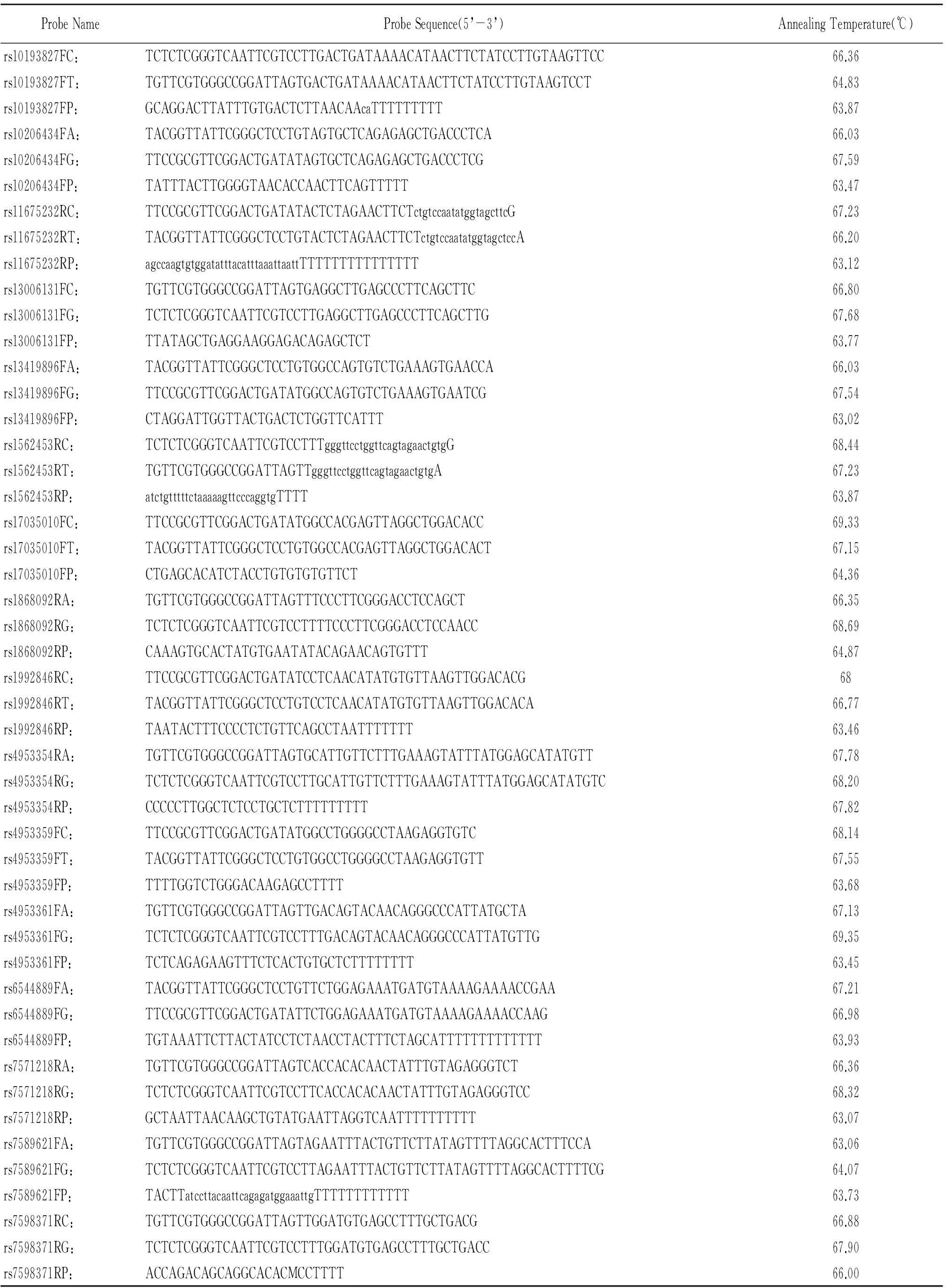
Table 2 The probe sequence for EPAS1 SNPs genotyping.
Statisticalanalysis
Statistical analyses were performed using the SPSS software(version 17.0,SPSS,Inc,Chicago,USA).Categorical values were presented as number(n)and percentage(%).Hardy-Weinberg equilibrium as well as genotypes and alleles distributions between groups were tested by chi-square test.The odds ratio,95% confidence interval,and P value were calculated in all groups,P<0.05 was considered to indicate a significant difference.
Results
Genotypeandalleledistribution
The genotypic and allelic distributions were shown in Table 3.SNPs such as rs10193827,rs10206434,rs13419896,rs1562453,rs17035010,rs4953359 and rs6544889 showed deviations from Hardy-Weinberg equilibrium(HWE)in HAPE-s,while other SNPs were in HWE in three groups.The genotypes CC,TT,GG,TT,TT,TT,AA,AA,GG,CC,CC,GG,AA,GG,AA,GG of rs10193827,rs11675232,rs13419896,rs17035010,rs1992846,rs4953359,rs6544889,rs7589621,rs10206434,rs13006131,rs1562453,rs1868092,rs4953354,rs4953361,rs7571218 and rs7598371,prevalent in Han Chinese,and their counterpart homozygotes,prevalent in HLT group.The homozygotic genotype CC,GG,TT of rs10193827,rs13419896 and rs17035010 were signi cantly more prevalent in HAPE-s group(54.1%,53.3% and 55.6%)than in HAPE-r group(41.6%,41.6% and 45.3%)(P<0.05).Furthermore,the rs10193827 were significantly associated with HAPE risk under the dominant model of inheritance[OR(95%):1.653(1.023-2.669),P=0.040],while the rs6544889 were significantly associated with HAPE risk under the recessive model of inheritance[OR(95%):4.821(1.022-22.745),P= 0.029](Table 4).

Table 3 Comparisons of the EPAS1 gene SNPs’ genotypes and alleles distribution in
续表:

Genotypedistribution(%)HAPE-s(n=135)HAPE-r(n=137)HLT(n=135)HAPE-svs.HAPE-rOR(95%CI)p-valueHAPE-svs.HLTOR(95%CI)p-valueHAPE-rvs.HLTOR(95%CI)p-valuers17035010TT75(0.556)62(0.453)16(0.119)CT41(0.304)62(0.453)64(0.474)1.829(1.089-3.072)0.0227.317(3.755-14.258)0.0004.000(2.086-7.671)0.000CC19(0.141)13(0.095)55(0.407)0.828(0.379-1.808)0.63513.569(6.406-28.742)0.00016.394(7.243-37.109)0.000T191(0.707)186(0.679)96(0.356)C79(0.293)88(0.321)174(0.644)0.874(0.607-1.259)0.470.228(0.159-0.328)0.0000.261(0.183-0.372)0.000rs1992846TT64(0.474)60(0.438)19(0.141)CT57(0.422)66(0.482)59(0.437)1.235(0.749-2.036)0.4073.487(1.860-6.535)0.0002.823(1.512-5.269)0.001CC14(0.104)11(0.080)57(0.422)0.838(0.353-1.990)0.68913.714(6.305-29.833)0.00016.364(7.162-37.390)0.000T185(0.685)186(0.679)97(0.359)C85(0.315)88(0.321)173(0.641)0.971(0.677-1.393)0.8740.258(0.180-0.368)0.0000.265(0.186-0.378)0.000rs4953359TT98(0.726)92(0.672)28(0.207)CT30(0.222)43(0.314)58(0.430)1.527(0.884-2.636)0.1286.767(3.681-12.439)0.0004.432(2.485-7.903)0.000CC7(0.052)2(0.015)49(0.363)0.304(0.062-1.503)0.12424.500(9.997-60.045)0.00080.500(18.401-352.161)0.000T226(0.837)227(0.828)114(0.422)C44(0.163)47(0.172)156(0.578)0.940(0.599-1.475)0.7890.142(0.095-0.213)0.0000.151(0.102-0.255)0.000rs6544889AA94(0.696)87(0.635)26(0.193)GA32(0.237)48(0.350)60(0.444)1.621(0.950-2.764)0.0756.779(3.682-12.482)0.0004.183(2.343-7.468)0.000GG9(0.067)2(0.015)49(0.363)0.240(0.050-1.142)0.05419.684(8.558-45.275)0.00081.981(8.658-360.214)0.000A220(0.815)222(0.810)112(0.415)G50(0.185)52(0.190)158(0.585)1.031(0.670-1.585)0.8916.207(4.198-9.177)0.0006.023(4.090-8.869)0.000rs7589621AA73(0.541)64(0.467)15(0.111)GA49(0.363)62(0.453)64(0.474)1.443(0.873-2.387)0.1526.356(3.257-12.406)0.0004.404(2.272-8.538)0.000GG13(0.096)11(0.080)56(0.415)0.965(0.404-2.304)0.93620.964(9.231-47.611)0.00021.721(9.222-51.162)0.000A195(0.722)190(0.693)94(0.348)G75(0.278)84(0.307)176(0.652)1.149(1.794-1.664)0.4604.868(3.378-7.016)0.0004.235(2.959-6.062)0.000rs10206434GG115(0.852)113(0.825)33(0.244)GA16(0.119)23(0.168)58(0.430)1.463(0.735-2.913)0.27712.6331(6.430-24.820)0.0008.635(4.648-16.042)0.000AA4(0.030)1(0.007)44(0.326)0.254(0.028-2.311)0.19138.333(12.833-114.505)0.000150.667(19.993-1135.428)0.000G246(0.911)249(0.909)124(0.459)A24(0.089)25(0.091)146(0.541)1.029(0.572-1.851)0.92412.069(7.448-19.556)0.00011.727(7.287-18.872)0.000rs13006131CC83(0.615)87(0.635)26(0.193)GC45(0.333)43(0.314)61(0.452)0.912(0.545-1.526)0.7254.327(2.410-7.769)0.0004.747(2.640-8.535)0.000GG7(0.052)7(0.051)48(0.356)0.954(0.321-2.837)0.93321.890(8.837-54.225)0.00022.945(9.274-56.772)0.000C211(0.781)217(0.792)113(0.419)G59(0.219)57(0.208)157(0.581)0.939(0.623-1.416)0.7654.969(3.410-7.241)0.0005.289(3.621-7.726)0.000
续表:

Genotypedistribution(%)HAPE-s(n=135)HAPE-r(n=137)HLT(n=135)HAPE-svs.HAPE-rOR(95%CI)p-valueHAPE-svs.HLTOR(95%CI)p-valueHAPE-rvs.HLTOR(95%CI)p-valuers1562453CC96(0.711)93(0.679)27(0.200)CT30(0.222)41(0.299)57(0.422)1.411(0.814-2.446)0.2206.756(3.654-12.490)0.0004.789(2.662-8.613)0.000TT9(0.067)3(0.022)51(0.378)0.344(0.090-1.311)0.10420.148(8.809-46.082)0.00058.556(16.933-202.492)0.000C222(0.822)227(0.828)111(0.411)T48(0.178)47(0.172)159(0.589)0.958(0.615-1.491)0.8486.625(4.463-9.835)0.0006.918(4.653-10.288)0.000rs1868092GG102(0.767)105(0.766)29(0.215)GA28(0.211)28(0.204)60(0.444)0.971(0.538-1.753)0.9237.537(4.098-13.864)0.0007.759(4.222-14.258)0.000AA3(0.023)4(0.029)46(0.341)1.295(0.283-5.931)0.73853.931(16.629-186.103)0.00041.638(13.842-125.254)0.000G232(0.872)238(0.869)118(0.437)A34(0.128)36(0.131)152(0.563)0.969(0.586-1.601)0.9020.114(0.074-0.175)0.0000.117(0.077-0.180)0.000rs4953354AA90(0.667)84(0.613)21(0.156)GA38(0.281)48(0.350)66(0.489)1.353(0.805-2.275)0.2537.444(4.003-13.843)0.0005.500(3.001-10.079)0.000GG7(0.052)5(0.036)48(0.356)0.765(0.234-2.504)0.65829.388(11.661-74.064)0.00038.400(13.603-108.401)0.000A218(0.807)216(0.788)108(0.400)G52(0.193)58(0.212)162(0.600)1.126(0.740-1.711)0.5796.288(4.265-9.272)0.0005.586(3.826-8.157)0.000rs4953361GG25(0.185)26(0.190)5(0.037)GA76(0.563)70(0.511)52(0.385)0.886(0.468-1.676)0.7093.421(1.230-9.515)0.0143.863(1.390-10.736)0.060AA34(0.252)41(0.299)78(0.578)1.160(0.568-2.365)0.68411.471(4.049-32.493)0.0009.893(3.535-27.684)0.000G126(0.467)122(0.445)62(0.230)A144(0.533)152(0.555)208(0.770)0.917(0.655-1.286)0.6160.341(0.235-0.494)0.0000.371(0.256-0.538)0.000rs7571218AA61(0.452)62(0.453)14(0.104)GA58(0.430)56(0.409)56(0.415)0.950(0.571-1.581)0.8434.207(2.116-8.364)0.0004.429(2.225-8.813)0.000GG16(0.119)19(0.139)65(0.481)1.168(0.550-2.481)0.68517.701(7.971-39.309)0.00015.150(6.993-32.822)0.000A180(0.667)180(0.657)84(0.311)G90(0.333)94(0.343)186(0.689)1.044(0.732-1.490)0.814.429(3.086-6.355)0.0004.240(2.962-6.069)0.000rs7598371GG86(0.637)87(0.635)26(0.193)GC42(0.311)43(0.314)64(0.474)1.012(0.602-1.701)0.9645.040(2.804-9.060)04.980(2.777-8.932)0CC7(0.052)7(0.051)45(0.333)0.989(0.333-2.938)0.98321.264(8.566-52.781)021.511(8.668-53.380)0G214(0.793)217(0.792)116(0.430)C56(0.207)57(0.208)154(0.570)0.996(0.658-1.508)0.9860.197(0.135-0.288)0.0000.198(0.136-0.289)0.000
HAPE-s,HAPE-susceptible subjects;HAPE-r,HAPE-resistant healthy controls;HLT,high-land local Tibetans.

Table 4 Genotype and allele distributions of rs10193827,rs13419896,rs17035010,rs6544889
*P value was calculated by x2test 3×2 contingency table(degree of freedom [df]=2)
☆P value was calculated by x2test 2×2 contingency table(degree of freedom [df]=1)
Discussion
In this study we investigated EPAS1 polymorphisms in 135 HAPE patients,137 matched Han Chinese and local Tibetans from Yushu earthquake construction population in high altitude area.Our data showed that the rs10193827 was significantly associated with HAPE risk under the dominant model of inheritance.The rs6544889 was significantly associated with HAPE risk under the recessive model of inheritance.The genotypes CC,TT,GG,TT,TT,TT,AA,AA,GG,CC,CC,GG,AA,GG,AA,and GG of rs10193827,rs11675232,rs13419896,rs17035010,rs1992846,rs4953359,rs6544889,rs7589621,rs10206434,rs13006131,rs1562453,rs1868092,rs4953354,rs4953361,rs7571218 and rs7598371 were prevalent in Han Chinese,while their counterpart homozygotes were prevalent in HLT group.
The non-coding nucleotide variants in EPAS1 gene are strongly associated with reduced blood concentration of hemoglobin in Tibetans[11].It is proposed that molecular adaptation of EPAS1 likely occurs at the transcriptional level,the SNPs may alter the expression and/or splicing pattern of EPAS1[12].Tibetans possess unique biological characteristics,such as low Hb concentration,low Hct,low pulmonary artery pressure(PAP),the absence of Mountain Sickness,which may help them adapt to hypoxic environment.
HAPE-s subjects demonstrated increased PAP,indicating that they had enhanced hypoxic pulmonary vasoconstriction[13].NO as an essential endogenous vasodilator regulates pulmonary vascular tone and maintains physiological low pulmonary vascular resistance(PVR).NO is synthesized locally in vascular endothelial cells by endothelial nitric oxide synthase(eNOS),which is a key catalytic enzyme responsible for providing basal pulmonary NO release[13].Tibetans exhibit an elevated NO level in the blood,contributing to low pulmonary artery pressure.eNOS is one of hypoxia-inducible genes regulated by EPAS1[14].Therefore,the different SNPs of EPAS1 between HAPE-s and Tibetans may account for enhanced expression of eNOS and increased NO level in Tibetans.
Several limitations of this study should be pointed out.First,due to the limitations of the equipments,we did not measure other clinic parameters in the subjects,such as BMI,SBP(systolic blood pressure),DBP(diastolic blood pressure),MAP(mean arterial pressure),PASP(pulmonary artery systolic pressure).Second,we selected only one gene with 16 SNPs and did not screen other genes and SNPs.Third,moderate number of participants was enrolled in the study.Larger individuals would be included to increase the power to detect differences between the genotypes.In addition,with the advances of new techniques,it is necessary to employ GWAS,Whole Exome sequencing and Whole genome re-sequencing to understand molecular mechanisms of HAPE diseases,which will help develop new approaches for the prevention and treatment of HAPE.
Acknowledgments
This study was supported by grants from Natural Science Foundation of China(No. 31160232).
REFERENCES
[1]Basnyat B.,Murdoch D.R.High-altitude illness[J].Lancet,2003,361(9373):1967-1974.
[2]Bärtsch P.,Mairbäurl H.,Maggiorini M.,et al.Physiological aspects of high altitude pulmonary edema[J].J Appl Physiol,2005,98(3):1101-1110.
[3]MacInnis M.J.,Koehle M.S.,Rupert J.L.Evidence for a Genetic Basis for Altitude Illness,2010 Update[J].High Alt Med Biol,2010,11(4):349-368.
[4]Buroker N.E.,Ning X.H.,Zhou Z.N.,et al.EPAS1 and EGLN1 associations with high altitude sickness in Han and Tibetan Chinese at the Qinghai-Tibetan Plateau[J].Blood Cells Mol Dis,2012,49(2):67-73.
[5]Lorenzo V.F.,Yang Y.,Simonson T.S.,et al.Genetic adaptation to extreme hypoxia,study of high-altitude pulmonary edema in a three-generation Han Chinese family[J].Blood Cells Mol Dis,2009,43(3):221-225.
[6]Mishra A,Mohammad G,Thinlas T,et al.EGLN1 variants influence expression and SaO2levels to associate with high-altitude pulmonary oedema and adaptation[J].Clin Sci(Lond),2013,124(7):479-489.
[7]Hanaoka M.,Droma Y.,Ota M.,et al.Polymorphisms of human vascular endothelial growth factor gene in high-altitude pulmonary oedema susceptible subjects[J].Respirology,2009,14(1):46-52.
[8]Hu C.J.,Wang L.Y.,Chodosh L.A.,et al.Differential roles of hypoxia-inducible factor 1alpha(HIF-1alpha)and HIF-2alpha in hypoxic gene regulation[J].Mol Cell Biol,2003,23(24):9361- 9374.
[9]Wang P.,Ha A.Y.,Kidd K.K.,et al.A variant of the endothelial nitric oxide synthase gene(NOS3)associated with AMS susceptibility is less common in the Quechua,a high altitude Native population[J].High Alt Med Biol,2010,11(1):27-30.
[10]The recommended draft in 3rd Symposium for Chinese Mountain Medicine Society of Chinese Medical Association.The Chinese Mountain Disease name,type & diagnosis criteria[J].Journal of High Altitude Medicine,1996,6(1):2-4.
[11]Van Patot M.C.,Gassmann M. Hypoxia,Adapting to High Altitude by Mutating EPAS-1,the Gene Encoding HIF-2α[J].High Alt Med Biol,2011,12(2):157-167.
[12]Peng Y.,Yang Z.,Zhang H.,et al.Genetic variations in Tibetan populations and high-altitude adaptation at the Himalayas[J].Mol Biol Evol,2011,28(2):1075-1081.
[13]Droma Y.,Hanaoka M.,Ota M.,et al.Positive association of the endothelial nitric oxide synthase gene polymorphisms with high-altitude pulmonary edema[J].Circulation,2002,106(7):826-830.
[14]Coulet F.,Nadaud S.,Agrapart M,et al.Identification of hypoxia-response element in the human endothelial nitric-oxide synthase gene promoter[J].J Biol Chem,2003,278(47):46230- 46240.
