地方政府财政支出与居民消费
2016-01-12童大龙李加
童大龙 李加
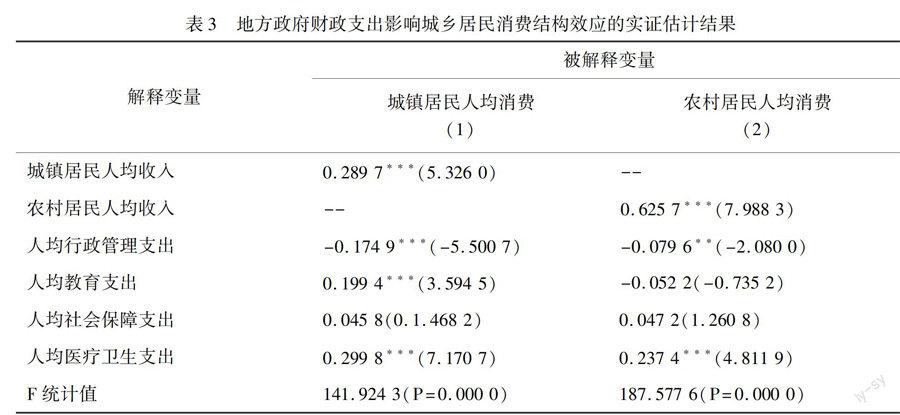

摘 要:从理论上说,地方政府财政支出对居民消费的影响效应有“挤入”与“挤出”之争。运用安徽省16个地级市面板数据,从总量和结构效应两个维度来实证分析地方政府财政支出对城乡居民消费的影响。结果表明:从总量效应看,地方政府财政支出对城乡居民消费均具有“挤入”效应,且对城镇居民消费的挤入效果更明显。从结构效应看,地方政府行政管理支出对城乡居民消费均具有“挤出”效应;医疗卫生支出对城乡居民消费均具有“挤入”效应;教育支出对城镇居民消费具有“挤入”效应,但是对农村居民消费的影响却不明显;社会保障支出对城乡居民消费的影响均不明显。
关键词:地方政府;财政支出;居民消费;影响效应
中图分类号:F812.7
文献标识码:A 文章编号:1672-1101(2015)04-0041-06
Abstract:In theory, the effect of fiscal expenditure impact on residents' consumption can be divided into two aspects: "crowding-in-effect" or "crowding-out-effect". Using the panel data of 16 cities from Anhui province, this paper analyses the influence of local government fiscal expenditure to consumption of urban and rural residents from the two dimensions of the total and structure effects. The results shows: from the total effect, local government fiscal expenditure has "crowd-in-effect" on the consumption of urban and rural residents, and the consumption of urban residents 'crowding-in-effect' is more obvious than that of the rural residents. From the structure effect, the administrative expenditure of local government has "crowding-out-effect" on the consumption of urban and rural residents; the health expenditure has "crowding-in-effect" on the consumption of urban and rural residents; education expenditure has "crowding-in-effect" on consumption of urban residents, but the impact on rural residents' consumption is not obvious; the effects of social security expenditure on bot the urban and rural residents' consumption are not obvious.
Key words:local government; fiscal expenditure; residents' consumption; effect
一、文献综述
近年来,内需已成为我国经济增长新的拉动力。为扩大内需、刺激居民消费,政府实施了积极的财政政策、增加财政支出,特别是民生方面的支出。在2014年底召开的中央经济工作会议上,政府又提出“继续实施积极的财政政策”,以此来释放消费潜力,从而“增强内需对经济增长的拉动力、使消费继续在推动经济发展中发挥基础作用”。财政支出与居民消费之间的关系,从影响方向上可以分为两类:一是财政支出促进了居民消费,即财政支出对居民消费具有挤入效应:二是财政支出抑制了居民消费,即财政支出对居民消费具有挤出效应。关于财政支出影响居民消费的效应,国内外学者进行了大量研究,但仍未得出一致的结论。……
