粗大柱状晶纯镍热变形流变应力行为及加工图
2015-07-20滕杰等
滕杰等

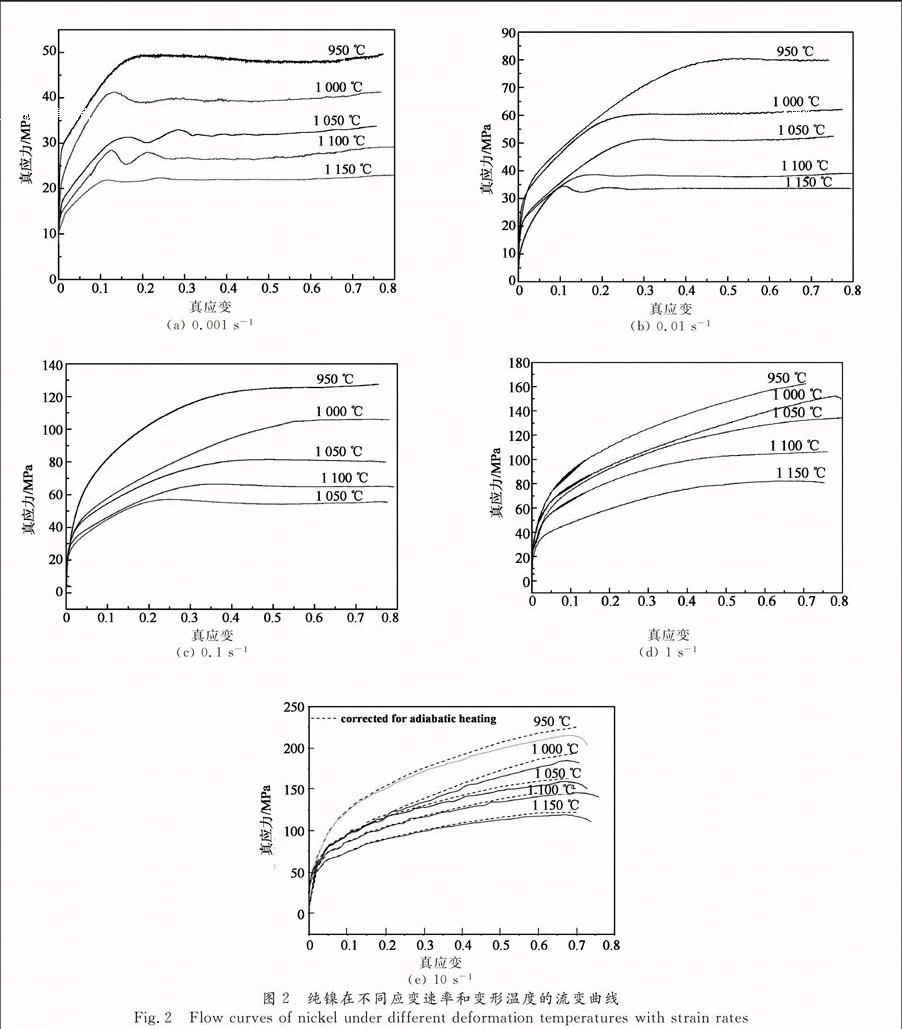
摘要:采用Gleeble3500热模拟机,在变形温度为950~1 150 ℃、应变速率为0.001~10 s-1的条件下,研究了粗大柱状晶粒纯镍的热变形行为和加工图.结果表明:热压缩过程中流变应力随应变速率增大而增大,随变形温度降低而增大.流变应力与应变速率、变形温度之间的关系用ZenerHollomon参数来描述,热变形激活能为312.4 kJ/mol.基于动态材料模型(DMM)热加工图及结合合金相显微组织分析,得到纯镍较优的热加工参数:变形温度为1 060~1 120 ℃,应变速率为0.03~0.20 s-1的蛋形区域.
关键词:本构方程;纯镍;热压缩;流变应力;加工图
中图分类号:TG301 文献标识码:A
Abstract: The hot deformation behavior of pure nickel with coarse, columnar grains at the temperature range of 950~1 150 ℃and the strain rate range of 0.001~10-1 was investigated in the Gleeble3500 system. The results showed that flow stress increased with the increase of strain rate and decreased with the increase of temperature. The relationship between flow stress and strain rate and temperature was represented by the ZenerHollomon parameter and the apparent activation energy of 312.4 kJ/mol. The optimum processing parameters were obtained by using processing maps based on the dynamic material model and microstructural observation at the deformation temperature of 1 060~1 120 ℃and the strain rate of 0.03~0.2 s-1.
Key words:constitutive equation; pure nickel; hot compression; flow stress; processing map
流变应力是表征合金在热变形过程中材料塑性变形性能的一个最基本参数,研究热变形过程中的流变应力对制定合理的热加工工艺具有重要的作用.通常,动态回复和动态再结晶是热变形过程中主要的软化机制.然而,层错能较低或中等的金属材料,如镍、铜和铅由于容易发生DRX现象,不容易发生动态回复过程.流变曲线在临界应变时发生动态再结晶过程就会出现单一峰值或多个峰值的特征[1].到目前为止,通过热拉伸、疲劳、扭转和压缩实验研究了锻造、挤压或轧制细晶粒纯镍,却未看到通过等温热压缩实验研究粗大柱状晶的工业铸态纯镍流变应力行为的报道[2-6].
金属热加工成形的产品质量主要取决于生产过程中选择的变形方式和变形量等,合理选择材料的工艺参数就显得非常重要.热加工图是由基于动态材料模型(DMM)的功率耗散图和失稳……