碱激发钢渣矿渣胶凝材料凝结硬化性能研究
2015-07-20彭小芹等
彭小芹等
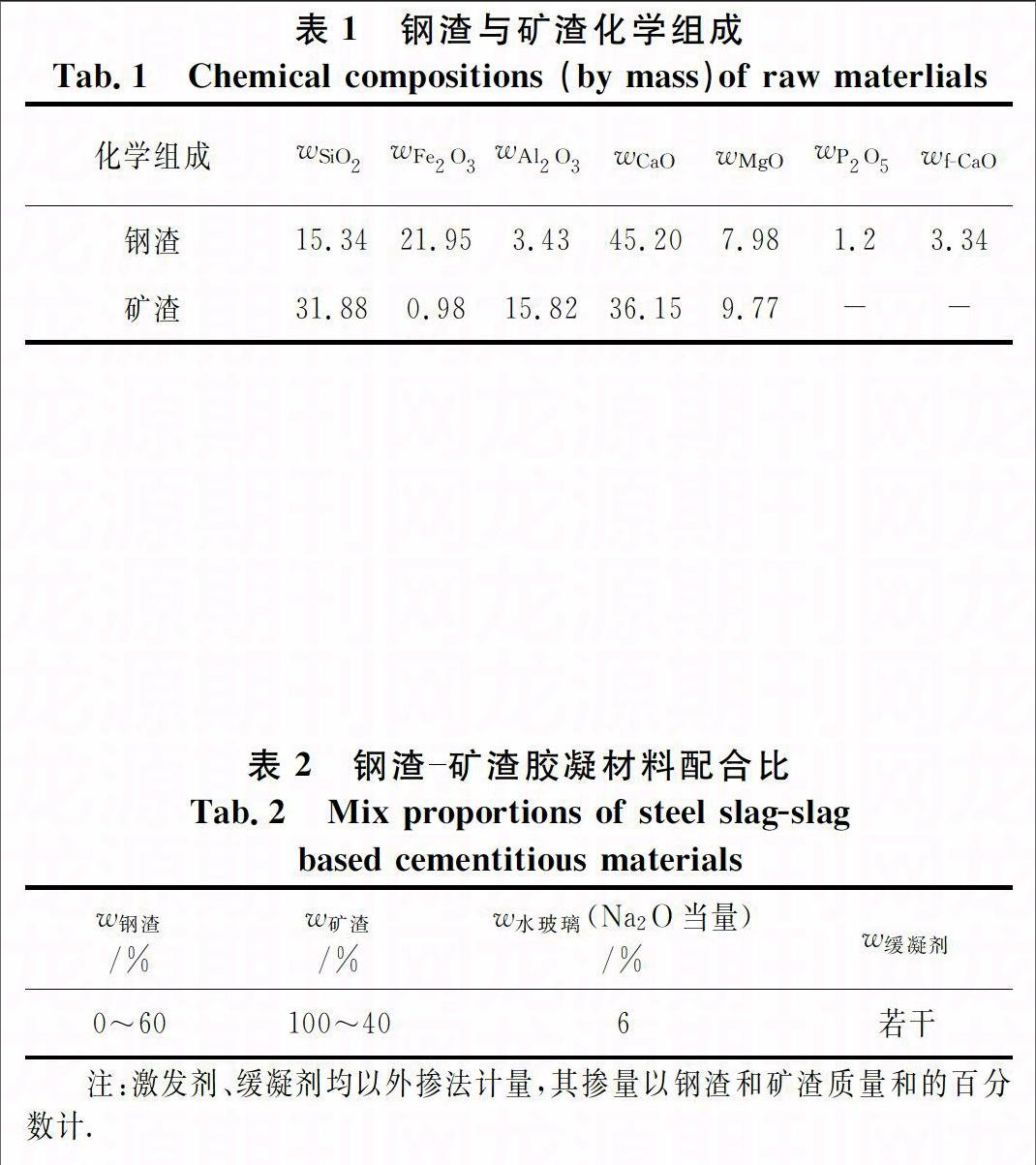

摘要:通过对胶凝材料强度、水化热的测定和对水化产物种类及表观形貌的分析,探讨了缓凝剂和钢渣掺量对碱激发钢渣矿渣胶凝材料性能的影响,并对其水化特性进行了研究.结果表明:钢渣掺量为40%、矿渣掺量为60%时,外掺6%水玻璃激发剂和1%的K缓凝剂,所制得的胶凝材料的凝结时间和强度可以达到42.5 R普通硅酸盐水泥的技术要求;碱激发钢渣矿渣胶凝材料的放热特性与碱激发矿渣胶凝材料类似,具有放热量小的特点;钢渣与矿渣组合有利于胶凝体系水化进程的发展,两者具有相互促进的作用.
关键词:性能;钢渣矿渣;胶凝材料;碱激发;水化产物
中图分类号:TQ172.78 文献标识码:A
Abstract:The effect of retarders, the dosage of steel slag on the properties of alkaliactivated steel slagslag based cementitious materials and the hydration characteristics of complex binding material were studied by the determination of strength and hydration heat evolution as well as type of hydration products and micromorphology of hardened paste. The results show that the properties of the setting time and the strength of binding material, with a composition of steel slag of 40%, blast furnace slag of 60 %, alkali activator of 6% and retarder K of 1%, can match the standard of grade 42.5R ordinary Portland cement. The hydration heat release characteristics of alkaliactivated steel slagslag based cementitious materials are similar to alkaliactivated slag cement, and the accumulative heat is limited. Steel slag and slag have a positive interaction, and the combination is beneficial to the development of the hydration process of the system.
Key words:properties; steel slagslag; cementitious materials; alkali activated; hydration products
钢渣是炼钢时所产生的废渣,其产量约占粗钢产量的12%~15%.近年来,随着钢铁工业的发展,钢渣产量迅猛增长,2012年我国钢渣产量约为1亿t,但综合利用率只有10%左右[1],且多为低附加值的应用,如填埋、作路基等,大量钢渣被闲置堆积起来,对环境造成影响.
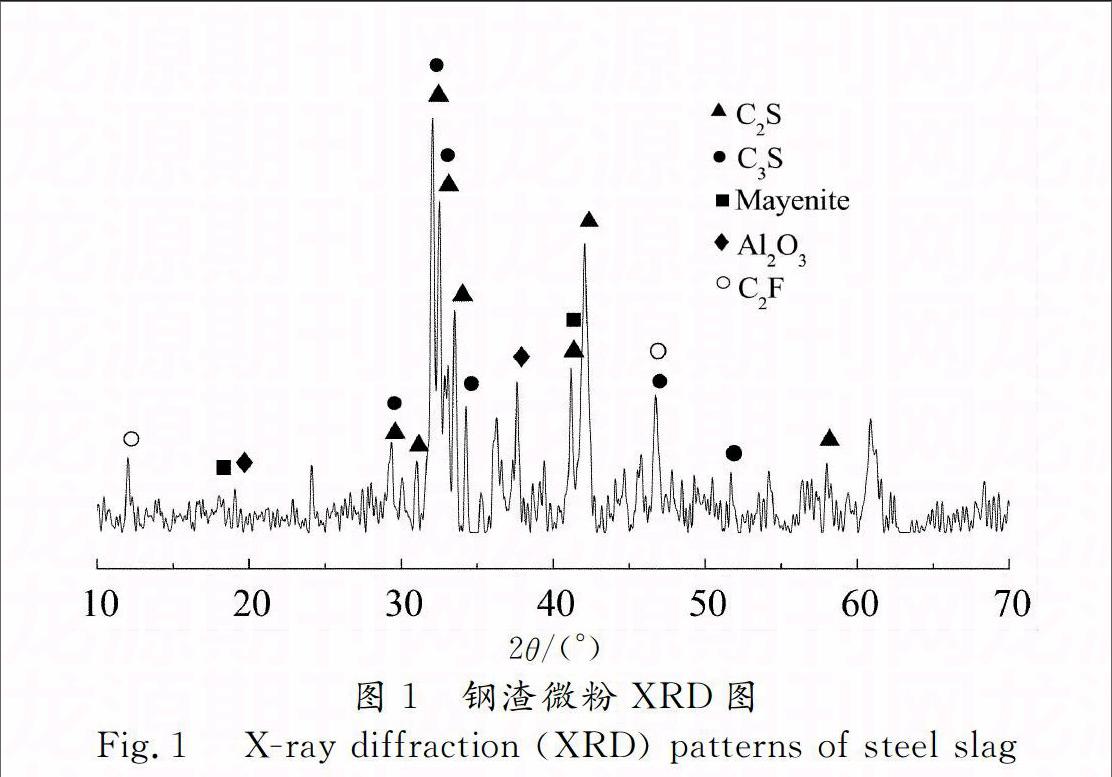
我国排放的钢渣大多为转炉钢渣,其化学和矿物组成都与水泥熟料相近,含有较多的C2S(硅酸二钙)和C3S(硅酸三钙).但钢渣的形成温度(1 650 ℃)较高,且多为自然冷却,常温活性很低,因此,被称为“过烧的水泥熟料”,具有潜在的胶凝活性[2].目前,多采用物理激发,化学激发等方法来激发钢渣活性,但是钢渣的化学成分波动较大,水化活性低,还可能产生安定性不良等问题[3-4],这些都限制了钢渣的实际应用.
研究发现钢渣与矿渣组合后……