脑出血患者术后早期吞咽障碍筛查和康复护理探析
2014-06-11吴雪华
吴雪华
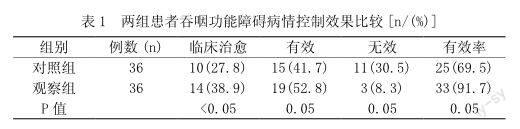
【摘 要】目的:对应用综合康复护理模式对手术治疗后早期出现吞咽功能障碍的脑出血疾病患者实施护理的临床效果进行研究。方法: 将我院收治的72例手术治疗后筛选出的早期出现吞咽功能障碍的脑出血疾病患者随机分为对照组和观察组,平均每组36例。采用常规脑出血围术期护理模式对对照组患者实施护理;采用综合康复护理模式对观察组患者实施护理。结果:观察组患者吞咽功能障碍病情控制效果明显优于对照组;脑出血护理服务满意度明显高于对照组;吞咽功能复常时间和脑出血疾病治疗计划实施总时间明显短于对照组。结论:应用综合康复护理模式对手术治疗后早期出现吞咽功能障碍的脑出血疾病患者实施护理的临床效果非常明显。
【关键词】综合康复护理;术后;早期;吞咽功能障碍;脑出血
Patients with cerebral hemorrhage after early dysphagia screening and rehabilitation nursing care of
Wu Xuehua
Department of rehabilitation medicine of Shangqiu First Peoples Hospital and Henan Shangqiu 476100
[Abstract] Objective: To study the clinical effect of comprehensive rehabilitationcare on the disease occurs in patients with early operation treatment ofswallowing dysfunction after cerebral hemorrhage. Methods: 72 cases ofoperation treatment in our hospital were screened in the early stage ofdysphagia in cerebral hemorrhage patients were randomly divided into controlgroup and observation group, each an average of 36 cases. The controlgroup on nursing in perioperative nursing mode of conventional cerebralhemorrhage; by comprehensive rehabilitation care to the patients in the observation group. Results: Patients with swallowing dysfunction disease control effect is better than that of the control group was significantly higher than that in control group; the nursing service satisfaction of cerebral hemorrhage; swallowing function recovery time and the cerebral hemorrhagedisease treatment plan to implement the total time was shorter than the control group. Conclusion: The clinical effect of comprehensive rehabilitation care on the disease occurs in patients with early operation treatment of swallowing dysfunction after cerebral hemorrhage is very obvious.
[key words]comprehensive rehabilitation nursing; early postoperative;dysphagia; cerebral hemorrhage
对脑出血疾病患者术后吞咽功能在早期阶段进行评估,及早发现吞咽出现的相应障碍并实施相应康复护理干预,使并发症率降低,改善疾病预后,显得尤为重要[ 1 ]。本次研究对手术治疗后早期出现吞咽功能障碍的脑出血疾病患者实施综合康复护理的效果进行研究。现汇报如下。
1 资料和方法
1.1 一般资料
选择2011年12月至2013年12月我院收治的72例手术治疗后筛选出的早期出现吞咽功能障碍的脑出血疾病患者,随机分为对照组和观察组,平均每组36例。对照组中男性22例,女性14例;患者年龄26~82岁,平均年龄(51.4±0.9)岁;脑出血发病时间1~17小时,平均发病时间(6.6±0.8)小时;……