我国高等教育质量的地区差异与收敛性研究
2023-10-21韩晶晶贾梨淙
韩晶晶 贾梨淙
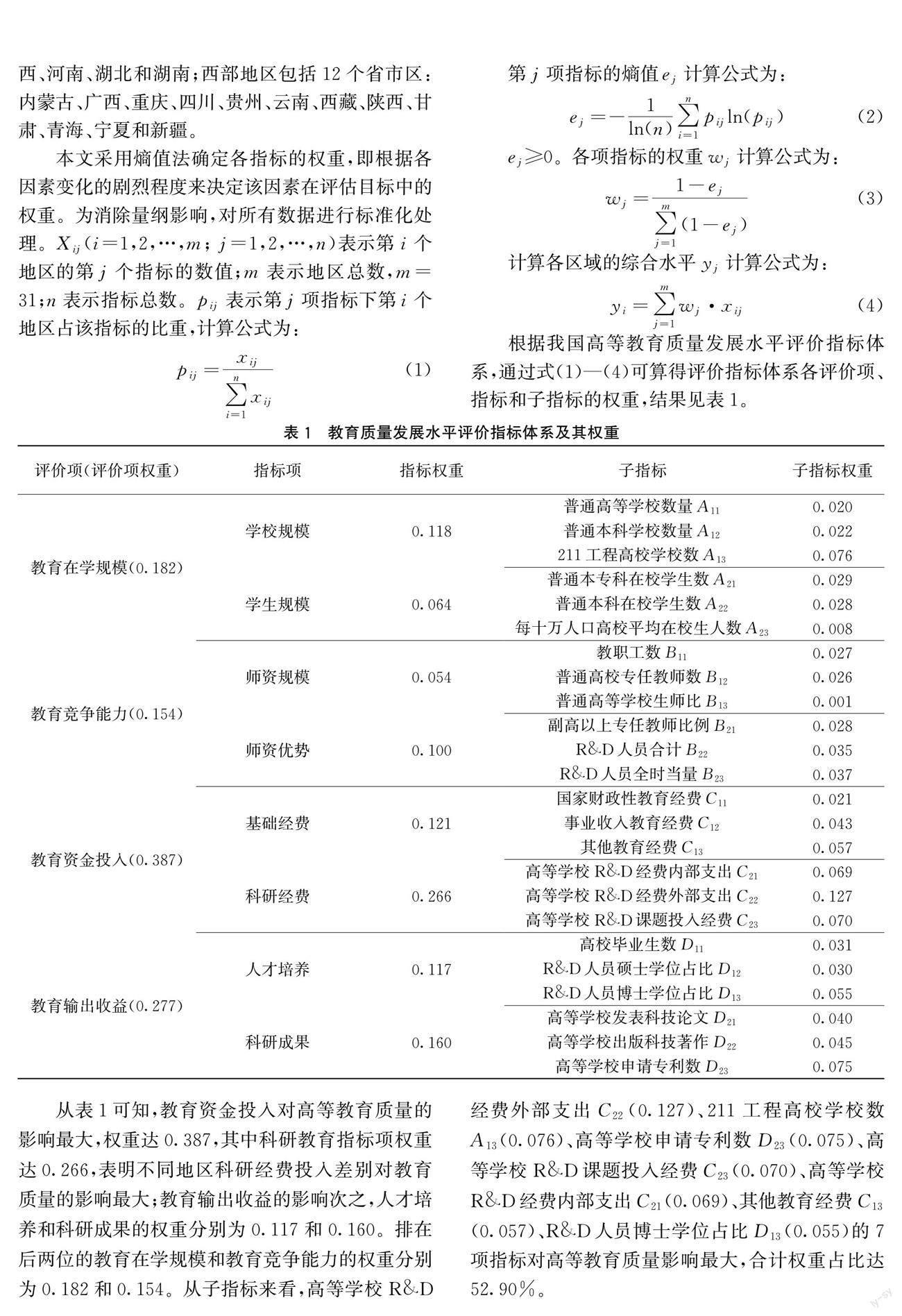
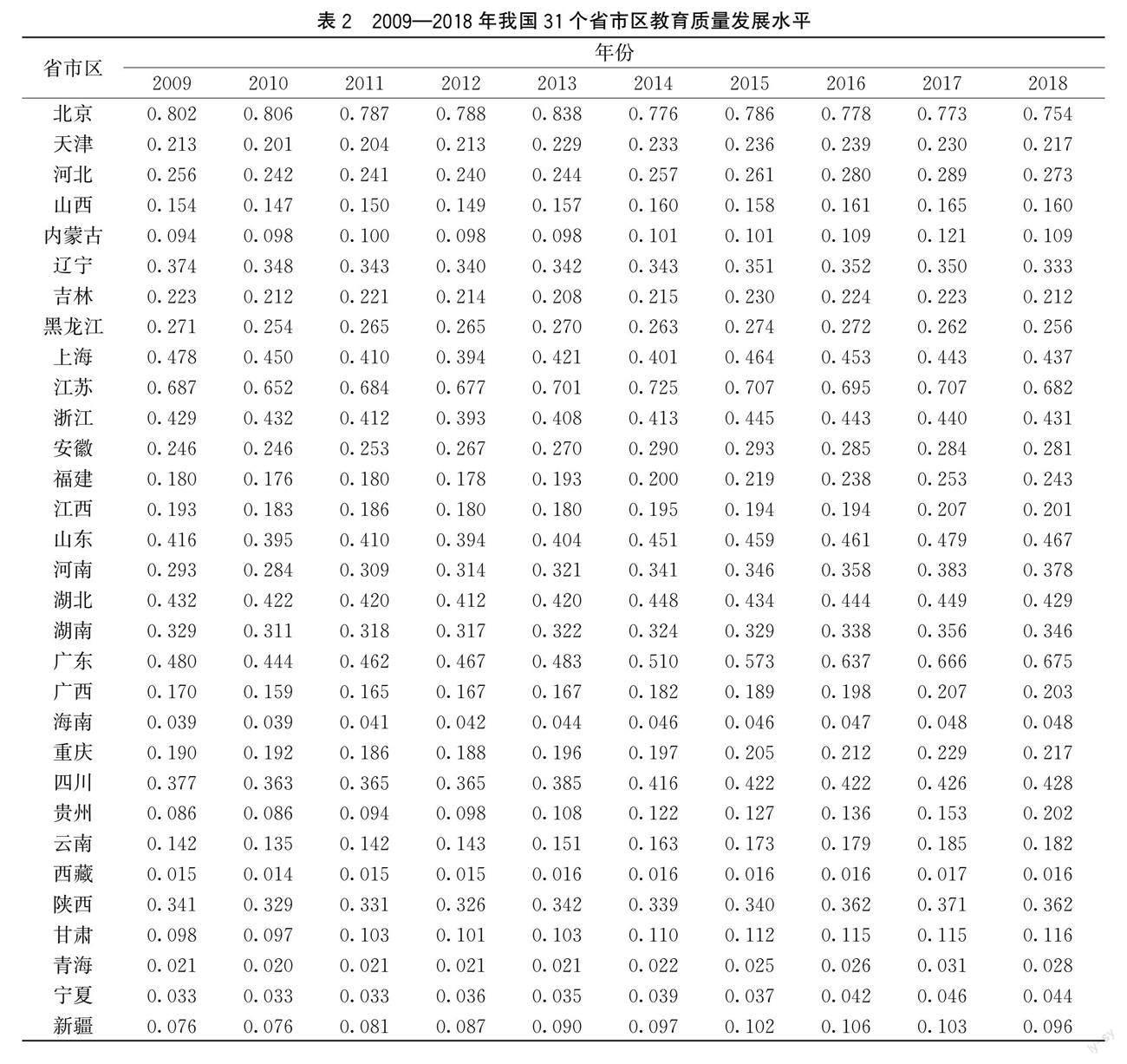
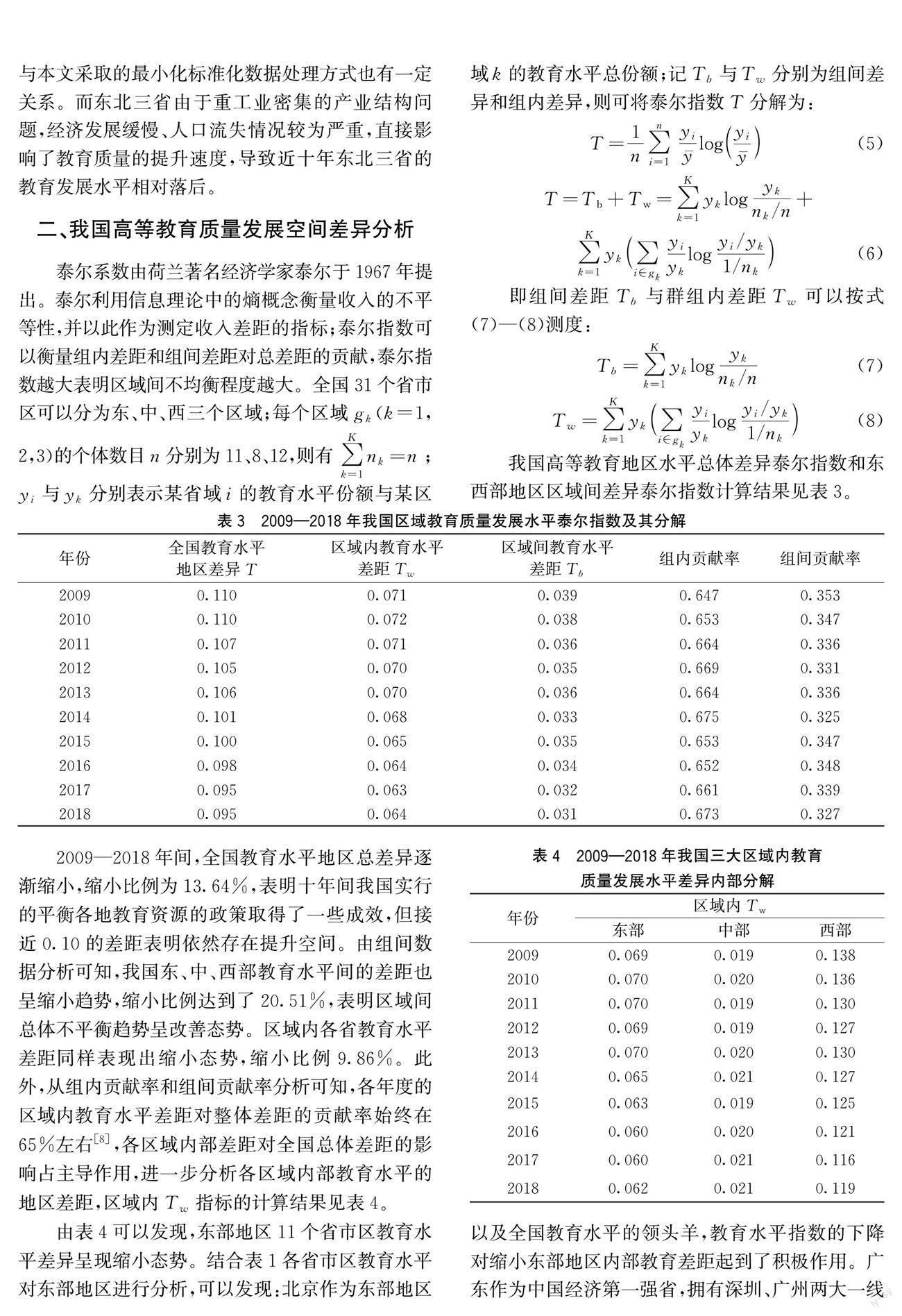
摘 要: 基于高等教育在學规模、教育竞争能力、教育资金投入、教育输出效益四个模块构建教育发展评价体系,利用2009—2018年数据对中国31个省市区的教育发展质量进行综合测度和评价。利用泰尔指数,对全国和三大区域的教育质量进行测算和分解;并借助收敛模型,对教育质量的地区差异和空间格局进行了收敛性检验和分析。研究发现:中国教育水平存在显著的区域差异,区域间和区域内均呈非均衡状态,教育水平差异在全国整体水平和三大区域间呈缩小态势。从区域内层面看,东部、西部教育水平地区差异在缩小,西部地区教育质量改善情况最为明显,东部地区落后省份追赶效应最强;中部地区教育质量差异改善不大,不存在σ收敛和β收敛,内部泰尔指数也呈波动态势。因此,为推进高质量高等教育发展,应在省域经济发展不均衡、高等教育办学差异的基础上,结合省域产业需求,加强省域高等教育应用型人才培养;结合区域产业优势,推进省域高等教育特色化人才培养;结合新兴产业发展,推进区域高等教育联合化人才培养;结合科技创新需求,加强区域高等教育创新型人才培养,构建特色化分类高等教育发展模式。
关键词: 高等教育;教育质量;泰尔指数;收敛分析;地区差异
中图分类号: G521
文献标志码: A
文章编号: 1673-3851 (2023) 06-0353-09
Regional differences and convergence research of higher education quality
development in China
HAN Jingjinga, JIA Licongb
(a.Organization Department of the CPC Committee; b.School of Fashion Design & Engineering,
Zhejiang Sci-Tech University, Hangzhou 310018, China)
Abstract: This article constructs an education development quality evaluation system from four modules: education scale, education competitiveness, capital investment, and output benefits, and comprehensively measures and evaluates the quality of education development in 31 provinces, autonomous regions and municipalities in China using data from 2009 to 2018. The article further uses the Theil index to measure and decompose the regional differences in education quality across the country and the three major regions, and uses the convergence model to test and analyze the regional differences and spatial patterns in education quality. It is found that there are obvious regional differences in China′s education levels, and there is an imbalance within and between the regions. The difference is shrinking between the overall education level of the country and that of the three major regions. From an intra-regional perspective, the difference in education levels between the eastern and western regions is shrinking, the improvement in western region is the most obvious, while the backward provinces in eastern region have the strongest catch-up effect. The difference in central region has not improved much, there is no σ convergence or β convergence, and the internal Theil index also shows a volatile trend. Therefore, based on the unbalanced development of provincial economy and the differences of recent higher education, we should combine the needs of provincial industries to strengthen the cultivation of application-oriented talents; we should combine the regional industrial advantages to advance the training of featured talents; we should combine the development of emerging industries to promote the training of talents about integration; and we should combine the demand for scientific and technological innovation to boost innovative talents training and build a development model of characterized and classified higher education.
Key words: higher education; education quality; Theil index; convergence analysis; region difference
随着经济建设和科学技术的快速发展,我国高等教育水平得到了极大提高。作为世界高等教育第一大国,2021年我国各类高等教育在学总规模达4430万人,毛入学率达57.8%[1],高等教育迈入普及化阶段。……