对比床旁盲插鼻肠管与库派鼻空肠管在重症脑出血患者中的应用分析
2022-07-13吕志露梁向明李淑英林玉珍
吕志露 梁向明 李淑英 林玉珍
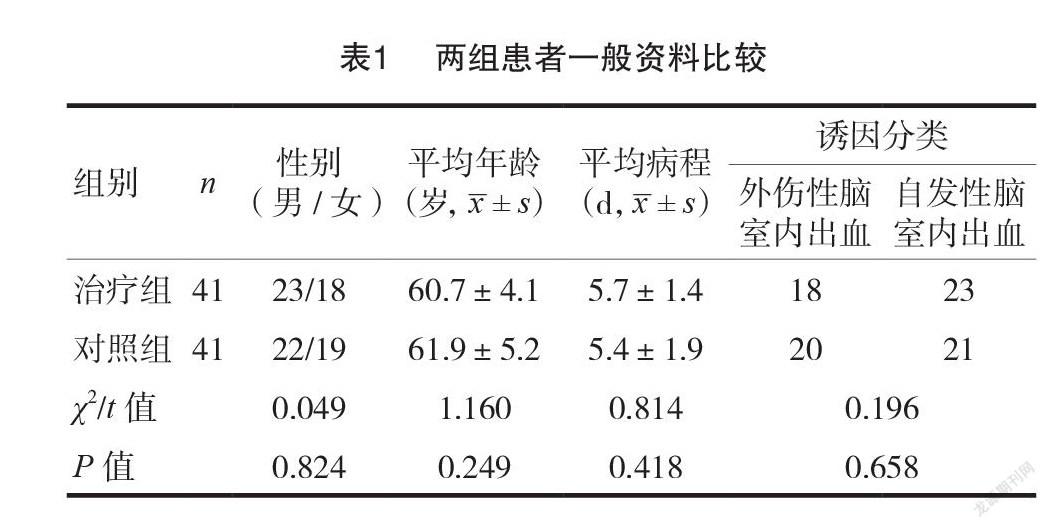
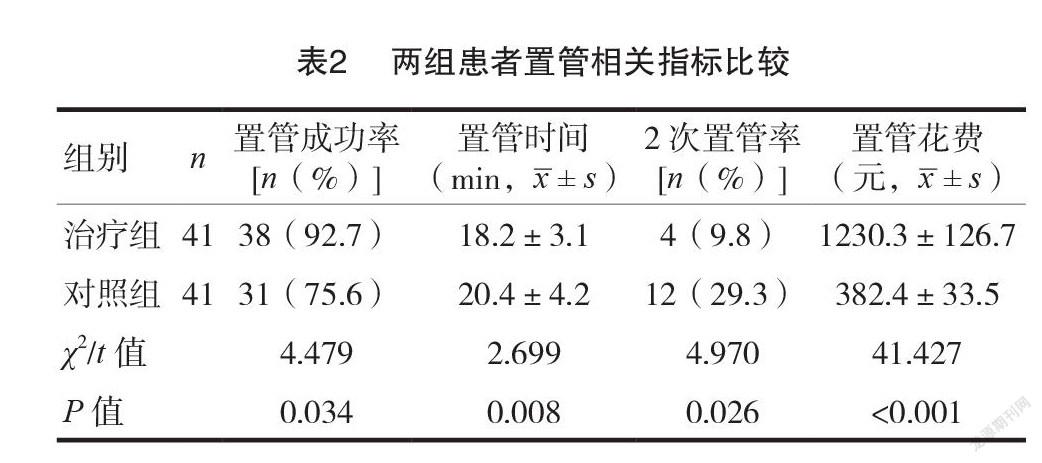
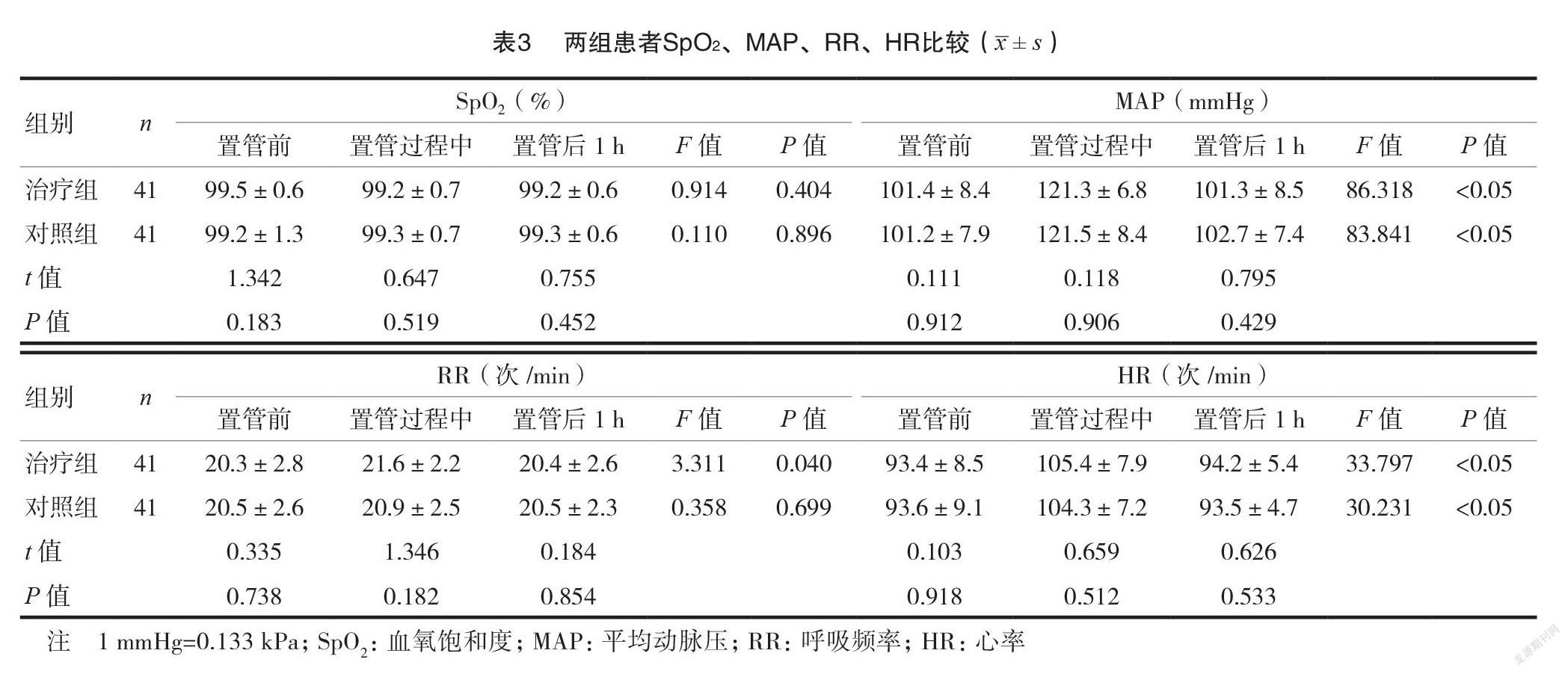
[摘要]目的對比床旁盲插鼻肠管与库派(CORPAK)鼻空肠管在重症脑出血患者中的应用效果。方法选取2020年4月至2021年4月于茂名市人民医院接受治疗的82例脑出血患者为研究对象,将其随机分为治疗组( n=41)和对照组( n=41),对照组实施床旁盲插鼻肠管进行肠内营养支持治疗,治疗组实施 CORPAK 鼻空肠管进行营养支持,比较两组置管成功率、置管时间、2次置管率、置管并发症、置管花费以及置管前、置管过程中、置管结束后1 h 的指端血氧饱和度(SpO2)、平均动脉压(MAP)、呼吸频率(RR)、心率(HR)及心律的变化情况。结果治疗组置管成功率高于对照组,置管时间短于对照组,2次置管率低于对照组,置管花费高于对照组,差异有统计学意义( P <0.05);两组患者均未出现操作相关性穿孔、出血等情况,并发症发生率均较低,极少量因黏膜充血水肿损伤而出现渗血,经对症处理得以缓解;置管过程中两组均出现 MAP 增高、HR 加快,置管结束后1 h 患者 HR、MAP 均恢复至置管前水平;置管过程中患者指端 SpO2以及 RR 均无明显变化,未出现新发心律失常。结论 CORPAK 鼻肠管营养支持方法用于重症脑出血患者,其临床效果更好,但因其所需费用较高,故临床推广会受到一定的限制,而床旁盲插置入鼻肠管方法相对经济,但置管成功率较低。
[关键词]床旁盲插鼻肠管; CORPAK 鼻肠管;重症脑出血;置管成功率
[中图分类号] R473.74 [文献标识码] A [文章编号]2095-0616(2022)09-0180-04
Comparison on the application effect of bedside blind insertion of nasogastric tube and CORPAK nasojejunal tube in patients with severe cerebral hemorrhage
LV Zhilu LIANG Xiangming LI Shuying LIN Yuzhen
Department Ⅱ of Neurosurgery, Maoming People's Hospital, Guangdong, Maoming 525000, China
[Abstract] Objective To compare the clinical effect of bedside blind intubation nasoenteric tube and Kupainasojejunal tube (CORPAK) in patients with severe cerebral hemorrhage. Methods A total of 82 patients with cerebral hemorrhage who received treatment in Maoming People's Hospital from April 2020 to April 2020 were selected as the research objects, and they were randomly divided into the treatment group (n=41) and the control group (n=41). The control group underwent bedside blind nose insertion. Enteral nutrition support was given to the bowel tube, and the treatment group was given CORPAK nasoenteric tube for nutritional support. The success rate of catheterization, catheterization time, 2 times of catheterization rate, catheterization complications, catheterization cost, and pre-intubation, catheterization, and catheterization costs were compared between the two groups. Changes in fingertip blood oxygen saturation (SpO2), mean arterial pressure (MAP), respiratory rate (RR), heart rate (HR) and heart rhythm during the intubation process and 1 hour after intubation. Results The success rate of catheterization in the treatment group was higher than that in the control group, the catheterization time was shorter than that in the control group, the rate of twice catheterization was lower than that in the control group, and the cost of catheterization was higher than that in the control group,with statistically significant difference (P <0.05). Operation-related perforation, bleeding, etc. occurred, and the incidence of complications was relatively low. A very small amount of bleeding occurred due to mucosal congestion and edema injury, which was relieved by symptomatic treatment. During the catheter placement process, both groups experienced increased MAP and increased HR. The HR and MAP of the patients returned to the pre-intubation levels 1 hour after the intubation. During the intubation process, the SpO2 and RR of the patient's fingertips did not change significantly, and no new arrhythmias occurred. Conclusion The CORPAKnasoenteric tube nutritional support method for patients with severe cerebral hemorrhage has better clinical effect, but because of the high cost, the clinical promotion will be limited to a certain extent, and the blind insertion of the nasoenteric tube at the bedside is relatively economical, but the success rate of intubation is low.
[Key words] Bedside blind insertion of nasogastric tube; CORPAK nasojejunal tube; Severe cerebral hemorrhage; Success rate of tube placement
腦出血会造成运动障碍、吞咽功能障碍以及认知障碍等,甚至死亡[1]。临床治疗过程中,常用的营养支持手段是留置鼻胃管,但可能会导致患者出现反流、胃潴留、误吸等现象,并可引发吸入性肺炎,继而延长住院时间,增加患者的经济负担[2]。……