基于资源分配的推荐算法研究
2021-11-03迟露阳
DOI:10.19850/j.cnki.2096-4706.2021.08.036
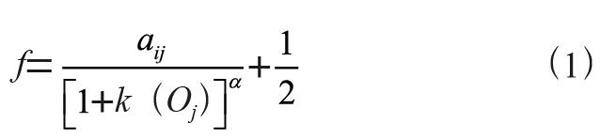
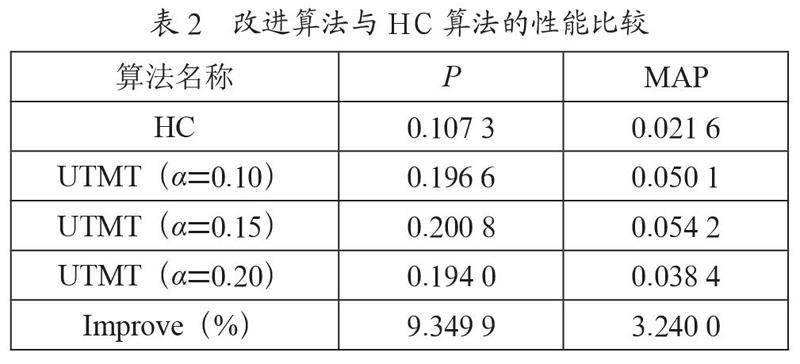
摘 要:针对马太效应中过度流行性偏见问题,通过定义新的节点权重来初始化项目资源值,达到降低项目流行性的目的;进一步考虑用户可信度因素,结合统计学中的3σ原则,根据数据统计量筛选出系统中存在的异常用户或欺诈用户。在此基础上给出一个新的推荐算法(UTMT)。在数据集MovieLens_100K上对算法进行试验,并与资源分配中的热传导算法作比较,结果表明,构建的UTMT推荐算法预测结果的准确率较之热传导算法有较大的提升。
关键词:二分图;马太效应;用户可信度;资源分配;推荐算法
中图分类号:TP391.3 文献标识码:A 文章编号:2096-4706(2021)08-0127-03
Research on Recommendation Algorithm Based on Resource Allocation
CHI Luyang
(College of Sciences,Northeastern University,Shenyang 110004,China)
Abstract:Aiming at the problem of excessive popularity bias in Matthew effect,a new node weight is defined to initialize the project resource value,so as to achieve the aim of reducing the project popularity. Further considering the user credibility factor and combining with the 3σ principle of statistics,the abnormal users or fraudulent users existing in the system are filtered out according to the data statistics. On this basis,a new recommendation algorithm(UTMT)is proposed. Test the algorithm on the dataset MovieLens_100k and make a comparison with heat conduction algorithm in resource allocation. The final results show that the constructed recommendation algorithm UTMT has a big improvement in the accuracy rate of predict outcomes than that of the heat conduction algorithm.
Keywords:bipartite graph;Matthew effect;user credibility;resource allocation;recommendation algorithm
0 引 言
隨着互联网的飞速发展,网络中爆发式增长的资源虽然能满足人们的各项需求,但却突破了人们可以有效利用的范围,严重导致了信息过载问题。这在一定程度上凸显了采用个性化推荐系统的关键性和重要性。近年来,将复杂网络与推荐系统相结合的思想也应运而生。一些研究将网络中节点链接关系预测方法应用到推荐系统中。Zhu等人[1]通过分析共同邻居节点来预测推荐效果。Zhang等人[2]运用似然分析法评估节点之间推荐的可能性。
基于二分图的推荐算法[3]可视为一个资源分配的过程,科研人员经常采用单模映射的方法压缩二分图来展示其中复杂的节点关系。通常,最原始的方法是把二分图映射到一个无权图上[4],如果一个图上只有A节点,那么这就是A的单模映射结果。若映射结果中两个节点存在一条无向边,那么说明两个节点至少有一个共同邻居。……