基于内聚力界面的钨合金两相细观结构拉伸模拟
2021-10-31杨梓清
杨梓清

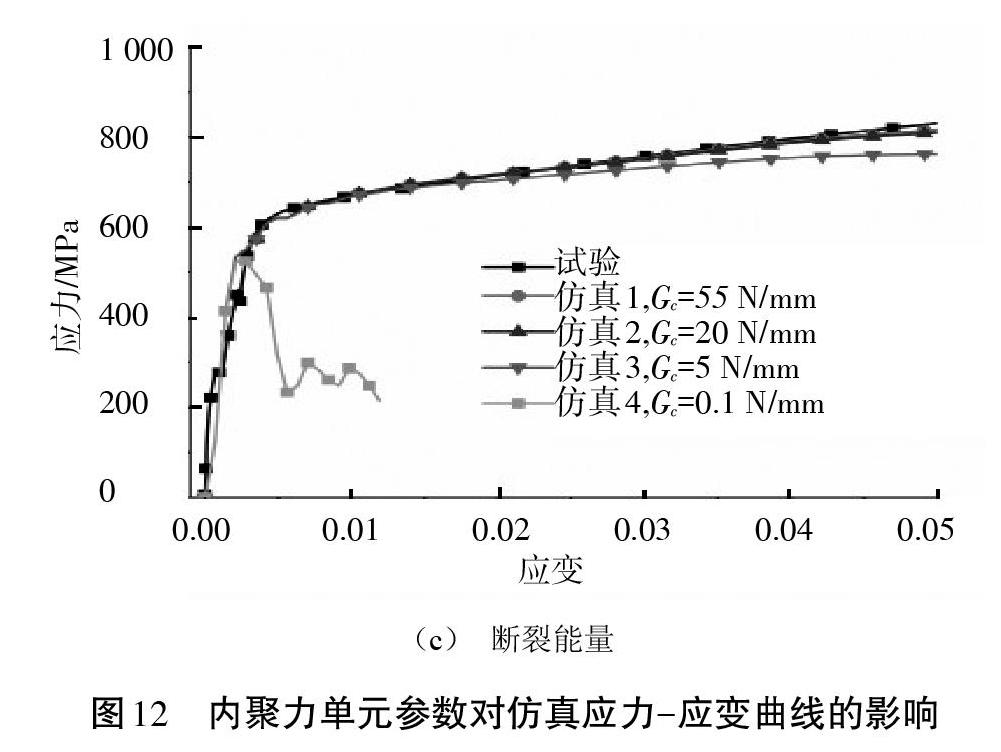
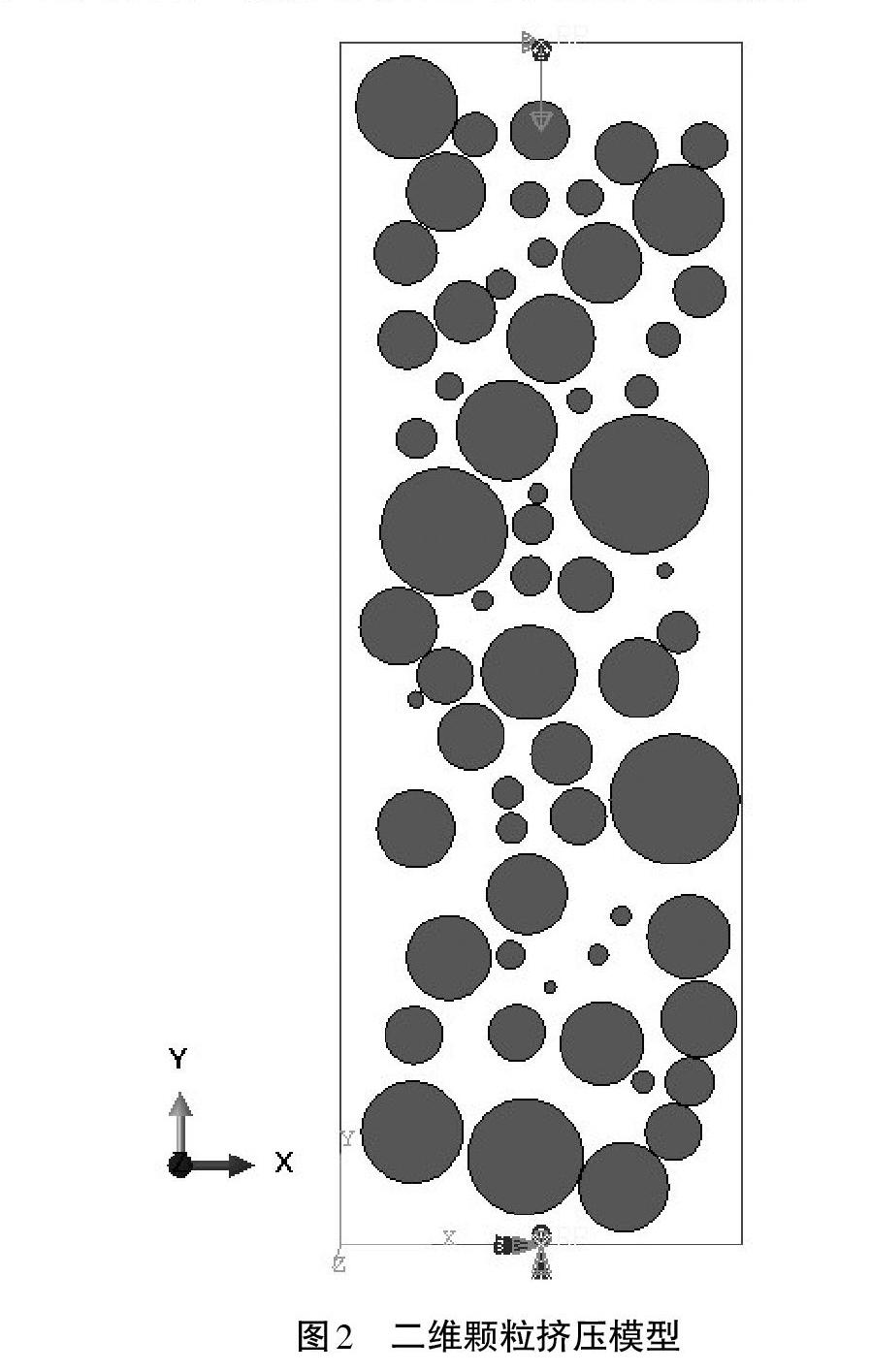
摘 要:在钨合金粉末冶金制备工艺的基础上,本研究建立了一种基于颗粒挤压方法的钨合金两相结构模型。首先在光学显微镜下观察了钨合金的微观组织结构,并统计了其颗粒分布特征,随后利用随机顺序吸附算法生成符合实际分布的颗粒初始构型,然后利用Python脚本程序在ABAQUS软件中建立颗粒挤压模型,以提高颗粒的体积分数。当模型模拟出的颗粒体积分数达到钨合金中鎢颗粒真实的体积分数时,提取颗粒边界轮廓,并运用布尔运算生成粘结相。最后通过Python脚本程序在颗粒界面生成内聚力单元,结合有限元方法,将上述模型运用于钨合金的拉伸模拟,确定了内聚力单元的参数,并与试验结果进行了对比验证,讨论了内聚力参数对拉伸应力-应变曲线的影响。
关键词:钨合金;细观结构;挤压模型;内聚力单元;有限元法;拉伸仿真
中图分类号:TB33;TB302.3文献标识码:A 文章编号:1003-5168(2021)15-0014-06
Abstract: Based on the powder metallurgy preparation process of tungsten alloy, this study establishes a dual-phase structure model of tungsten alloy based on particle extrusion method. First, the microstructure of the tungsten alloy is observed under an optical microscope, and its particle distribution characteristics are counted, subsequently, the random sequential adsorption algorithm is used to generate the initial configuration of the particles in line with the actual distribution, and then the particle extrusion model is established in the ABAQUS software using the Python script program to increase the volume fraction of the particles. When the particle volume fraction simulated by the model reaches the true volume fraction of tungsten particles in the tungsten alloy, the boundary contours of the particles are extracted and the Boolean operation is used to generate the binder phase. Finally, a cohesive force unit is generated on the particle interface through a Python script program, combined with the finite element method, the above model is applied to the tensile simulation of tungsten alloy, the parameters of the cohesion unit are determined, the test results are compared and verified, and the influence of cohesion parameters on the tensile stress-strain curve is discussed.
Keywords: tungsten alloy;microstructure;extrusion model;cohesion element;finite element method;tensile simulation
材料的宏观力学特性往往会受到其微观结构特征的影响,特别是高比重钨合金这种拥有复杂微观结构的两相材料。已有研究表明,钨合金的力学性能受其微观结构特征的影响[1-3]。比如,钨合金的平均颗粒半径会影响钨合金的拉伸性能,平均颗粒尺寸越小,钨合金的屈服强度和抗拉强度越大,表现出细晶强化效应;钨合金内部钨颗粒分布不均匀,会导致其拉伸性能下降;钨合金的钨含量增加,粘结相体积相对减少,钨-钨连接度增加,从而导致其拉伸性能和冲击性能降低。……