基于DEA模型的京津冀农业水资源利用效率研究
2021-10-09李世玉刘笑冰
李世玉 刘笑冰


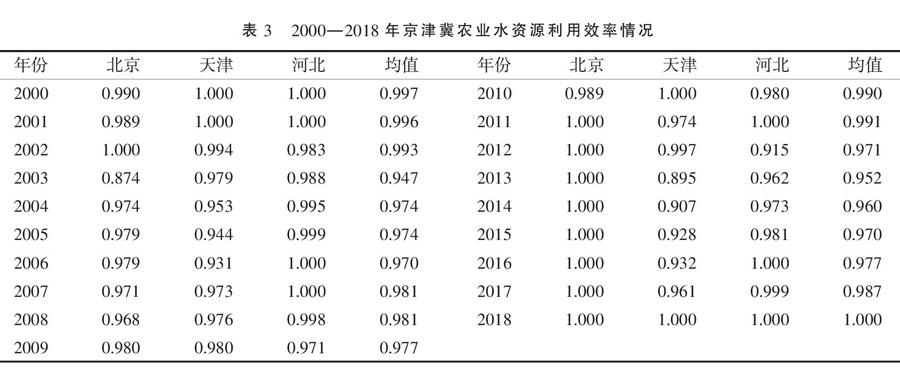
摘 要:为提高京津冀农业水资源利用效率,本文选取2000—2018年的面板数据,运用DEA-Malmquist指数模型对京津冀地区农业水资源利用效率进行了研究。结果表明:静态(DEA)分析中,2000—2018年京津冀地区农业水资源利用效率均值波动较小,呈“W”形,其综合利用效率处于相对有效状态,北京市与河北省资源配置最优;动态(Malmquist)分析中,京津冀农业水资源利用全要素生产率变化指数呈现波动式增长,技术进步变化是影响其变化的主要因素。鉴于此,笔者提出了加强节水技术创新、“调结构、转方式”,实行节水法制化与价格机制等建议,这将有助于缓解京津冀农业水资源紧缺状况并提高其利用效率。
关键词:农业水资源利用效率;DEA-Malmquist模型;京津冀地区
中图分类号:F323.213 文献标识码:A DOI 编码:10.3969/j.issn.1006-6500.2021.09.015
Study on Utilization Efficiency of Agricultural Water Resources in the Beijing-Tianjin-Hebei Region Based on DEA Model
LI Shiyu, LIU Xiaobing
(School of Economics and Management, Beijing University of Agriculture/Beijing New Countryside Construction Research Base, Beijing 102206)
Abstract: To improve the utilization efficiency of agricultural water resources in the Beijing-Tianjin-Hebei region, this paper selected panel data from 2000 to 2018 and usedDEA-Malmquist index model to study the utilization efficiency of agricultural water resources in the Beijing-Tianjin-Hebei region. Research showed that: in the static(DEA) analysis,the mean value fluctuation of agricultural water use efficiency in Beijing-Tianjin-Hebei region from 2000 to 2018 was small, showing a "W" shape. The comprehensive use efficiency was relatively effective, and Beijing and Hebei province had the best resource allocation.In the dynamic(Malmquist) analysis, it showed that the change index of total factor productivity of agricultural water resources utilization in Beijing-Tianjin-Hebei presented a fluctuating growth, and the change of technological progress was the main factor affecting its change. In view of the above results, the author put forward some suggestions, such as strengthening water-saving technology innovation, "adjusting structure and changing mode", and implementing water-saving legalization and price mechanism, which would help alleviate the shortage of agricultural water resources in Beijing-Tianjin-Hebei and promote its utilization efficiency.
Key words: efficiency of water use in agriculture;DEA and Malmquistmodel;the Beijing-Tianjin-Hebei region
·土壤肥料與节水灌溉
收稿日期:2021-07-06
作者简介:李世玉(1996—),女,贵州兴义人,在读硕士生,主要从事林业资源与环境经济方面研究。
通讯作者简介:刘笑冰(1981—),女,北京人,副教授,博士,主要从事农林资源与环境经济方面研究。
2021,27(9):69-74
近五年来,京津冀地区的供用水总量平均值为251.7亿m3,并且人均水资源量仅为全国人均水资源量的1/9,以北京市为例,每年约21亿m3的水资源要维持约36亿m3的需求,缺口达15亿m3左右[1]。据相关统计,该区域用水总量中农业用水占到65%,其中,河北省农业用水比例为70%,天津为50%,北京市占比相对较低。随着国民经济飞速发展,京津冀地区农业生产用水受到生活、生态用水需求的强力挤压,加之其农业水资源经营管理与利用方式较为粗放,资源型缺水已成为限制区域协同发展的首要瓶颈。……
