超高速磁浮车辆用减振系统设计探究
2021-09-10陈清化王玉辉
陈清化 王玉辉
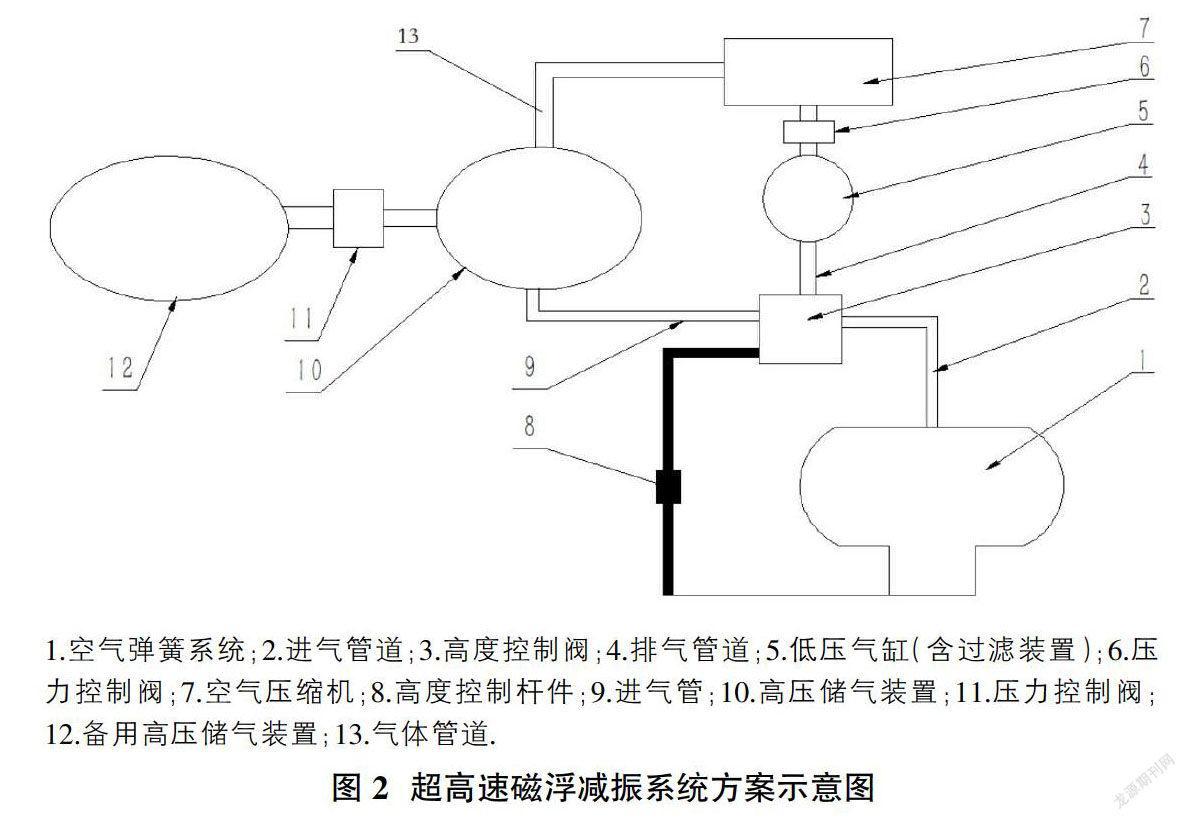
摘要:针对真空管道超高速磁浮车辆用空气弹簧需要外部空气参与循环的问题,提出了一种可用的减振系统设计方案,并对其工作原理及相关特性进行了阐述。创新减振系统方案可以实现空气在系统内部的循环使用,考虑了产品的可用性、可靠性以及可维护性,有利于提升磁浮车辆的运行稳定性及平顺性。此系统方案设计也可为其他类似系统产品结构的设计提供参考借鉴。
Abstract: Aiming at the problem that air springs for vacuum ducted ultra-high-speed maglev vehicles require external air to participate in the circulation, an available design scheme of vibration reduction system is proposed, and its working principle and related characteristics are described. The innovative damping system solution can realize the circulating use of air inside the system, taking into account the availability, reliability and maintainability of the product, and is conducive to improving the operational stability and smoothness of the maglev vehicle. This system scheme design can also provide reference for the design of other similar system product structures.
關键词:真空管道;高速磁浮;减振系统
Key words: vacuum pipeline;high-speed maglev;damping system
中图分类号:U260 文献标识码:A 文章编号:1674-957X(2021)12-0209-02
0 引言
当前,轨道交通车辆正在朝着更高速方向发展,而现有的轮轨交通车辆的试验速度还未超过600公里时速,这主要是受限于空气阻力的影响,车辆在更高速运行时需要克服的空气阻力也更大。为了实现更高速运行,轨道交通车辆的高速研究正朝着真空管道超高速磁浮方向努力。在世界范围内,1000公里时速、2000公里时速,甚至4000公里时速的真空管道超高速磁浮均在规划研究中。而要实现这些超高速磁浮的一个前提就是要减少外界的阻力干扰,目前普遍选用的在在真空管道中运行的方案,让车辆在完全密闭真空的环境中运行。对于高速运行的车辆而言,一个很小的波动都有可能引发较大的振动。现有的高速动车组中,为提高车辆的减振效果均是采用了低刚度的空气弹簧作为减振部件,该减振部件的使用需要压缩空气,并且会随机向外界排放空气,显然,此种使用方式将限制空气弹簧在真空管道超高速磁浮车辆中的使用。……