考虑不确定性的电动汽车动力电池逆向物流网络设计
2021-08-09刘娟娟郭炎可
刘娟娟 郭炎可
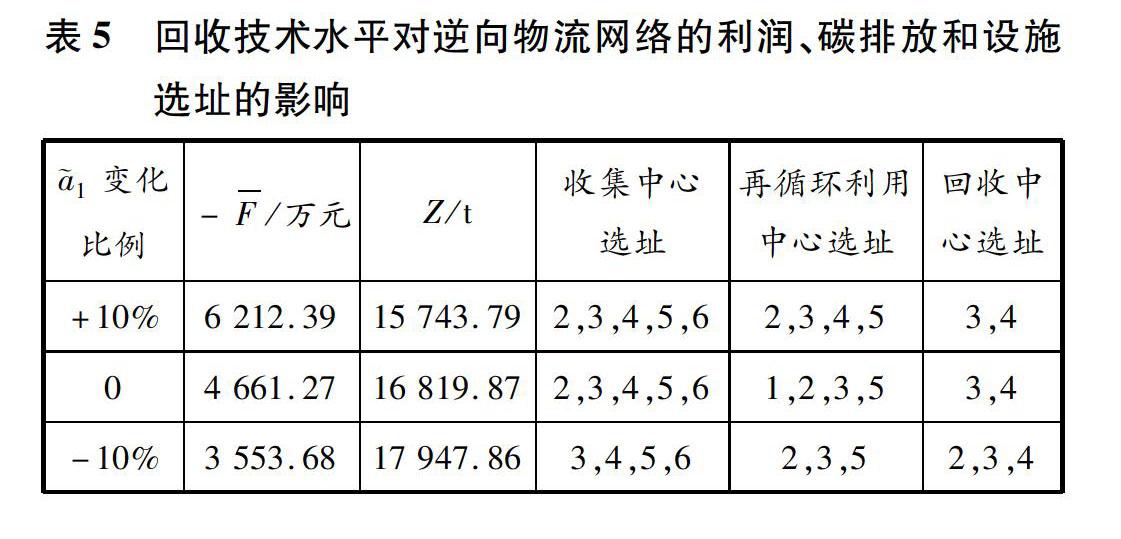
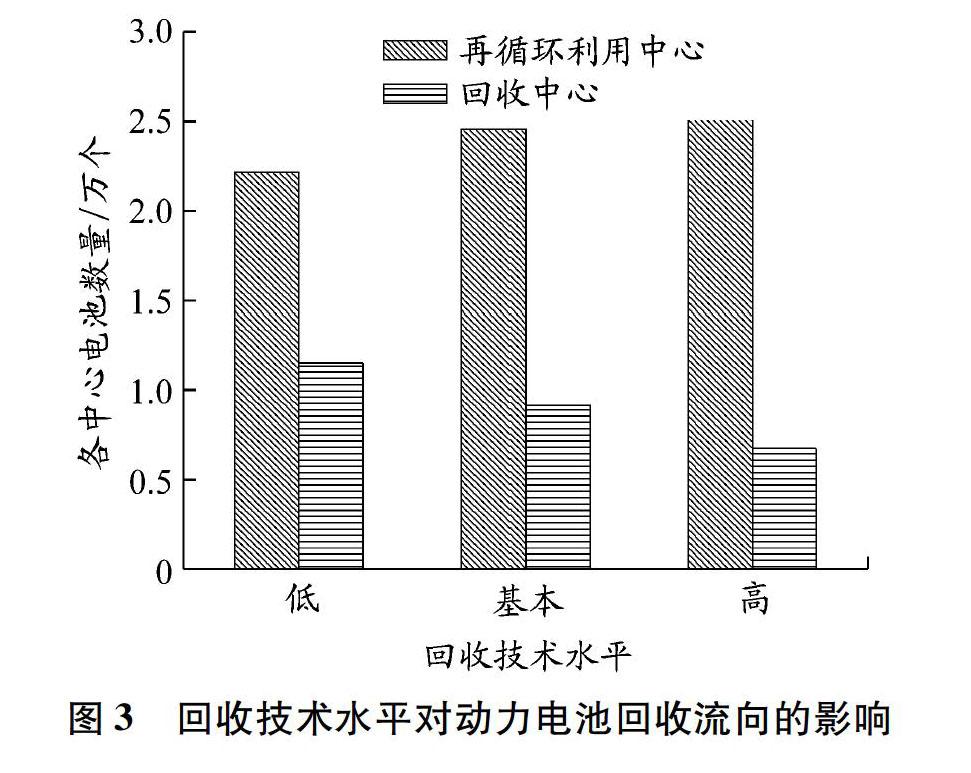
摘要:考虑到电动汽车动力电池回收量、回收技术水平等参数的不确定性,以逆向物流网络总利润最高和环境影响最小为目标,建立多目标模糊规划模型,进行电动汽车动力电池逆向物流网络设计。利用基于可信性测度的模糊求解方法处理模型中的模糊参数。引入决策者偏好系数,采用加权理想点法将多目标模型转化为单目标模型进行求解,得到考虑不确定性的逆向物流网络设施的选址、数量以及设施间的废旧动力电池流量分配方案。通过数值算例验证模型和算法的可行性和有效性。对回收量、回收技术水平和决策者偏好系数进行灵敏度分析,结果表明:随着回收量的增加,逆向物流网络利润增加;回收技术水平的提升和决策者选择合适的偏好系数可以提高逆向物流网络的经济效益和环境效益。
关键词:
电动汽车动力电池; 逆向物流; 网络设计; 模糊规划
中图分类号: F252;X705
文献标志码: A
收稿日期: 2020-06-21
修回日期: 2020-11-20
基金项目: 国家社会科学基金(15BGL084)
作者简介:
刘娟娟(1973—),女,山西闻喜人,副教授,博士,研究方向为物流与供应链管理,(E-mail)jjliu@shmtu.edu.cn
Design of reverse logistics network for electric vehicle power battery considering uncertainty
LIU Juanjuan, GUO Yanke
(School of Economics & Management, Shanghai Maritime University, Shanghai 201306, China)
Abstract:
Considering the uncertainty of recovery quantity, recovery technology level and other parameters of electric vehicle power battery, a multi-objective fuzzy programming model is established to design the reverse logistics network of electric vehicle power battery with the objectives of the maximum total profit and the minimum environmental impact. The fuzzy parameters in the model are processed by the fuzzy solution method based on the credibility measure. By introducing the preference coefficient of decision makers, the multi-objective model is transformed into a single-objective model by the weighted ideal point method. The location and quantity of facilities and the waste power battery flow distribution scheme between facilities of reverse logistics network considering uncertainty are obtained. The feasibility and validity of the model and algorithm are verified by a numerical example. The sensitivity analysis on the recovery quantity, the recovery technology level and the decision makers preference coefficient shows that the reverse logistics network profit increases with the increase of recovery quantity, and the improvement of the recovery technology level and decision makers selecting an appropriate preference coefficient can improve the economic and environmental benefits of the reverse logistics network.
Key words:
electric vehicle power battery; reverse logistics; network design; fuzzy programming
0 引 言
近年來,随着全社会对能源转型和环境保护的日益重视,电动汽车的推广成为解决能源短缺和环境污染的一种方案。动力电池作为电动汽车的重要组件之一,销量迅猛增长。据中国汽车技术研究中心估算,到2025年我国电动汽车动力电池年报废量或达35万t。由于废旧动力电池中含有有毒电解液以及重金属(钴、镍、铜),将其随意丢弃或做不规范处理不仅白白浪费资源,而且会对水和土壤造成严重污染,回收利用废旧动力电池则可以延长电池的生命周期、减少环境污染。……