γ丁内酯法在腈纶混纺织物化学定量分析中的应用
2021-08-09陈启群吴俭俭张瑾晖俞玲玲江一帆
陈启群 吴俭俭 张瑾晖 俞玲玲 江一帆
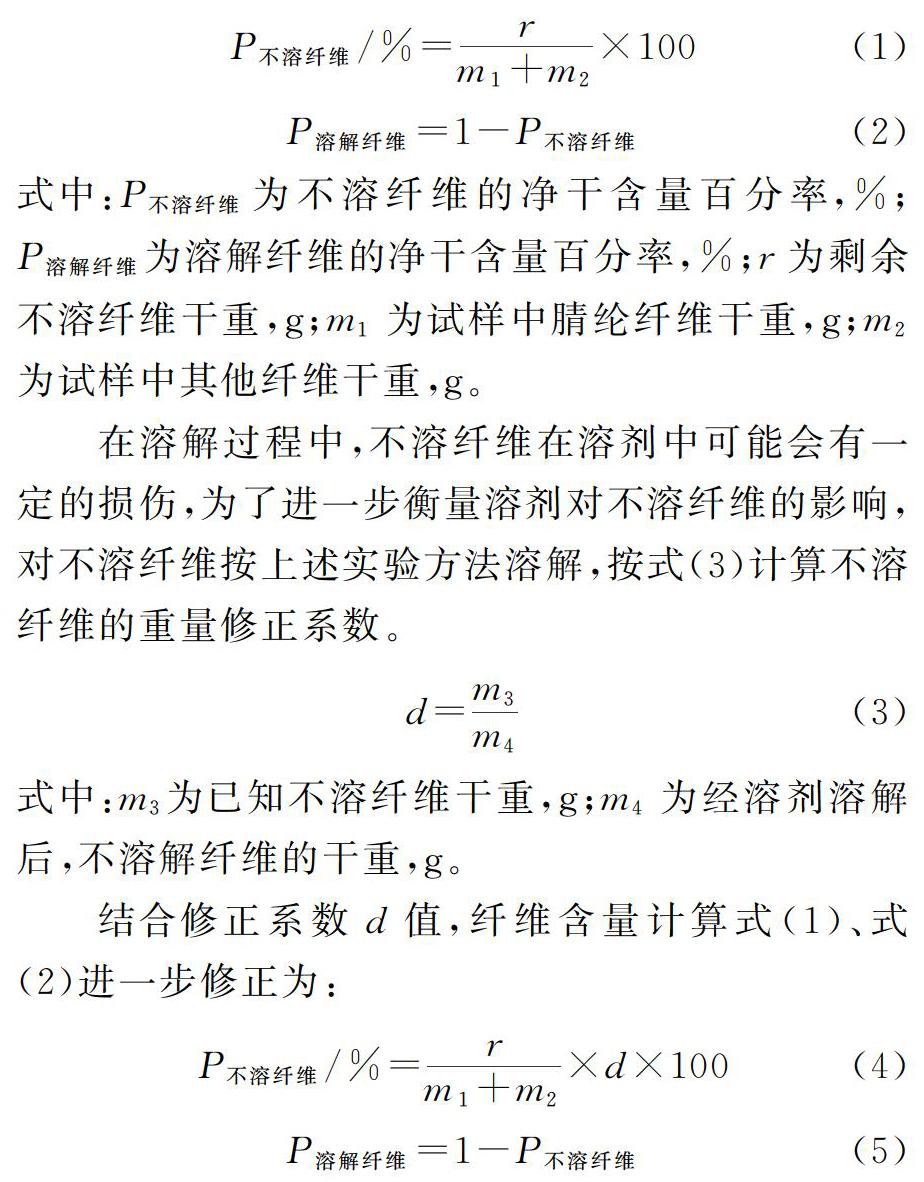
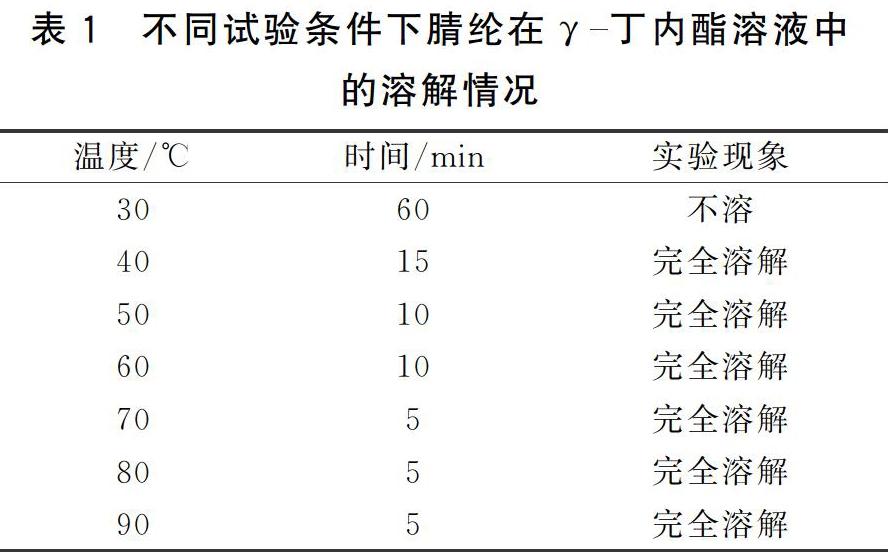
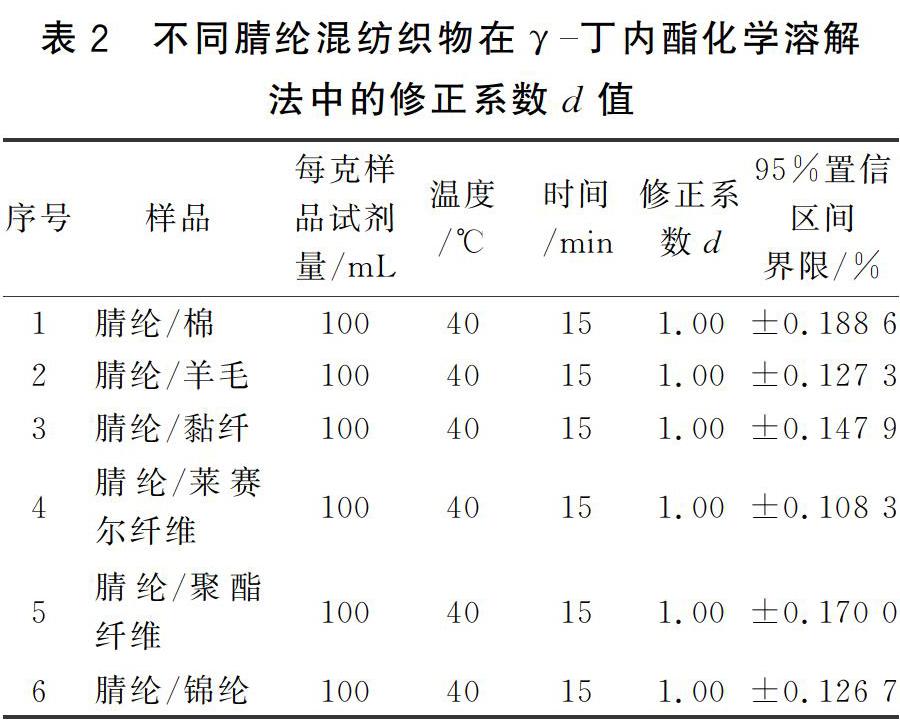
摘 要:为改进现有腈纶混纺织物化学溶解法试剂毒性大、反应时间长等缺点,研究采用γ丁内酯作为腈纶与棉、羊毛、黏纤、莱赛尔纤维、涤纶、锦纶等二组分混纺织物的定量化学分析法。试验结果表明:采用γ丁内酯对腈纶与棉、羊毛、黏纤、莱赛尔纤维、涤纶、锦纶等二组分混纺织物进行化学定量分析的最佳反应条件为温度40 ℃、时间15 min,此时腈纶纤维能够彻底溶解,剩余纤维棉、羊毛、黏纤、莱赛尔纤维、涤纶、锦纶的修正系数d值均为1.00,在95%置信水平下,纤维成分定量分析结果的置信界限远小于1%,该方法可行。相比现行的国内外标准中的相关方法,该方法反应时间短、效率高,且反应温度低、毒性低,更节能环保。
关键词:γ丁内酯;腈纶混纺织物;定量化学分析;修正系数d;置信界限
中图分类号:TS157 文献标志码:A
文章编号:1009-265X(2021)04-0091-05
Abstract: In order to improve the disadvantages of chemical dissolving method of acrylic blended fabric, such as high toxicity and long reaction time, γ-butyrolactone was used as the quantitative chemical analysis method of acrylic fiber and cotton, wool, viscose fiber, lyocell fiber, polyester, nylon and other two-component blended fabrics. The experimental results showed that the best reaction conditions for the chemical quantitative analysis of acrylic fiber and cotton, wool, viscose fiber, lyocell fiber, polyester, nylon and other two-component blended fabrics by γ -butyrolactone could be achieved under the following conditions: 40 ℃ and 15 min. At this time, the acrylic fiber could be completely dissolved, and the value of correction coefficient d of the remaining fiber cotton, wool, viscose fiber, lyocell fiber, polyester and nylon was 1.00. At 95% confidence level, the confidence limit of quantitative analysis results of fiber composition was far less than 1%. Hence, this method is feasible. Compared with the relevant methods in the current domestic and foreign standards, this method has the advantages of short reaction time, high efficiency, low reaction temperature, low toxicity, more energy saving and environmental protection.
Key words:γ-butyrolactone; acrylic blended fabric; chemical quantitative analysis; correction factor d; confidence limit
中国是全球纺织品生产第一大国,也是全球紡织品贸易大国,纺织品的检测市场规模巨大。如今人们在纺织品消费时对产品的环保性能日益重视,而实验室检测过程中的环保安全问题却往往容易被忽视。腈纶主要以丙烯腈单体与少量其他单体经自由基聚合反应合成,经纺丝加工而成的合成纤维。腈纶又称聚丙烯腈纤维,有人造羊毛之称,外观蓬松、耐光性能好、保暖性能可以与羊毛媲美,而且其造价成本低,在中国服装毛纺、产业等领域有广泛应用[1]。在实验室的纤维含量检测中针对腈纶混纺织物的纤维成分定量分析占了很大一部分工作。……