药用万寿菊多倍体的诱导与特征分析
2021-07-20符勇耀杨利平郑开敏徐文姬
符勇耀 杨利平 郑开敏 徐文姬

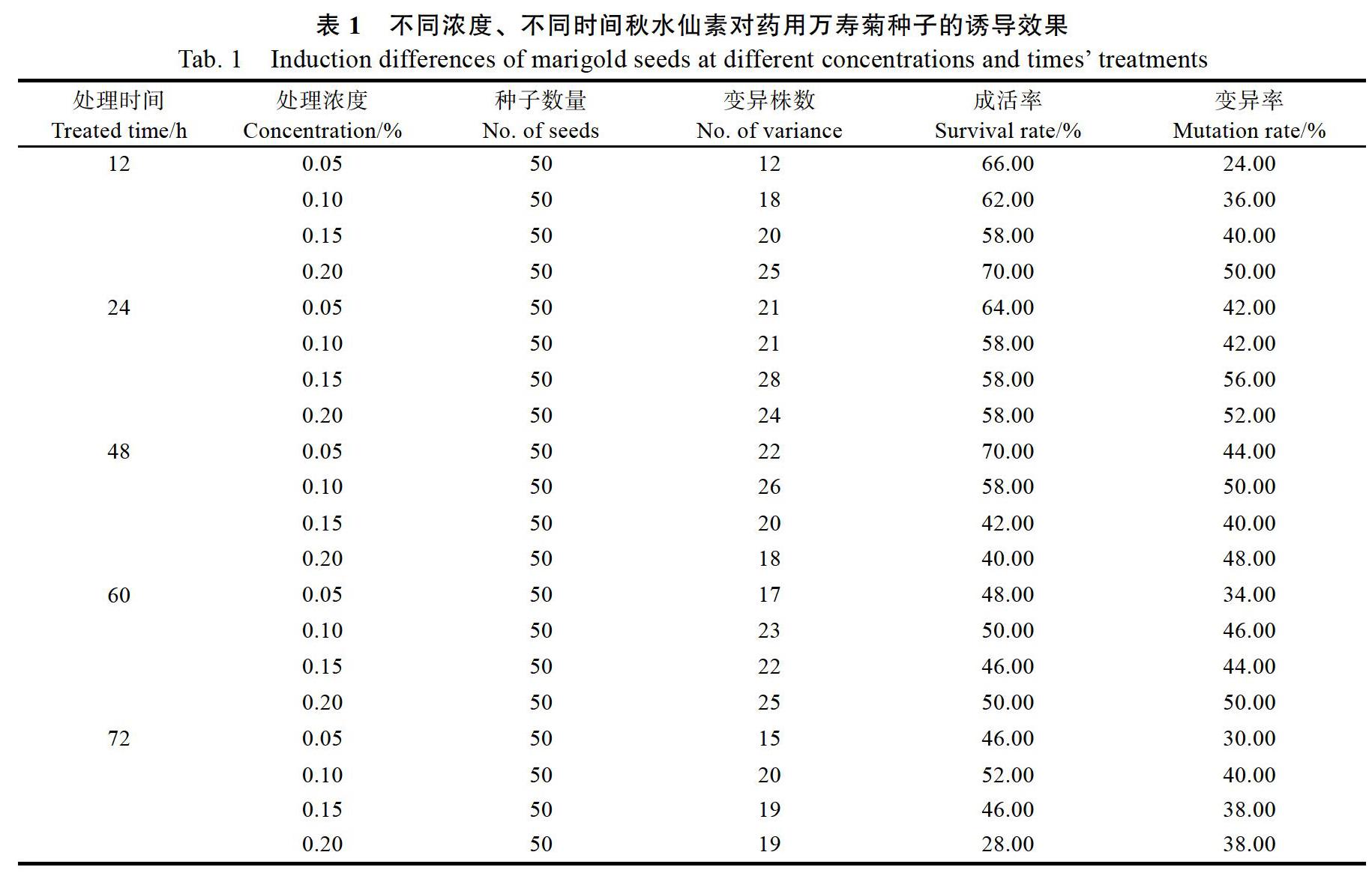
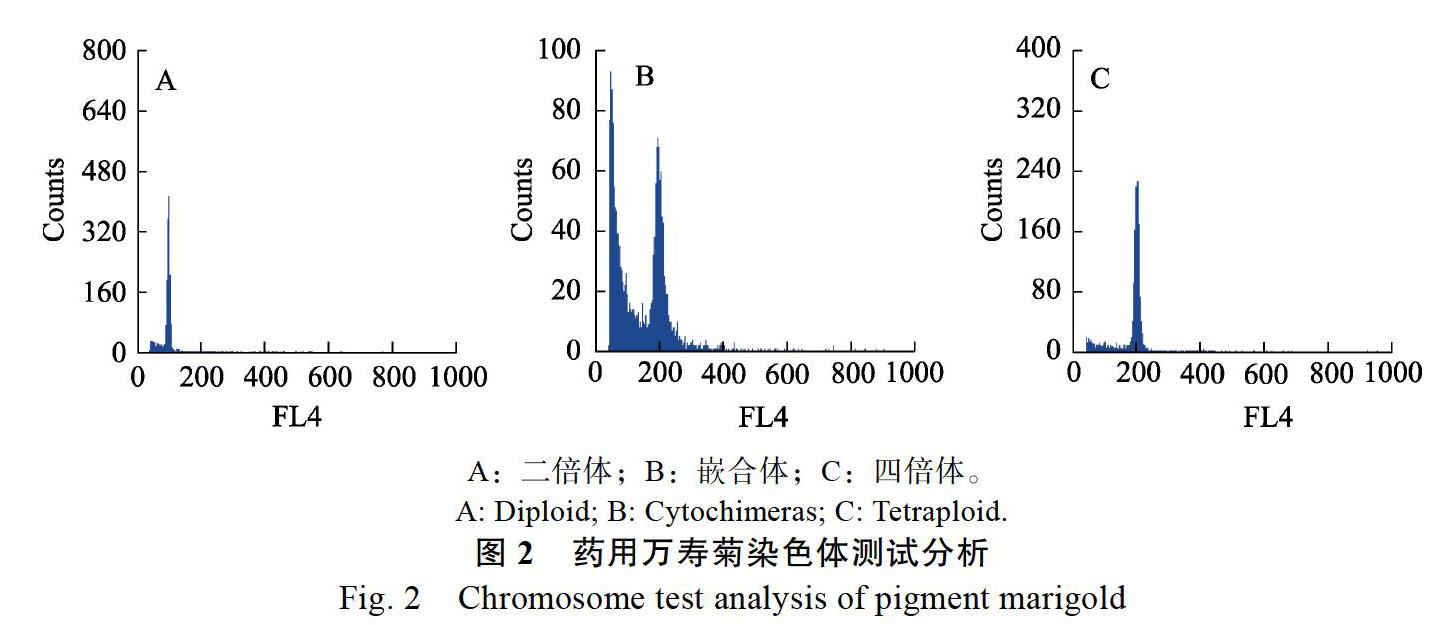
摘 要:为获得四倍体药用万寿菊材料,采用秋水仙素对药用万寿菊‘内蒙1号的种子进行多倍体诱导研究。以0.15%浓度的秋水仙素处理露白的万寿菊种子24 h,幼苗变异率较佳,可达到56%。幼苗定植于田间,初步筛选并标记形态变异植株,自花授粉后采收种子播种并观测子代形态指标,对形态变异明显的植株进行流式细胞仪检测,确定获得15株纯合四倍体。通过将四倍体与二倍体进行比较,四倍体植株茎粗、栅栏组织厚度、栅栏组织与海绵组织的比例和单朵花重量显著高于二倍体植株,四倍体植株总叶量、叶宽、叶长、叶长宽比、叶片气孔密度和单株花朵数量显著低于二倍体植株。获得的四倍体万寿菊植株单株花总重量比二倍体显著增加。
关键词:万寿菊;多倍体;育种;诱变
中图分类号:S567 文献标识码:A
Abstract: To obtain the material of polyploid medicinal marigold, colchicine was used for the polyploid induction with the seeds of medicinal marigold ‘Neimeng No. 1. The results showed that 0.15% of colchicine treated for 24 h was the best selection of the seedling induction of Tagetes erecta, reaching 56% of mutation rate. The seedlings were planted in the field and preliminary screening and marking of morphological variant plants were carried out. Seeds were harvested after pollination and seeded and morphological indicators of progenies were observed. Flow cytometry was used to detect the plants with obvious morphological variation and a total of fifteen tetraploid plants were identified. By contrast, the stem diameter, palisade tissue thickness, ratio of palisade tissue to spongy tissue and single flower weight of tetraploid plants were significantly higher than those of diploid plants, and the total leaf weight, leaf width, leaf length-width ratio, leaf stomatal density and number of flowers per plant of tetraploid plants were significantly lower than those of diploid plants. The total flower weight per plant of tetraploid plants was significantly increased in contrast to that of diploid plants.
Keywords: Tagetes erecta; polyploid; breeding; induction
DOI: 10.3969/j.issn.1000-2561.2021.05.017
万寿菊(Tagetes erecta)为菊科万寿菊属一年生植物,原产墨西哥等美洲地区[1]。根据其用途可分为花用万寿菊和药用万寿菊两大类,其中药用万寿菊花瓣中的叶黄素含量很高,约占花瓣色素总质量的90%,因此万寿菊成为提取天然叶黄素的普遍植物材料[2]。药用万寿菊产业的终端产品叶黄素具有抗氧化、抗白内障、防止老年视黄斑退化、降低患癌率和防治冠心病等用途,在保健食品、化妆品、医药等行业领域普遍应用[3]。目前,辽宁、内蒙古和云南等省(区)是我国药用万寿菊的主要栽培地,万寿菊种植和叶黄素的提取加工已经成为地方脱贫致富的特色产业[4-7]。……