火龙果主要商业品种SSR指纹图谱构建和遗传多样性分析
2021-07-20胡文斌洪青梅李婧濮文辉何云李洪立李琼
胡文斌 洪青梅 李婧 濮文辉 何云 李洪立 李琼
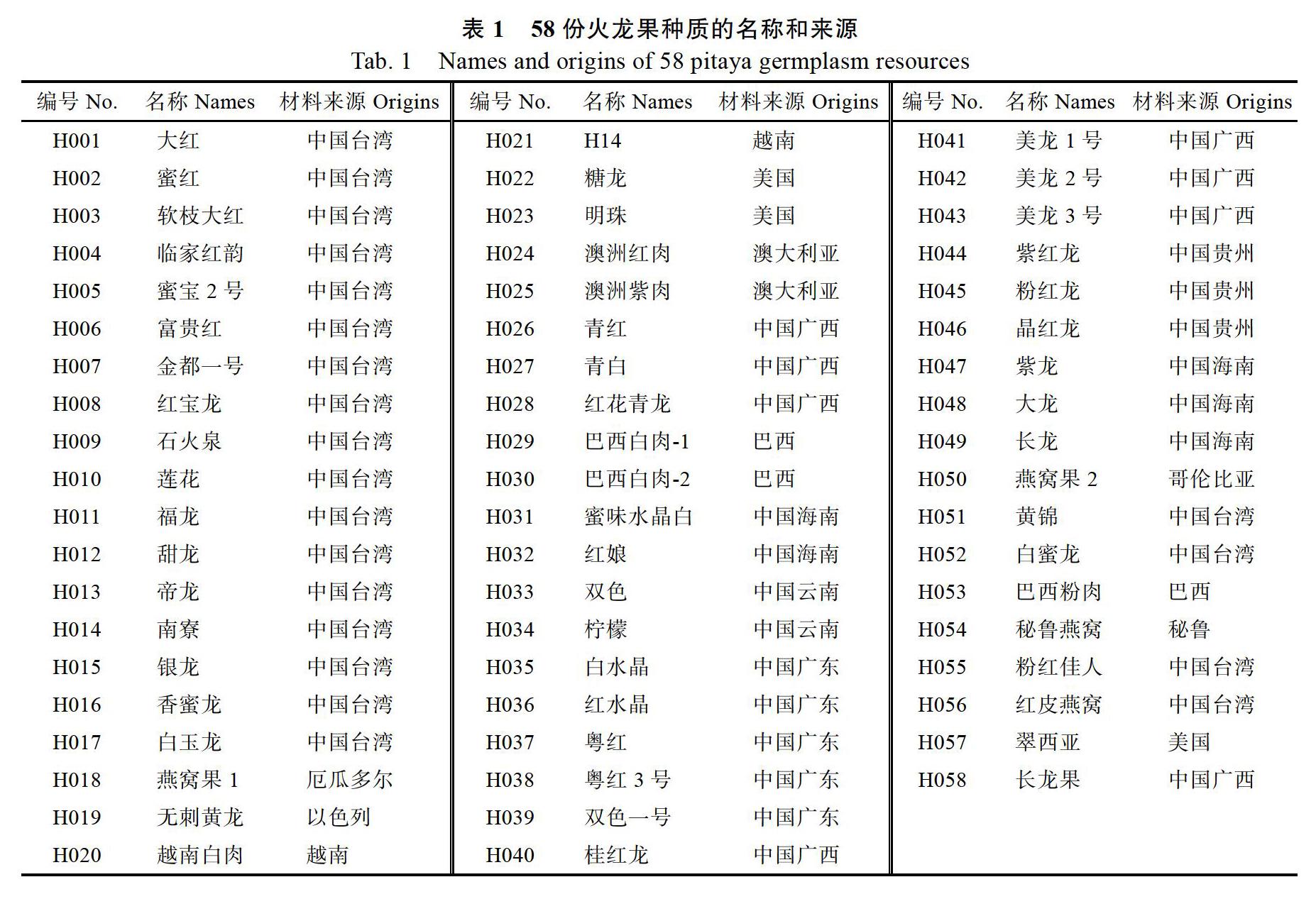
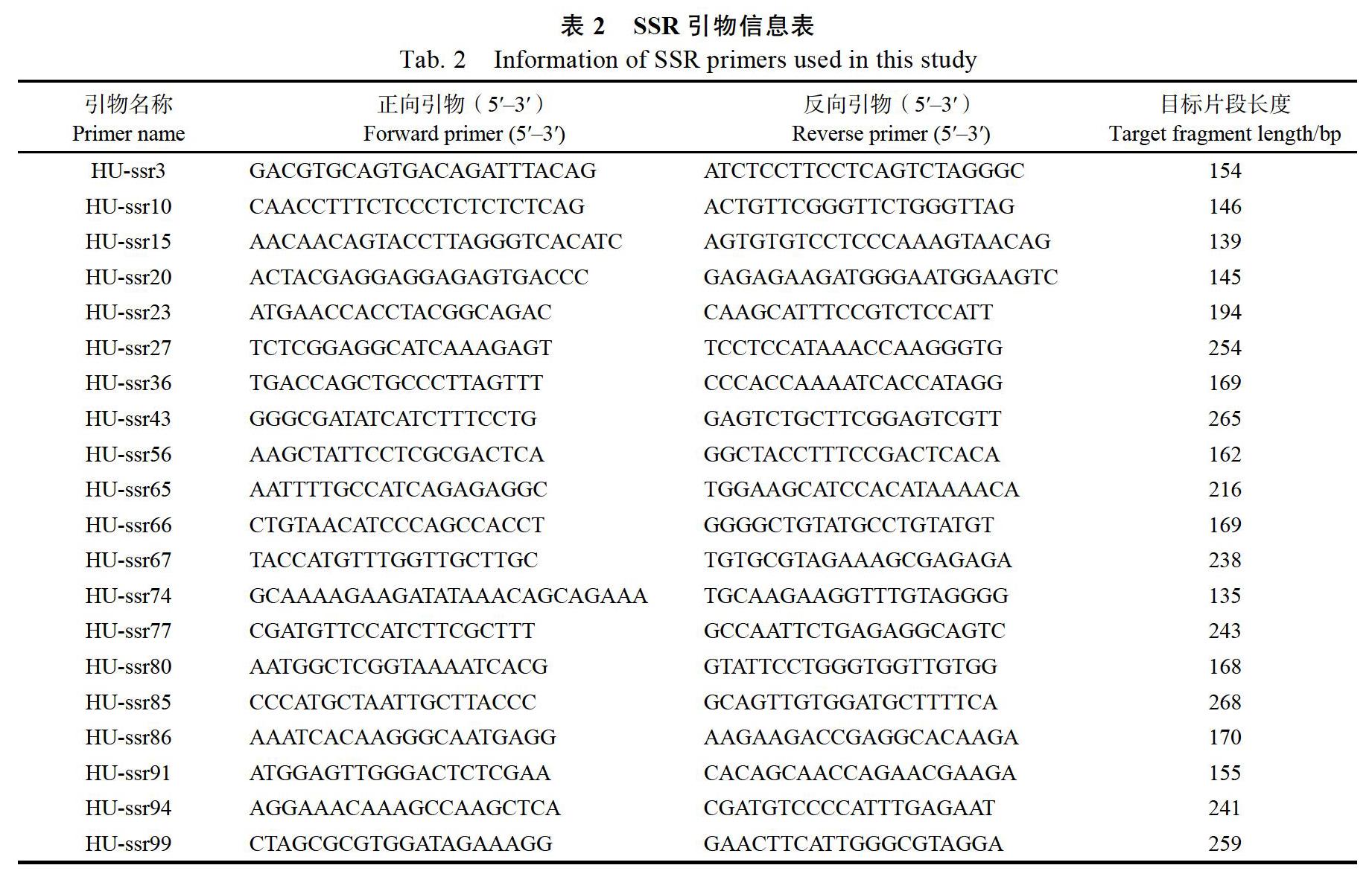
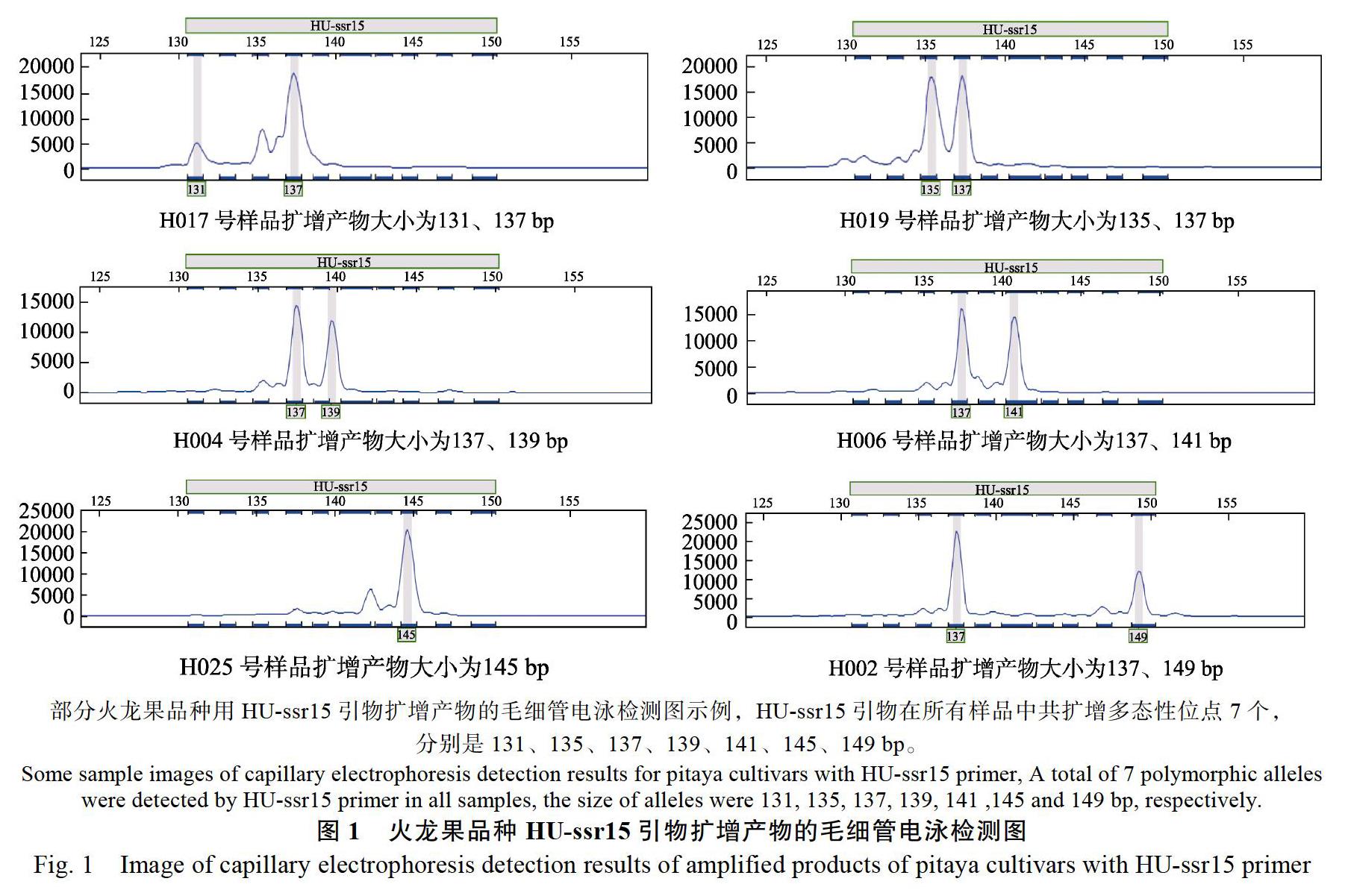
摘 要:为了准确鉴定火龙果主要商业品种和评估其遗传多样性,本研究利用20对火龙果SSR核心引物对58个火龙果品种进行遗传多样性分析,采用毛细管电泳技术进行多态性位点检测,共检测到116个多态位点,平均每个位点等位基因数(Na)为5.8个,有效等位基因数(Ne)为2.0519,观测杂合度(Ho)为0.3318,期望杂合度(He)为0.4603,多态性信息含量指数(PIC)为0.417。基于遗传相似系数聚类结果,将火龙果主要商业品种分为3大类群。依据20对SSR引物在58个品种中扩增的特异带型组合,选取其中9对引物采用引物-带型组合法构建了58个火龙果品种的指纹图谱,品种鉴定的置信概率几乎为100%。研究结果可为火龙果种质分类、品种鉴定和品种权保护提供重要的理论依据与技术支撑。
关键词:火龙果;SSR标记;指纹图谱;品种鉴定;遗传多样性
中图分类号:S667 文獻标识码:A
Abstract: In order to accurately identify pitaya cultivars and evaluate their genetic diversity, 20 pairs of SSR core pri-mers were used to analyze the genetic diversity of 58 pitaya varieties, and polymorphic alleles were detected by capil-lary electrophoresis. Totally, 116 polymorphic alleles were revealed, with an average of 5.8 for each primer pairs. The average number of alleles (Na), number of effective alleles (Ne), observed heterozygosity (Ho), expected heterozygosity (He), and polymorphism information content (PIC) was 5.8, 2.0519, 0.3318, 0.4603 and 0.417, respectively. Based on the clustering results of genetic similarity coefficient, the main commercial cultivars of pitaya were divided into three groups. Based on 20 pairs of SSR primers amplified from 58 cultivars, the fingerprints of 58 cultivars of pitaya were constructed using 9 pairs of primers. A strategy of combining primer pair with distinct alleles for fingerprint construction was developed and applied to the 58 cultivars. The confidence probability of variety identification was almost 100%. The research results would provide important theoretical basis and technical support for the germplasm classification, cultivar identification and varieties property protection of pitaya.
Keywords: pitaya; SSR; fingerprint; variety identification; genetic diversity
DOI: 10.3969/j.issn.1000-2561.2021.05.016
火龙果(Hylocereusundatus Britt. & Rose)又名红龙果,属仙人掌科(Cactaceae)多年生攀缘植物,原产于墨西哥南部及中美洲诸国的太平洋沿岸地区。火龙果是近年发展起来的具有较高的营养价值[1]、药用价值[2-4],以及观赏价值[5]的新兴热带亚热带果树。在中国、越南、美国、泰国、以色列、哥伦比亚、厄瓜多尔、巴西、澳大利亚等国家有大规模种植,目前中国的种植面积大约有80 000 hm2,主要分布在广东、广西、海南、贵州、云南、福建等省(区),但是火龙果现有品种存在严重的同物异名、同名异物以及品种混淆等问题,由于主要商业品种外形特征极为相似,传统形态学分类手段难以有效鉴定。……