老年肺癌患者用药安全现状调查
2021-07-05刘祎哈敏文
刘祎 哈敏文
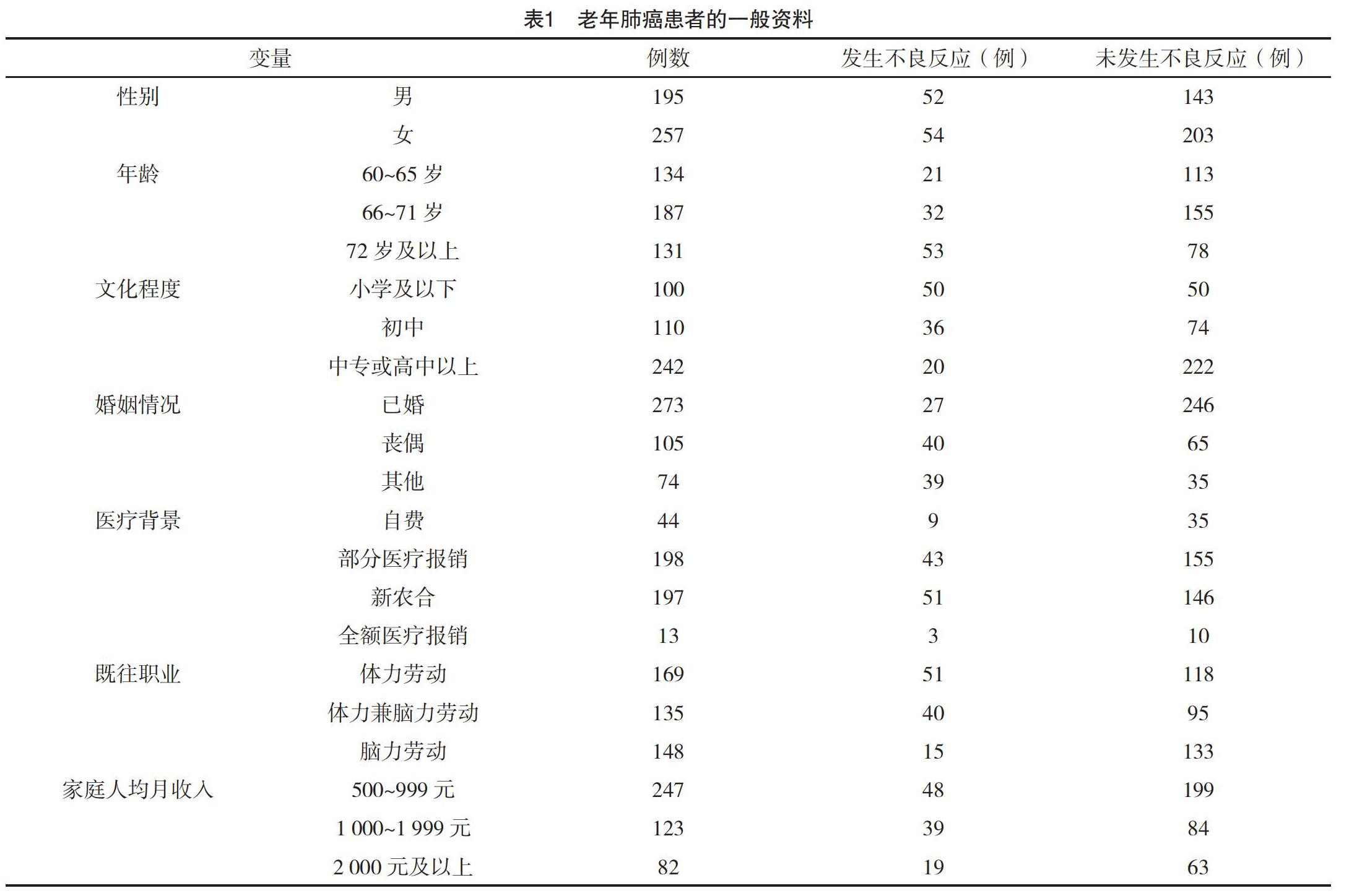
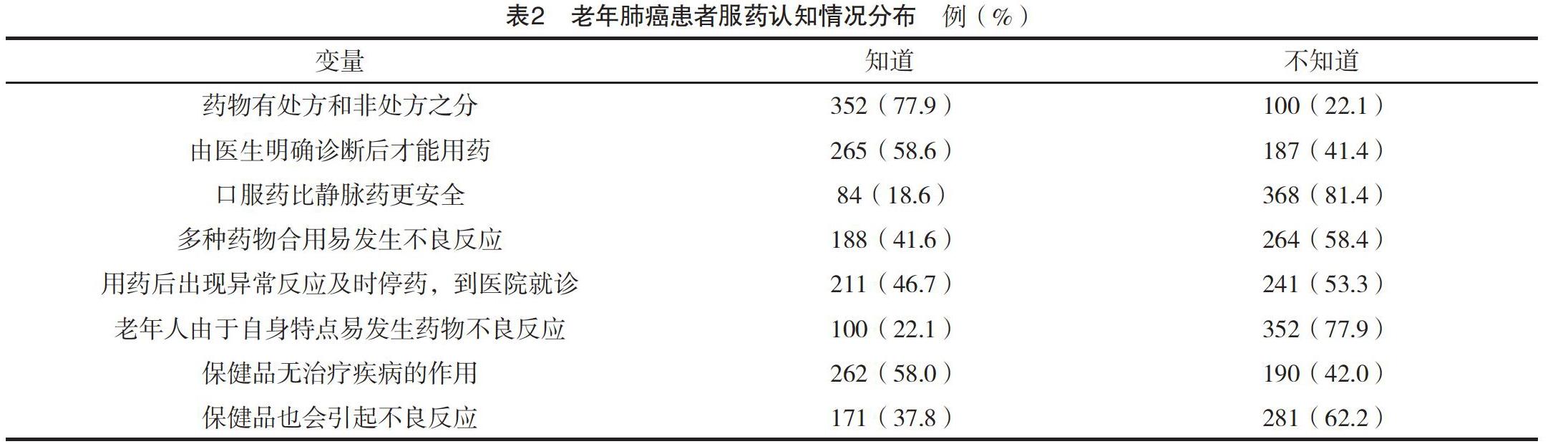
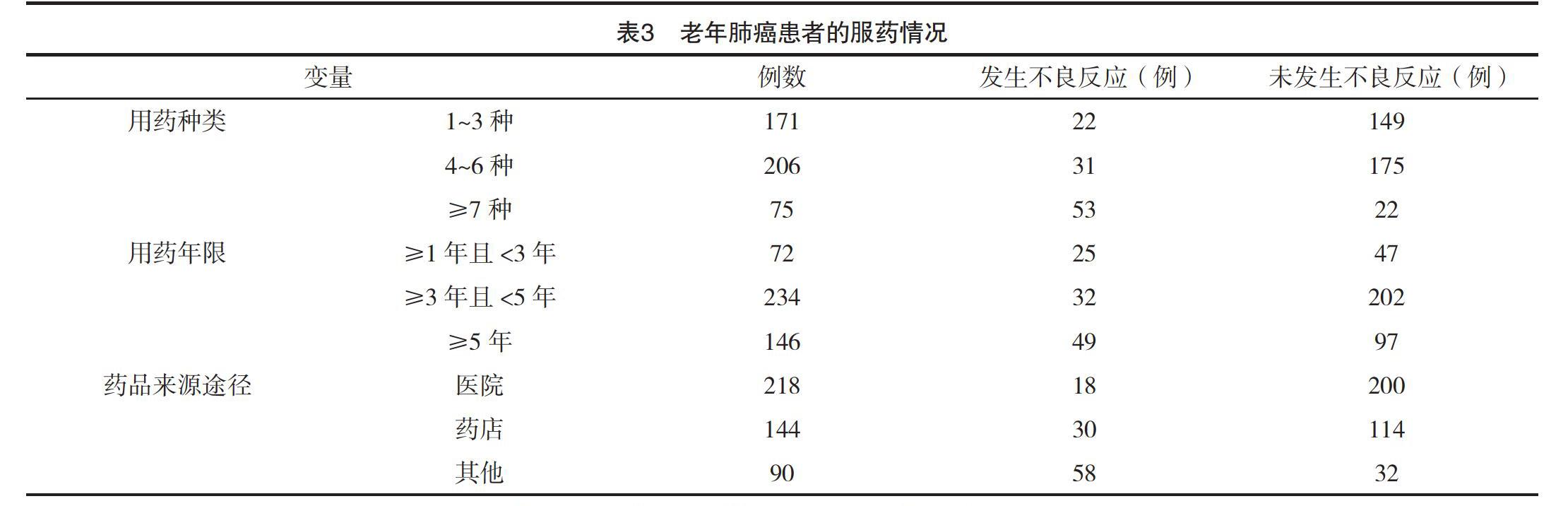
【摘要】 目的:了解老年肺癌患者服藥安全现状以及影响因素,为改善服药依从性提供方向。方法:于2019年2-12月,应用便利抽样方法,使用研究者自行设计的问卷对452例老年肺癌非住院老年人进行问卷调查。结果:老年肺癌患者用药安全认知最好的是“药物有处方和非处方之分”,占77.9%;用药安全认知最差的是“口服药比静脉药更安全”,占18.6%。用药种类7种及以上的有75例,用药5年及以上有146例,药品来源为医院的有218例。老年肺癌患者服药知识掌握情况最好的是“服药前是否认真阅读药品说明书”,最差的是“是否服用过过期药”。服药行为最好的是“自行停止服用药物”,最差的是“错服药物”。老年肺癌患者药物不良反应的主要保护因素有既往职业、学历、家庭人均月收入(P<0.05);而老年肺癌患者药物不良反应的主要危险因素有年龄、服药年限和使用药物的来源途径(P<0.05)。结论:肺癌老年人用药安全知识相对缺乏,同时这些老年人存在许多错误的认知和行为等常常导致老年肺癌患者不良反应和用药隐患的出现,应该引起社会、家属及老年人的重视。
【关键词】 用药安全 老年人 肺癌
Investigation on the Present Situation of Medication Safety for Elderly Patients with Lung Cancer/LIU Yi, HA Minwen. //Medical Innovation of China, 2021, 18(14): 0-085
[Abstract] Objective: To understand the current situation of medication safety in elderly patients with lung cancer and its influencing factors, and to provide direction for improving medication compliance. Method: From February to December 2019, the convenience sampling method was used to conduct a questionnaire survey on 452 elderly non-hospitalized elderly with lung cancer using a scale designed by the researcher. Result: The best cognition of medication safety of elderly lung cancer patients was “there are prescription and non prescription medicines”, accounting for 77.9%; the worst cognition of medication safety was “oral medicine is safer than intravenous medicine”, accounting for 18.6%. 75 cases used more than 7 kinds of drugs, 146 cases used more than 5 years, 218 cases the drugs came from hospitals. The best knowledge of taking medicine in elderly patients with lung cancer was “whether to read the drug instructions carefully before taking medicine”, and the worst was “whether to take expired drugs”. The best medication compliance was “stop taking drugs on your own”, and the worst was “taking drugs by mistake”. The main protective factors of ADR in elderly patients with lung cancer were previous occupation, education background and family income per capita (P<0.05); the main risk factors of adverse drug reactions in elderly patients with lung cancer were age, medication years and the source of drug use (P<0.05). Conclusion: Elderly people with lung cancer have relatively lack of knowledge about medication safety. At the same time, these elderly people have many wrong cognitions and behaviors, which often lead to adverse reactions and hidden dangers of medication in elderly patients with lung cancer, this should arouse the attention of society, family members and the elderly.
[Key words] Drug safety Elderly Lung cancer
First-authors address: The First Affiliated Hospital of Jinzhou Medical University, Jinzhou 121000, China
doi:10.3969/j.issn.1674-4985.2021.14.020
随着我国老年人口的不断增长,老年慢性病治疗与护理费用也在逐年增长,这早已成为社会的公共卫生问题[1]。有研究结果显示,老年肺癌作为老年慢性病中非常严重,同时也是给家庭以及社会造成经济负担最严重的疾病之一,也越来越得到了社会的广泛关注,老年肺癌患者且常常伴随其他疾病,加重了老年患者以及家庭的经济负担[2]。有研究显示,肺癌老年患者由于长期服用多种药物,常常出现药物不良反应[3-4]。有研究显示,药物不良反应在老年慢性患者的发生率是青年慢性病患者的2.5倍[5-6]。用药依从性是老年慢性病患者治疗效果评价中非常重要的一环,由于治疗时间长,出现年龄增长、视力减退等问题,对于老年慢性病患者的用药指导显得尤为重要。……