基于循证思维的预见性干预在预防ICU脑出血合并肺部感染中的应用观察
2021-05-10章莉谢雯琳
章莉 谢雯琳
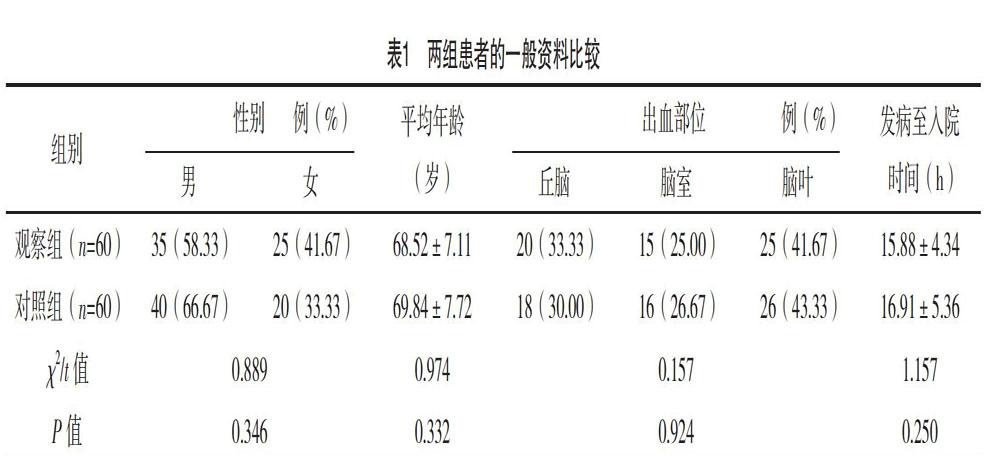
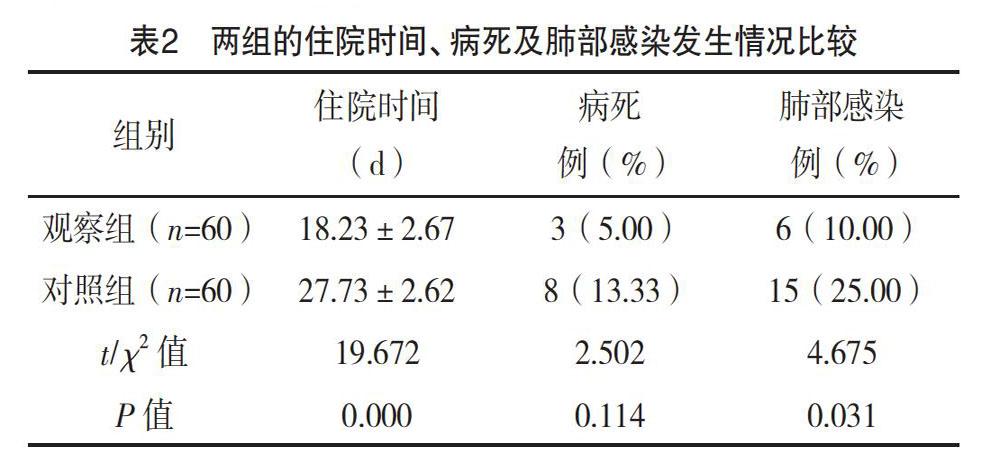
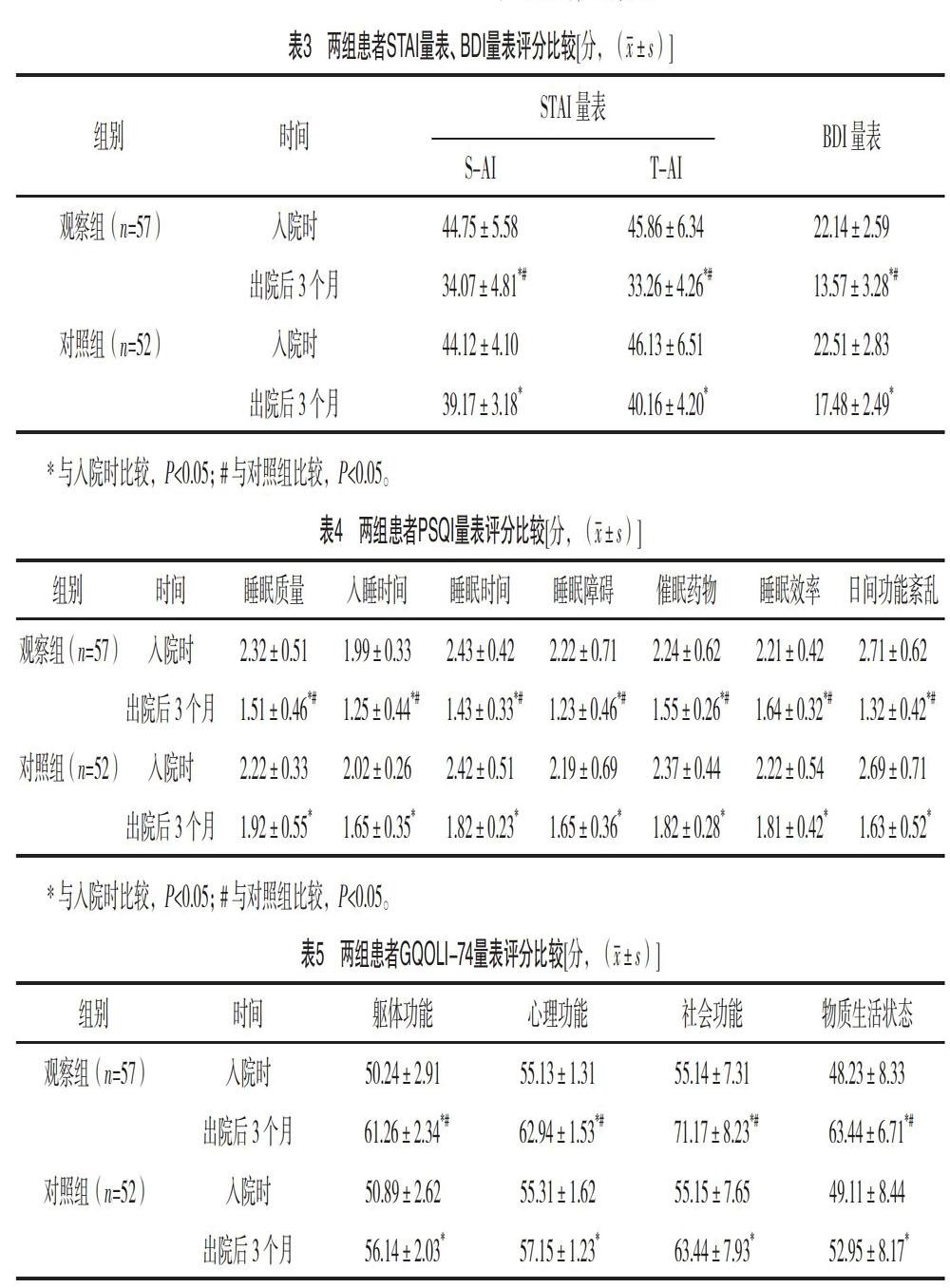
【摘要】 目的:探討基于循证思维的预见性干预在预防ICU脑出血合并肺部感染中的应用效果。方法:选取2019年1-12月本院ICU收治的120例脑出血患者为研究对象。按随机数字表法分为对照组和观察组,每组60例。对照组患者给予常规护理,观察组在对照组基础上实施基于循证思维的预见性干预。比较两组患者疾病相关指标(住院时间、病死及肺部感染发生情况),并比较两组患者入院时、出院后3个月的负面情绪[状态特质焦虑量表(STAI)、贝克抑郁问卷(BDI)]、睡眠质量[匹兹堡睡眠质量指数量表(PSQI)]及生活质量[生活质量综合评定量表(GQOLI-74)]变化情况。结果:观察组患者住院时间明显短于对照组(P<0.05);出院3个月内,观察组的肺部感染发生率低于对照组(P<0.05),而两组病死率比较,差异无统计学意义(P>0.05)。出院后3个月,两组患者STAI量表(S-AI、T-AI)中各分量表评分、BDI量表评分、PSQI量表(睡眠质量、入睡时间、睡眠时间、睡眠障碍、催眠药物、睡眠效率与日间功能紊乱)各维度评分均较入院时显著降低,且观察组均明显低于对照组(P<0.05)。出院后3个月,两组患者GQOLI-74量表(躯体功能、心理功能、社会功能、物质生活状态)各维度评分均较入院时显著上升,且观察组均明显高于对照组(P<0.05)。结论:基于循证思维的预见性干预不仅可有效降低ICU脑出血患者肺部感染发生风险,缩短其住院时间,有利于生活质量与睡眠质量的提高,改善其负面情绪,值得临床推广应用。
【关键词】 ICU脑出血 肺部感染 基于循证思维的预见性干预
[Abstract] Objective: To explore the application of predictive intervention based on evidence-based thinking in the prevention of cerebral hemorrhage with pulmonary infection in ICU. Method: A total of 120 patients with cerebral hemorrhage admitted to ICU of this hospital from January to December 2019 were selected as the research subjects. According to the random number table method, the patients were divided into control group and observation group, 60 cases in each group. Patients in control group were given routine nursing, and patients in observation group were given predictive intervention based on evidence-based thinking on the basis of control group. Disease-related indicators (hospital stay, occurrence of mortality and pulmonary infection) were compared between the two groups. The changes of negative emotions [state-trait anxiety inventory (STAI), becks depression inventory (BDI)], sleep quality [Pittsburgh sleep quality index (PSQI)] and quality of life [generic quality of life inventory-74 (GQOLI-74)] at admission and at 3 months after discharge were compared between the two groups. Result: The hospital stay in observation group was significantly shorter than that in control group (P<0.05). Within 3 months after discharge, the incidence rate of pulmonary infection in observation group was lower than that in control group (P<0.05), but there was no statistically significant difference in mortality rate between the two groups (P>0.05). At 3 months after discharge, the scores of subscales (S-AI, T-AI) of STAI, score of BID scale and scores of dimensions (sleep quality, time to fall asleep, sleep time, sleep disorder, hypnotics, sleep efficiency and daytime dysfunction) of PSQI scale were significantly reduced compared with those at admission, and the scores of observation group were significantly lower than those of control group (P<0.05). 3 months after discharge, the scores of dimensions of GQOLI-74 scale (physical function, psychological function, social function, and material life status) of patients in both groups were significantly increased compared with those at admission, and the scores of observation group were significantly higher than those of control group (P<0.05). Conclusion: Predictive intervention based on evidence-based thinking can not only effectively reduce the risk of pulmonary infection and shorten the hospital stay of patients with cerebral hemorrhage in ICU, but also contribute to the improvement of quality of life and sleep quality, and improve the negative emotions, thus it is worthy of clinical promotion and application.
[Key words] Cerebral hemorrhage in ICU Pulmonary infection Predictive intervention based on evidence-based thinkingFirst-authors address: Huazhong University of Science and Technology Union Shenzhen Hospital, Shenzhen 518052, China
脑出血于临床指的是脑实质内血管破裂导致的局部出血,属于急诊科常见疾病之一,患者主要表现为强烈头痛、恶心呕吐、昏迷等,需引起重视[1]。考虑该病起病较急,具有较高的致残率及死亡率,且治疗过程中介入治疗的使用会增加肺部感染风险,若处理不当则危及生命安全,因此针对ICU脑出血患者选择科学合理的临床护理方案尤为重要[2]。目前临床上的常规护理流程较为基础,多涉及神经内科常规康复训练,干预效果尚不明显[3]。……