恶性血液病患者血流感染病原菌分布与药物敏感性分析
2021-05-06王敏
王敏
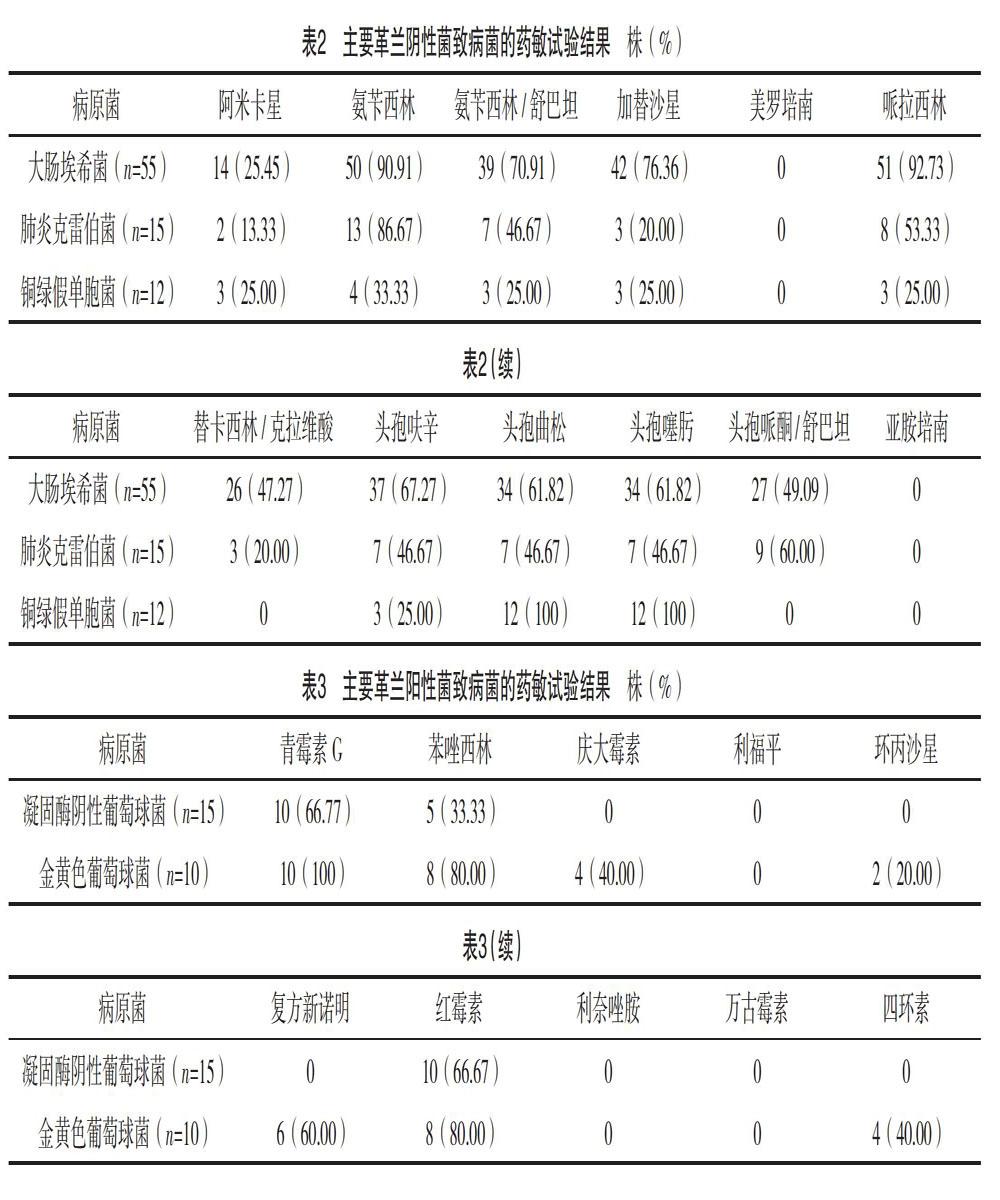
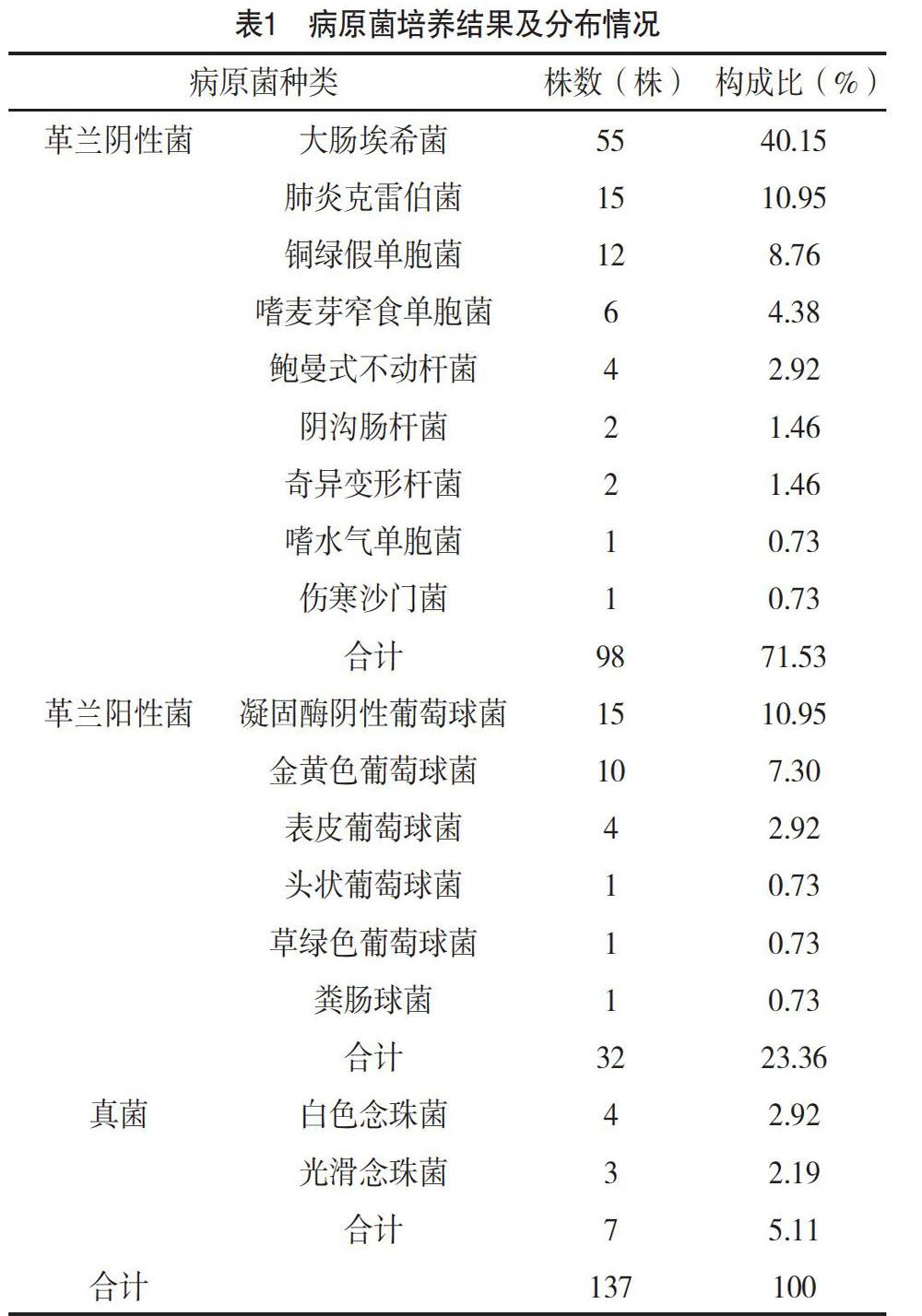
【摘要】 目的:探討恶性血液病患者血流感染病原菌分布与药物敏感性。方法:选择2016年1月-2019年12月于本院住院治疗出现血流感染的恶性血液病患者120例的临床资料进行回顾性分析。采集血液标本,进行病原菌培养及耐药性试验,分析血流感染病原菌分布与药物敏感性。结果:共培养出137株病原菌,其中革兰阴性菌98株(71.53%),占比最高,其次为革兰阳性菌32株(23.36%),真菌7株(5.11%)。大肠埃希菌对哌拉西林的耐药率(92.73%)最高,其次为氨苄西林(90.91%);肺炎克雷伯菌对氨苄西林的耐药率(86.67%)最高;铜绿假单胞菌对头孢曲松和头孢噻肟的耐药率均为100%;大肠埃希菌、肺炎克雷伯菌与铜绿假单胞菌对美罗培南和亚胺培南的耐药率均为0。凝固酶阴性葡萄球菌对于青霉素G和红霉素的耐药率均为66.67%,最高;金黄色葡萄球菌对青霉素G的耐药率为100%;凝固酶阴性葡萄球菌和金黄色葡萄球菌对利福平、利奈唑胺和万古霉素的耐药率均为0。结论:多种微生物均可导致恶性血液病患者出现血流感染,其中以革兰阴性菌为主,对引发感染的革兰阴性菌与革兰阳性菌的敏感度最高的抗生素为美罗培南、万古霉素和利奈唑胺。
【关键词】 恶性血液病 血流感染 耐药
[Abstract] Objective: To investigate the distribution of pathogens and drug sensitivity of bloodstream infections in patients with hematological malignancies. Method: Clinical data of 120 patients with hematologic malformations with bloodstream infection hospitalized in our hospital from January 2016 to December 2019 were retrospectively analyzed. Blood samples were collected for pathogen culture and drug resistance test, and the distribution of pathogens and drug sensitivity of bloodstream infection were analyzed. Result: A total of 137 strains of pathogenic bacteria were cultured, among which 98 strains (71.53%) of Gram-negative bacteria accounted for the highest proportion, followed by 32 strains (23.36%) of Gram-positive bacteria and 7 strains (5.11%) of fungi. The resistance rate of Escherichia coli to Piperacillin was the highest (92.73%), followed by Ampicillin (90.91%). Klebsiella pneumoniae had the highest drug resistance rate to Ampicillin (86.67%). The drug resistance rates of Pseudomonas aeruginosa to Ceftriaxone and Cefotaxime were 100%. The drug resistance rates of Escherichia coli, Klebsiella pneumoniae and Pseudomonas aeruginosa to Meropenem and Imipenem were 0. The drug resistance rate of coagulase-negative staphylococcus to Penicillin G and Erythromycin was 66.67%, which was the highest. The drug resistance rate of Staphylococcus aureus to Penicillin G was 100%. The drug resistance rates of coagulase-negative staphylococcus and Staphylococcus aureus to Rifampicin, Linezolid and Vancomycin were 0. Conclusion: A variety of microorganisms can cause bloodstream infection in patients with hematologic malignancies, among which Gram-negative bacteria are the main ones. The antibiotics with the highest sensitivity to the Gram-negative bacteria and Gram-positive bacteria causing infection are Meropenem, Vancomycin and Linezolid.
[Key words] Hematological malignancies Bloodstream infection Drug resistance
恶性血液病病情较为严重,预后大多较差[1-2]。相当比例的恶性血液病患者并非死于原发恶性疾病,而是死于由恶性血液病所导致的血流感染[3]。恶性血液病的患者往往会因为诸多原因而出现个体免疫力的下降,比如原发疾病对人體的侵袭、化疗药物作用、营养素缺乏等,免疫力的降低也必然会导致各类病原体侵袭身体,感染率上升[4-5]。……