基于技术接受模型的虚拟试衣使用意愿研究
2021-03-28叶晶郭香梅
叶晶 郭香梅
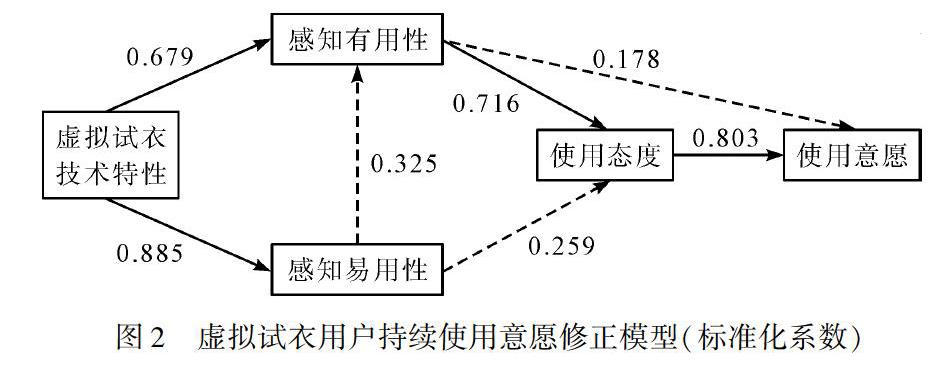
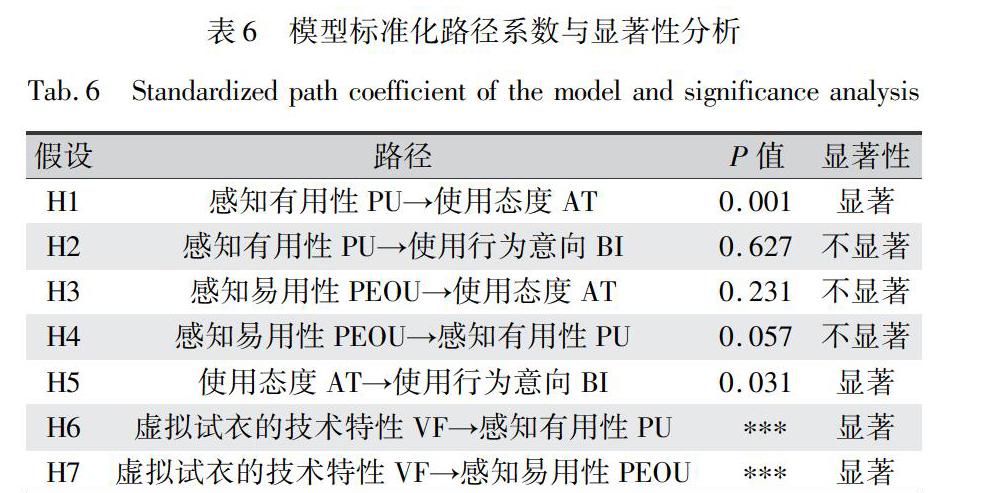
摘要: 文章基于技术接受模型(TAM),建立用户虚拟试衣使用意愿概念模型,并运用结构方程模型对研究假设进行检验,探讨不同因素对虚拟试衣使用意愿的影响。研究结果表明:虚拟试衣的技术特性(VF)对用户感知有用性(PU)和感知易用性(PEOU)均有正向显著影响;感知有用性(PU)正向显著影响用户使用态度(AT);使用态度(AT)正向显著影响用户虚拟试衣的使用意愿(BI)。最后提出了促进虚拟试衣使用意愿的建议。
关键词: 技术接受模型;虚拟试衣;使用意愿;结构方程模型;服装
Abstract: Based on the technology acceptance model(TAM), our study established a conceptual model on users intention to use virtual fitting, used a structural equation model to test the research hypothesis and investigate the effect of different factors on users intention to use virtual fitting. The results indicated that the technical features of virtual fitting(VF) had a significant positive effect on users perceived usefulness and perceived ease of use. Perceived usefulness(PU) positively affected users attitude towards using(AT). The attitude towards using(AT) had a significant positive effect on users intention to use virtual fitting(BI). Finally, some suggestions were put forward to improve the intention to use virtual fitting.
Key words: technology acceptance model; virtual fitting; intention to use; structural equation model; garment
隨着互联网技术的发展和人们服装消费方式的改变,电商平台的兴起给消费者带来了多元化的购物方式。相对于线下购物,尽管网购服装给消费者提供了便利,摆脱了时间与空间的限制,但也存在一些问题,如网购平台的文字描述、模特试穿的效果图提供的信息有限,容易发生消费者实际穿着效果与预期存在偏差的情况,由此导致高差评率及退货率。同时线下购物又存在着服装款式少、试衣繁琐等问题[1]。当然,服装业的试衣模式正朝着智能化方向发展[2],三维虚拟试衣系统的出现提供了有效的解决方法,正改变着人们的服装试穿习惯。
虚拟试衣系统是以计算机为辅助工具,通过三维人体扫描获取人体三维数据并据此建立三维虚拟人体模型[3],在此基础上构建相应的三维服装衣片模型。用户在不接触服装实物的情况下,可根据自己的喜好,方便快捷地更换不同款式的虚拟服装,最终得到相应的三维人体着装立体效果图[1,4]。……