卒中后患者认知障碍的危险因素分析
2021-03-22黄晓芸付文金陈建军林菡黄益洪余映丽官少兵梅志忠
黄晓芸 付文金 陈建军 林菡 黄益洪 余映丽 官少兵 梅志忠
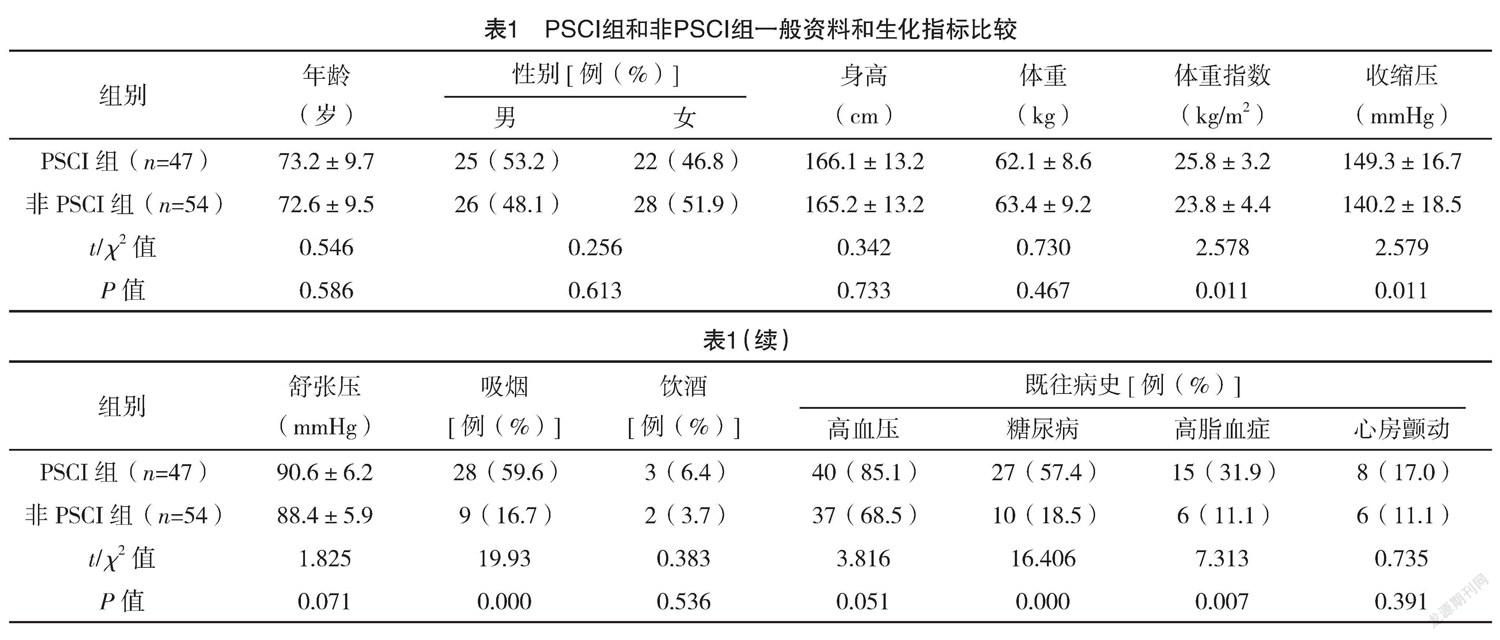
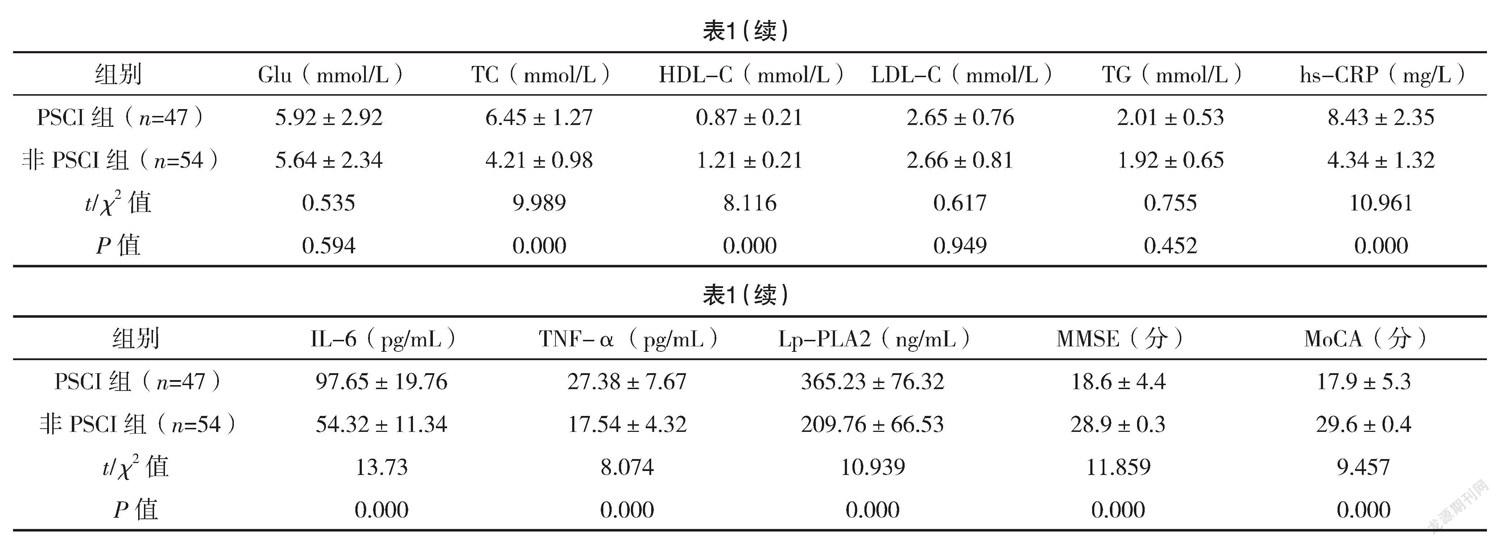
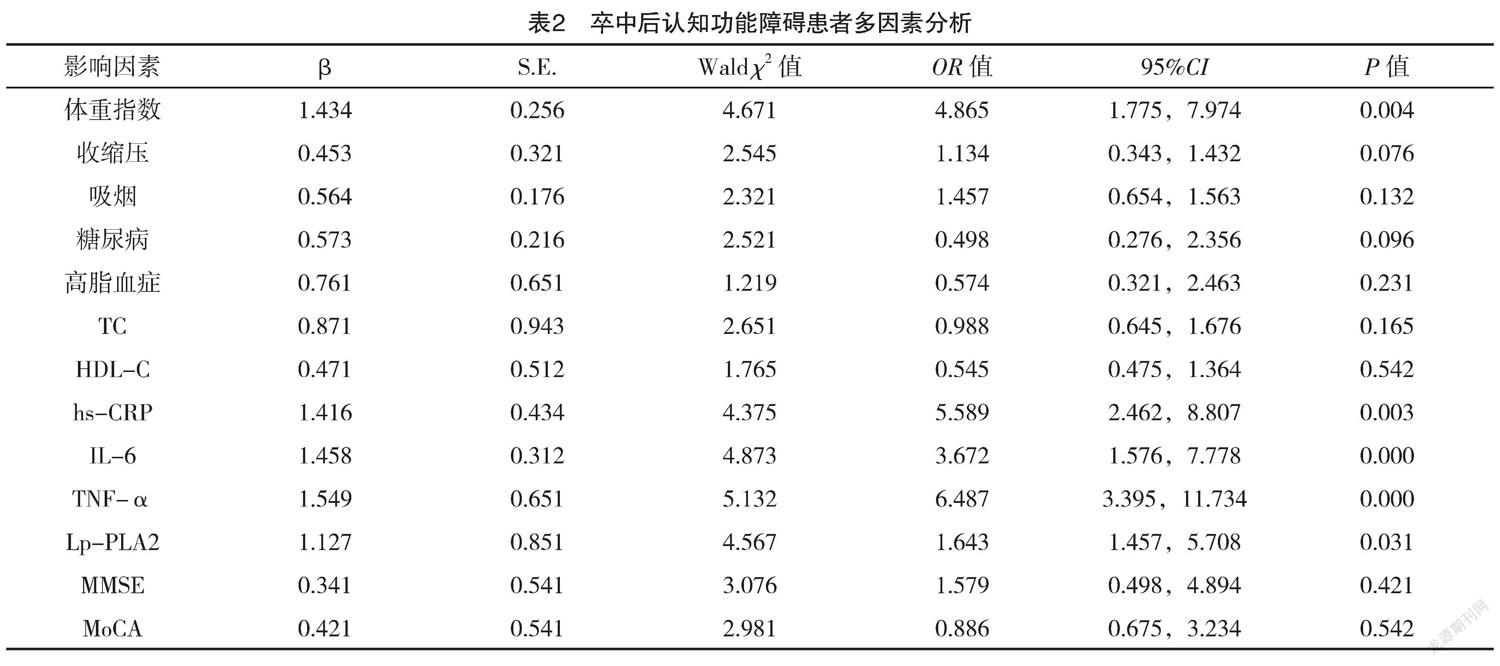
【摘要】 目的:探讨卒中后认知障碍(PSCI)的危险因素,为预防该类患者认知障碍的发生提供依据。方法:分析2014年8月-2015年6月入住東莞市厚街医院神经内科并确诊为首发脑卒中的患者101例的人口学资料。根据简易智能筛查量表(MMSE)和蒙特利尔认知评估量表(MoCA)将所有患者分为PSCI组和非PSCI。比较两组一般资料、血脂和血糖生化指标、血清炎症指标(hs-CRP、TNF-a、IL-6及Lp-PLA2)等,采用多因素logistic回归分析,分析PSCI相关危险因素。结果:两组体重指数、收缩压、吸烟、糖尿病、高脂血症、TC、HDL-C、hs-CRP、IL-6、TNF-α、Lp-PLA2、MMSE、MoCA比较比较,差异均有统计学意义(P<0.05)。logistic回归分析显示,高体重指数、高血清hs-CRP、IL-6、TNF-α和Lp-PLA2水平均是卒中后认知障碍的独立危险因素(P<0.05)。结论:影响卒中后发生认知障碍的影响因素较多,临床应根据影响因素进行干预,预防认知障碍的发生。
【关键词】 脂蛋白相关磷脂酶A2 炎症因子 卒中后认知障碍 危险因素
Analysis of Risk Factors Associated with Cognitive Impairment in Post-stroke Patients/HUANG Xiaoyun, FU Wenjin, CHEN Jianjun, LIN Han, HUANG Yihong, YU Yingli, GUAN Shaobing, MEI Zhizhong. //Medical Innovation of China, 2021, 18(30): -150
[Abstract] Objective: To analyze the risk factors associated with cognitive impairment in post-stroke patients, providing evidence for the prevention of cognitive impairment in these patients. Method: The demographic data of 101 patients with first stroke admitted to the department of Neurology of our hospital from August 2014 to June 2015 were analyzed. According to the simple intelligent screening scale (MMSE) and the Montreal cognitive assessment scale (MoCA), they were divided into PSCI group and non-PSCI group. General information, blood lipid and blood glucose biochemical indicators, serum inflammatory indicators (hs-CRP, TNF-α, IL-6 and Lp-PLA2) were compared between the two groups. Multivariate logistic regression analysis was used to analyze PSCI related risk factors. Result: There were statistically significant differences in bmi, systolic blood pressure, smoking, diabetes, hyperlipidemia, TC, HDL-C, hs-CRP, IL-6, TNF-α, Lp-PLA2, MMSE and MoCA between the two groups (P<0.05). logistic regression analysis showed that high body mass index, high serum hs-CRP, IL-6, TNF-α and Lp-PLA2 levels were independent risk factors for cognitive impairment after stroke (P<0.05). Conclusion: There are many factors influencing the occurrence of cognitive impairment after stroke, and clinical intervention should be carried out according to the factors to prevent the occurrence of cognitive impairment.
[Key words] Lipoprotein phospholipase A2 Inflammatory factors Post-stroke cognitive impairment Risk factors
First-author’s address: Houjie Hospital of Dongguan City, Dongguan 523945, China
doi:10.3969/j.issn.1674-4985.2021.30.035
社会老龄化是全球面临的一大问题,随着年龄增长导致机体器官功能的退化诱发一系列疾病。脑卒中是老年人常见疾病,是导致患者致残和死亡的主要病因,且其呈现“三高”现象,高发病率、高病死率、高致残率等,而严重影响患者生活质量[1]。越来越多的研究发现,卒中后认知功能障碍(post-stroke cognitive impairment,PSCI)是卒中患者生活质量和生存时间的重要影响因素,也是目前研究热点[2]。目前对PSCI仍以预防为主,无有效的治疗手段[3]。脂蛋白相关磷脂酶A2(lipoprotein associated-phospholipase A2,Lp-PLA2)作为血管特异性炎症标志物,已有研究表明其是多种心脑血管疾病的独立危险因素,且与病情严重程度和认知功能障碍的发生发展密切相关[4-5]。……
