木薯蚕丝的13C CP/MAS NMR分析
2021-01-21陈静黄继伟彭泽冶宁晚娥
陈静 黄继伟 彭泽冶 宁晚娥
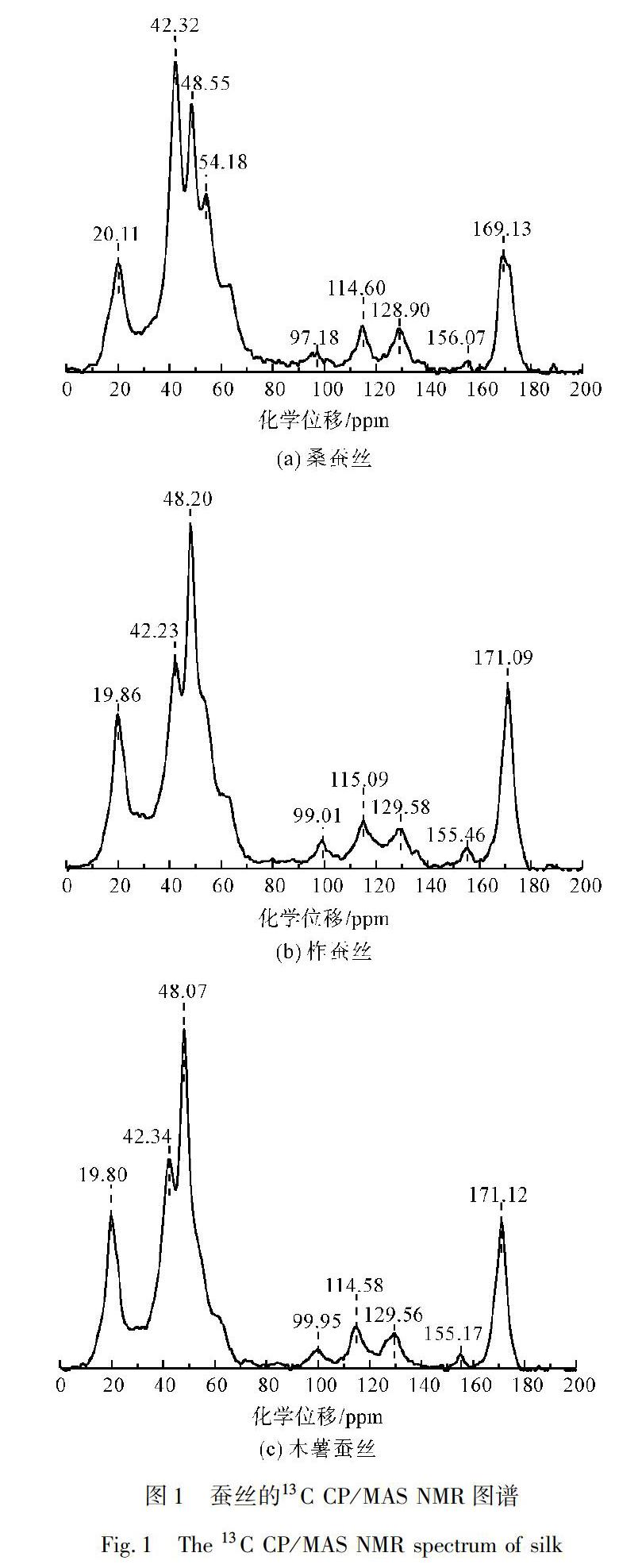
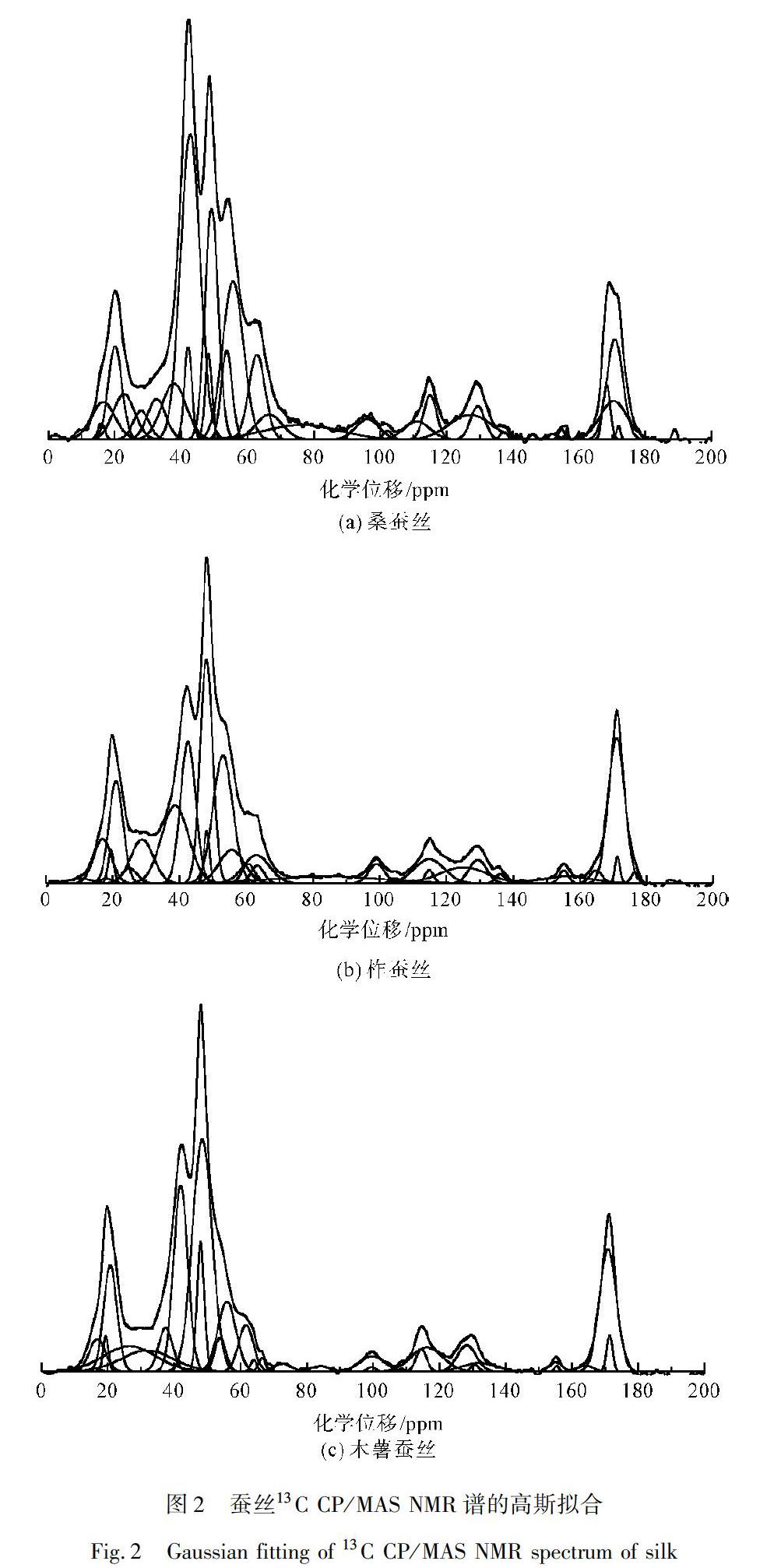
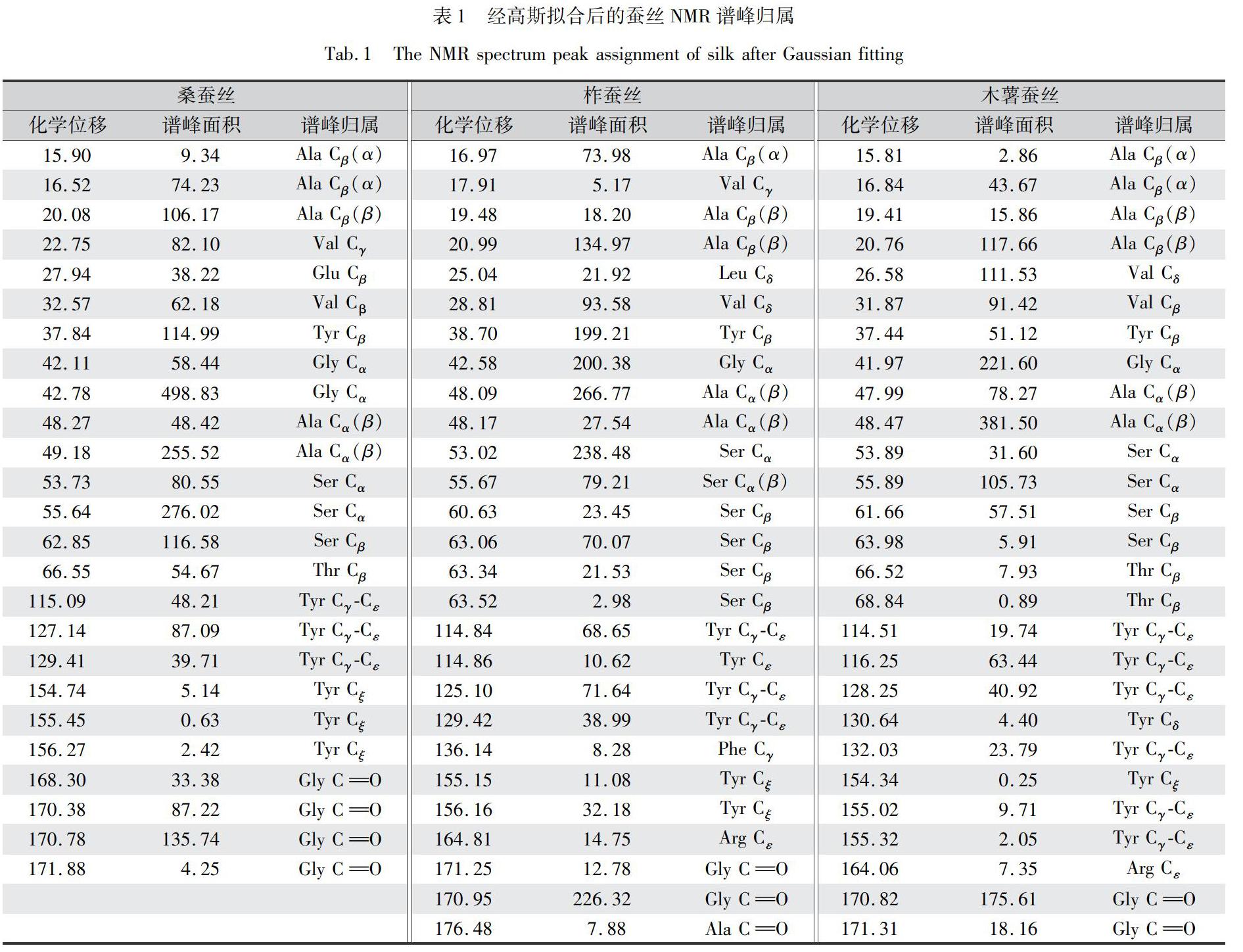
摘要: 木薯蚕丝作为一种极具开发利用价值的野蚕丝,其结晶结构、热学性质和力学性能显著不同于桑蚕丝,对木薯蚕丝二级结构的研究有助于进一步认识其构效关系,拓展其应用领域。13C CP/MAS NMR技术是研究蚕丝丝素蛋白结构的有效方法之一。文章通过13C CP/MAS NMR测试,分析了木薯蚕丝丝素蛋白的二级结构特征,并将其与桑蚕丝和柞蚕丝进行了对比。结果表明:桑蚕丝中Gly的含量较柞蚕丝和木薯蚕丝高,木薯蚕丝与柞蚕丝相近;Ala的含量及其β-sheet结构较柞蚕丝和木薯蚕丝低,木薯蚕丝最高,三者的α-螺旋结构相差不大;桑蚕丝的不定形区含量最高,木薯蚕丝最低,与柞蚕丝接近。
关键词: 木薯蚕丝;桑蚕丝;柞蚕丝;丝素蛋白;二级结构;13C CP/MAS NMR
中图分类号: TS102.333
文献标志码: A
文章编号: 10017003(2021)01000107
引用页码: 011101
DOI: 10.3969/j.issn.1001-7003.2021.01.001(篇序)
13C CP/MAS NMR analysis of cassava silk
CHEN Jing1, HUANG Jiwei1,2, PENG Zeye1, NING Wane1
(1.College of Biological and Chemical Engineering, Guangxi University of Science and Technology, Liuzhou 545006, China;2.College of Textile and Clothing Engineering, Soochow University, Suzhou 215123, China)
Abstract:
Cassava silk as a kind of wild silk with great development and utilization value, is significantly different from mulberry silk in terms of the crystal structure, thermal properties and mechanical properties. The study on the secondary structure of cassava silk can help to further understand its structure-activity relationship and expand its application field. 13C CP/MAS NMR is an effective method to study the structure of silk fibroin. By 13C CP/MAS NMR test, the secondary structure characteristics of cassava silk were analyzed, and then compared with those of mulberry silk and tussah silk. The results showed that the content of Gly in mulberry silk was higher than that in tussah silk and cassava silk, and the content of Gly in tussah silk and cassava silk was close. The content of Ala and β-sheet structure were lower than those of tussah silk and cassava silk, which were the highest in cassava silk. There was no significant difference in α-helix structure among the three. The content of amorphous region in mulberry silk was the highest, and that of cassava silk was the lowest, which was close to tussah silk.
Key words:
cassava silk; mulberry silk; tussah silk; silk fibroin; secondary structure; 13C CP/MAS NMR
木薯蠶丝是由喂食木薯叶的蓖麻蚕吐丝形成,是一种重要的丝制品原料,可被用于生产高档蚕丝被、绢纺纱及织物等产品[1-5]。木薯蚕丝还是重要的天然蛋白质原料来源,具有良好的生物相容性、可控的生物降解性、无毒和低免疫源性等特点,在生物医用材料、食品和精细化学品等领域被广泛关注[6-8]。近年来,一系列有关木薯蚕丝的加工与处理方法被报道,包括脱胶、整理与改性等[9-12],这些报道为木薯蚕丝的进一步开发与利用提供了参考。同时,木薯蚕丝结构与性能的研究也逐渐深入。杨莹莹等[13]通过扫描电镜、X射线衍射、红外光谱和力学性能测试等手段详细对比了木薯蚕丝与桑蚕丝和柞蚕丝之间的差异。……