番茄甾体生物碱合成酶基因SlERT1b的功能验证及转录调控
2021-01-13黎晗史云霞袁弘伦刘贤青罗杰
黎晗 史云霞 袁弘伦 刘贤青 罗杰
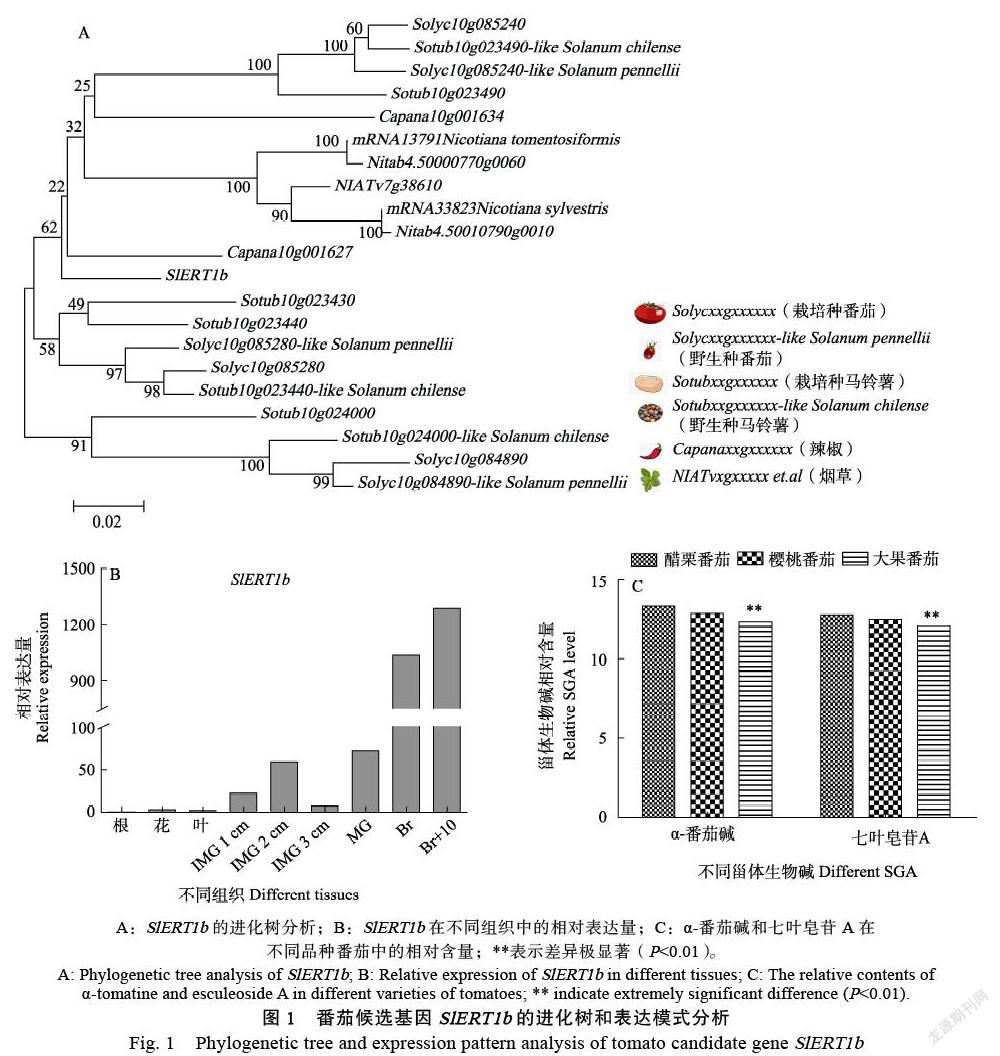
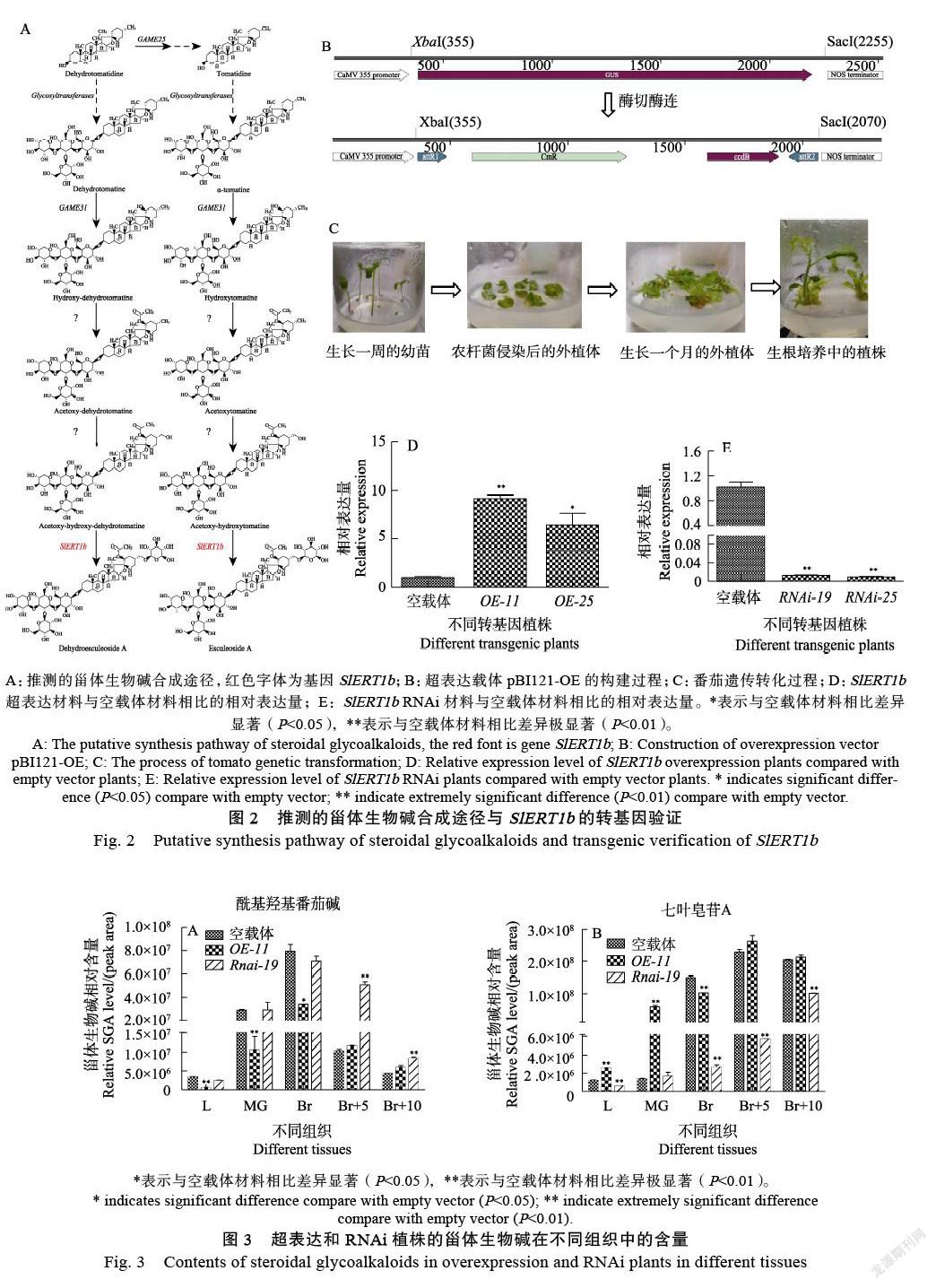
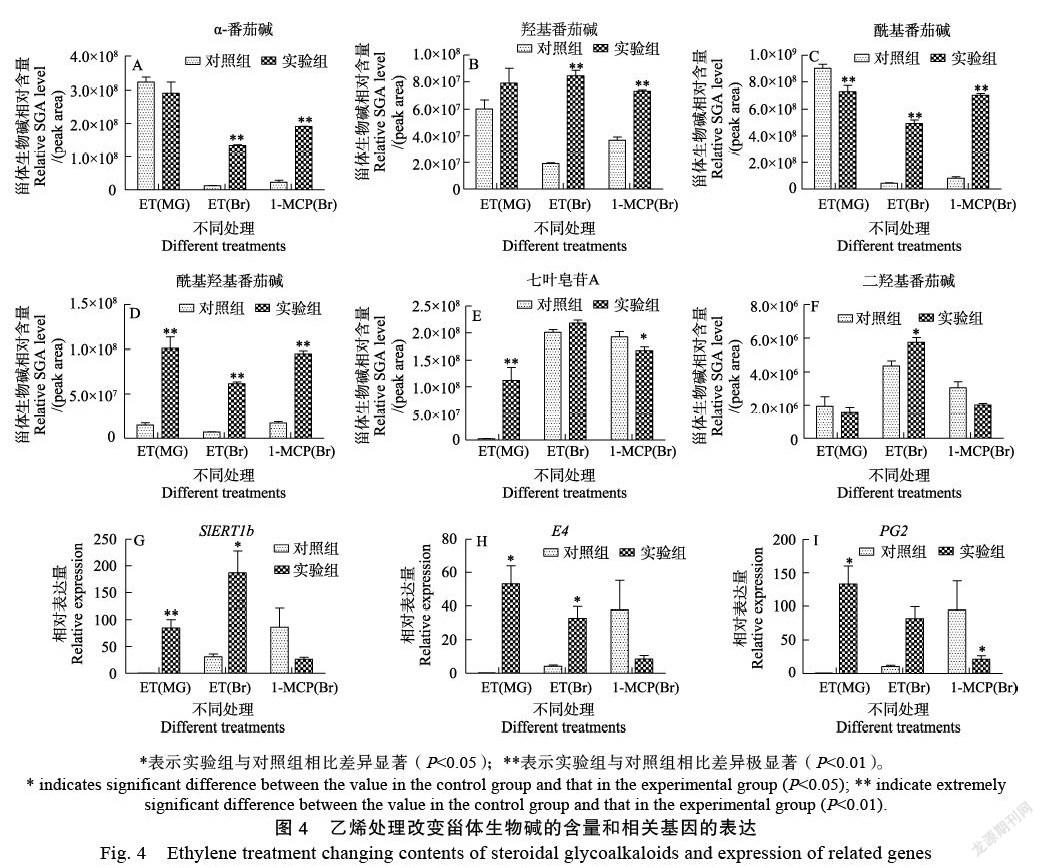
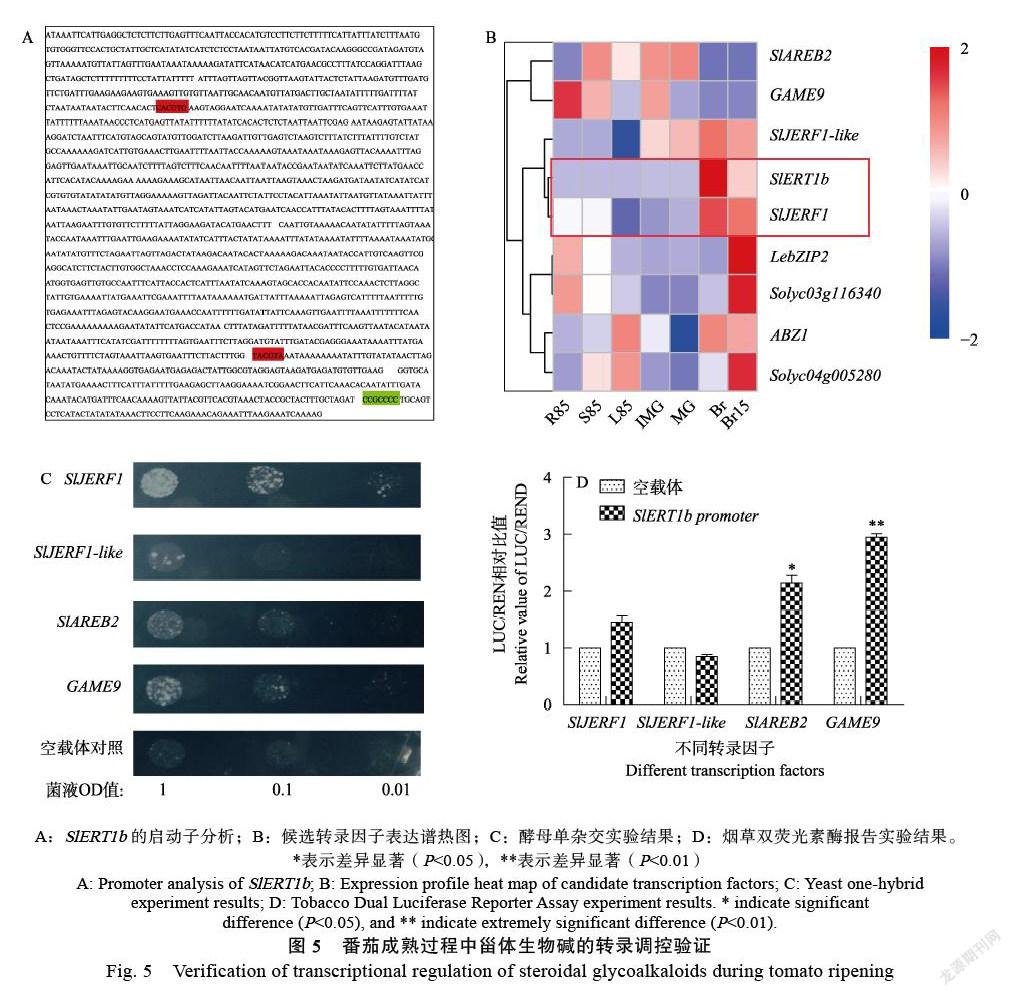
摘 要:绿色番茄中的甾体生物碱主要以α-番茄碱(α-tomatine)形式存在,使得果实带有苦味而不适宜食用。在果实成熟过程中,α-番茄碱会通过一系列酶促反应生成七叶皂苷A(esculeoside A),使果实适宜食用,然而这一代谢途径尚未被完全解析。本课题组在先前研究中鉴定出一个参与这一代谢途径的糖基转移酶SlERT1b,本研究通过番茄的遗传转化实验研究SlERT1b的功能,并利用LC-MS检测其中的甾体生物碱,验证该基因可发挥糖基转移酶的功能。此外,施加外源乙烯和乙烯抑制剂1-MCP后,发现乙烯可调控SlERT1b基因,并影响甾体生物碱的合成途径。同时鉴定出可以调控SlERT1b基因的转录因子SlJERF1和SlAREB2。该研究结果为今后番茄遗传育种提供理论基础。
关键词:番茄;甾体生物碱;乙烯;转录因子
中图分类号:Q946.92 文献标识码:A
Abstract: The steroidal glycoalkaloids in green tomatoes mainly exist in the form of α-tomatine, which gives tomatoes bitter taste and are not suitable for consumption. During the fruit ripening process, α-tomatine will generate esculeoside a through a series of enzymatic reactions, which makes fruits eatable. But the metabolic pathway has not been com-pletely elucidated. In the previous research, we identified a glycosyltransferase SlERT1b which is involved in this met-abolic pathway. In the study, the function of SlERT1b was studied by a tomato genetic transformation experiment. The steroidal glycoalkaloids were detected by LC-MS to verify the role in the metabolic pathway as a glycosyltrans-ferase. Furthermore, the application of exogenous ethylene and ethylene inhibitors 1-MCP could regulate SlERT1b and affect the synthesis of steroidal glycoalkaloids. In addition, we identified the transcription factors SlJERF1 and SlAREB2 which can regulate the expression of SlERT1b. This research provide theoretical basis for the tomato genetic breeding.
Keywords: Solanum lycopersicum; steroidal glycoalkaloids; ethylene; transcription factor
DOI: 10.3969/j.issn.1000-2561.2021.12.010
番茄(Solanum lycopersicum)是一種深受人们喜爱的蔬菜,其包含丰富的营养物质,如维生素、番茄红素、β-类胡萝卜素、类黄酮和植物甾醇等[1-4]。甾体生物碱(SGAs)是一类在茄科植物(番茄、马铃薯和茄子等)中发现的特有次生代谢物,又被称为茄碱。甾体生物碱由糖苷配基和糖基侧链组成[5]。马铃薯中甾体生物碱的主要形式有α-卡茄碱(α-chaconine)和α-茄碱(α-solanine)[6]。在番茄中甾体生物碱主要由2种形式存在,即α-番茄碱(α-tomatine)和脱氢番茄碱(dehydrotomatine),后者的B环5-6 C-C键为双键[7-8]。番茄在生长过程中会遭遇诸多生物胁迫,如真菌、细菌和昆虫等,甾体生物碱对这些胁迫具有一定的抗性[9]。甾体生物碱具有与生物膜上的胆固醇结合进而裂解膜结构的生物学活性,从而使植物获得抗性[10]。……