茶渣固态发酵产红曲霉色素的工艺参数探索
2020-12-21周昀
周昀
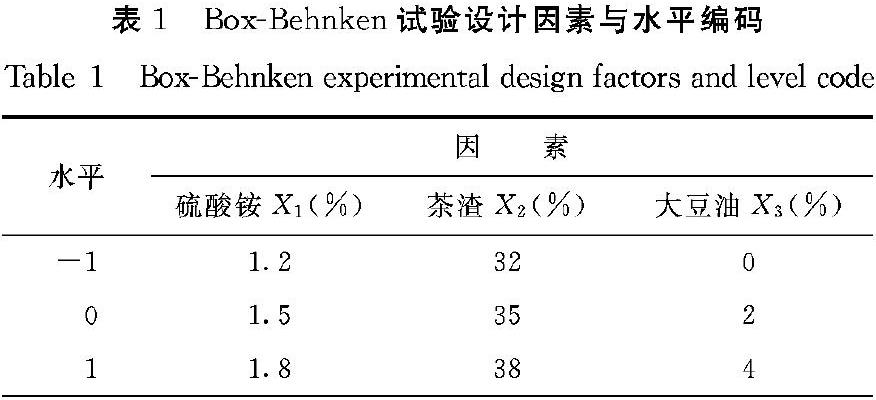
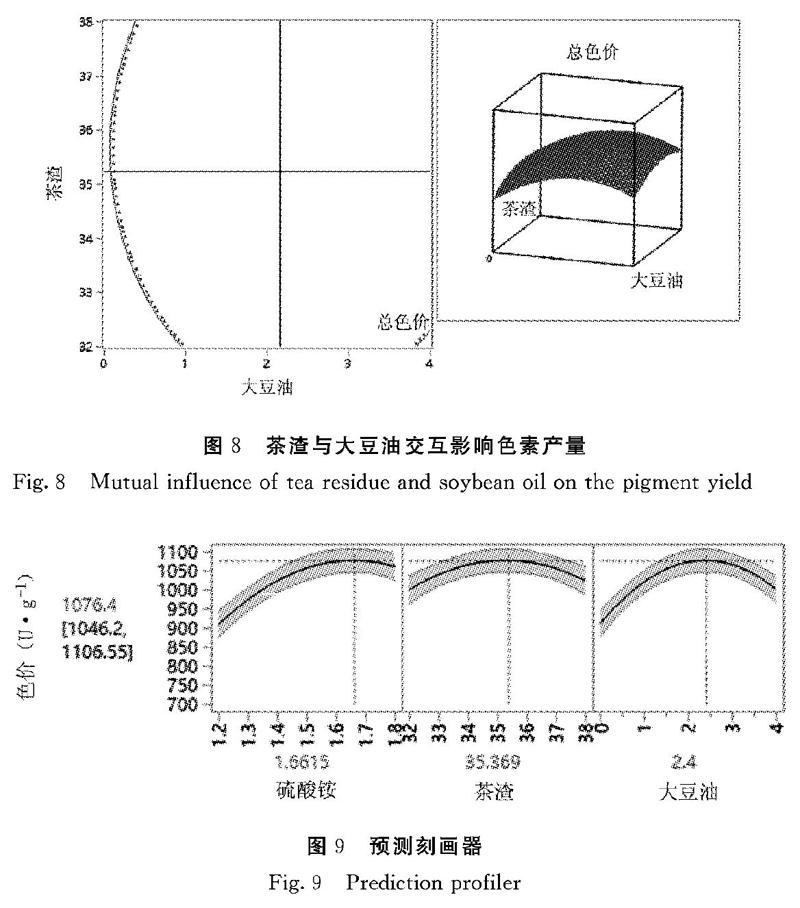
摘 要:對茶渣固态发酵产红曲霉色素工艺条件进行优化。在单因素试验基础上,以硫酸铵、茶渣、大豆油添加量为影响因素,以红曲色素总色价为响应值,采用BoxBehnken中心组合试验设计数学模型,优化茶渣固态发酵产红曲霉色素的培养条件。结果表明:影响茶渣固态发酵产红曲霉色素的因素大小依次为硫酸铵、大豆油、茶渣;茶渣固态发酵产红曲霉色素的最佳培养条件为硫酸铵添加量1.66%、茶渣添加量35.37%、大豆油添加量2.4%以及接种量3%,根据模型预测的总色价为(1076.4±30.2)U·g-1。进行重复验证试验,经测定实际所得总色价为1063 U·g-1,总色价实测值与回归模型的预测值相对误差1.26%,说明回归方程与实际情况拟合较好。
关键词:茶渣;红曲霉;红曲色素;固态发酵
中图分类号:TS209 文献标志码:A 文章编号:0253-2301(2020)08-0001-06
Abstract: The technological conditions of producing the Monascus pigment by solidstate fermentation of tea residue were optimized. On the basis of the single factor experiment, with the ammonium sulfate, tea residue and soybean oil as the influencing factors and the total color value of Monascus pigment as the response value, the BoxBehnken central composite design was used to design a mathematical model, in order to optimize the culture conditions for the production of Monascus pigment by solidstate fermentation. The results showed that the factors affecting the production of monascus pigment by solidstate fermentation of tea residue were the ammonium sulfate, soybean oil and tea residue in order. The optimum culture conditions for producing the Monascus pigment by solidstate fermentation of tea residue were the ammonium sulfate (1.66%), tea residue (35.37%), soybean oil (2.4%) and inoculation amount (3%). And the total color value predicted by the model was (1076.4±30.2)U·g-1. Then, the repeated verification tests were carried out and the actual total color value was determined to be 1063 U·g-1. The relative error between the measured value of total color value and the predicted value of the regression model was 1.26%, indicating that the regression equation fit well with the actual situation.
Key words: Tea residue; Monascus; Monascus pigment; Solidstate fermentation
红曲霉产的红曲色素作为一种天然色素,广泛使用在食品加工业中[1]。红曲色素目前已确定结构的有红曲红、红曲橙和红曲黄3种,与其他色素相比具有降血脂、降血压等生理活性,且稳定性高,着色力强等优势[2],开发色价高的红曲色素成为近年来红曲霉产物的研究热点。与此同时,由于茶叶中含有较多的营养成分,作为传统饮料,制作茶叶、茶饮料生产中产生了大量废弃茶叶副产品。茶渣中保留了大量纤维素、木质素、茶多酚、氨基酸及微量元素等有效成分,具有潜在利用价值[3]。福建省作为产茶大省,茶叶消费副产品相当巨大,茶渣等再利用的研究对促进福建省农业残余产业发展具有重要意义。……