微电解-A/O生化组合工艺处理实验室高浓度废水
2020-08-13潘琨苏洲陆静怡居军张键
潘琨 苏洲 陆静怡 居军 张键

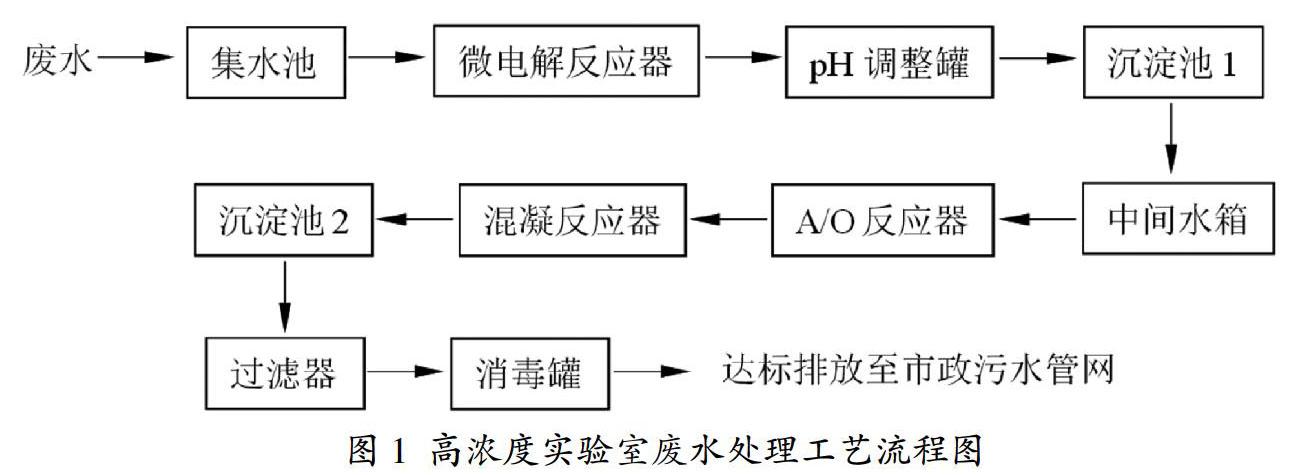
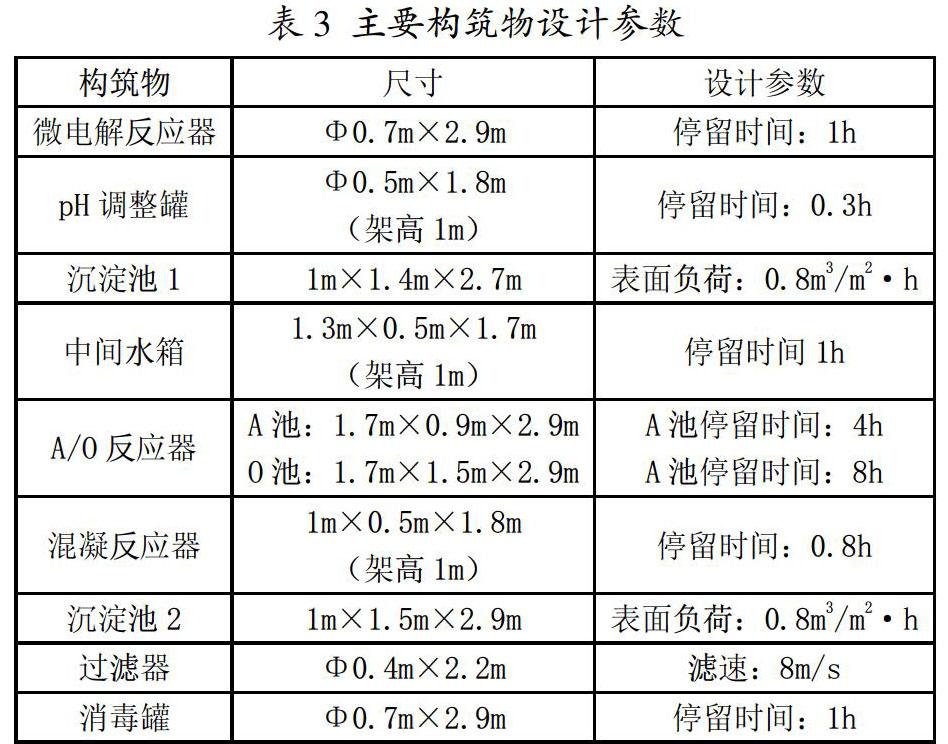
摘 要:高校实验室废水具有排放周期和排放量不定、浓度和成分复杂多变等特性。为减少实验室高浓度废水排放对周边环境造成的污染,采用微电解-A/O生化组合工艺对某高校环境学院实验室废水进行处理。工程实践表明,该工艺运行稳定,抗冲击负荷能力强,处理成本低,处理效果好,CODcr、SS和NH3-N的总去除率分别达到87.2%、90.5%和79.9%。出水水质达到《污水排入城镇下水道水质标准》(GB/T 31962-2015)和污水处理厂纳管要求。
关键词:实验室废水;微电解;A/O生化
中图分类号:X703 文献标志码:A 文章编号:2095-2945(2020)24-0105-03
Abstract: Laboratory wastewater in colleges and universities has the characteristics of indefinite discharge cycle and quantity, complex concentration and composition. In order to reduce the pollution to the surrounding environment caused by the discharge of high concentration laboratory wastewater, a micro electrolysis-A/O biochemical combination process was used to treat the laboratory wastewater of the Environmental College of a university. The engineering practice shows that the process has stable operation, strong shock load resistance, low treatment cost and good treatment effect. The total removal rates of CODcr, SS and NH3-N are 87.2%, 90.5% and 79.9% respectively. The water quality of the effluent meets the requirements of "Wastewater Quality Standards for Discharge to Municipal Sewers" (GB/T 31962-2015) and the requirements of the sewage treatment plant for collecting wastewater through pipes.
Keywords: laboratory wastewater; microelectrolysis; A/O biochemical
1 实验室高浓度废水来源及特性
近年来,我国高等教育规模迅速扩大,各高校实验室的教学、科研活动增加迅猛,随之而来的便是教学、实验过程中产生的实验室废水污染物排放量快速增加[1-3]。各高校师生在科研过程中都会使用到各类化学试剂,这些化学试剂的部分在使用后一般会和洗涤水一同排入下水道。因此,近年来实验室废水逐渐呈现高浓度趋势[4]。
实验室高浓度废水具有长期残留性、生物积蓄性、高毒性等性质,如果不经处理直接排放不仅会对周围环境造成严重的污染,长远来看,还会对人体造成危害,而且一般的城市污水处理厂的常规处理工艺很难处理这些实验室高浓度废水,更为严重的是大量排放的高浓度实验室废水会对污水处理厂生化系统造成破坏[5]。因此,实验室高浓度废水的处理是一个急需解决的问题。
根据对某高校环境学院实验楼排放的废水多次采样分析测定,主要水質指标如表1所示。……