1912—1913年国民党基层组织的活动内容初探
2020-08-06孙明阳
孙明阳
摘 要 袁世凯统治时期的国民党基层组织,主要分为支部、交通部和分部,在其真正存在的时间里,国民党基层组织分别参与了民初第一届国会选举和二次革命等重大事件,在这些事件中,暴露出了国民党作为中国第一个具有建设意义的现代政党组织,建设经验的不足和西方政党建设理念在本土的不适应,这也导致了二次革命的必然失败和随后的国民党基层组织的被迫解散。
关键词 袁世凯统治时期 国民党基层组织 国会选举 二次革命
Abstract During the reign of Yuan Shikai, the Kuomintang grassroots organizations were mainly divided into branches, ministries of transportation and their branches. During their real existence, the Kuomintang grassroots organizations participated in some major events such as the first congressional election and the second revolution in the early Republic of China. The incidents exposed the inadequacy of organization construction experience of the Kuomintang as Chinas first constructive modern party and the maladaptation of western party construction concept to local China, which also led to the inevitable failure of its second revolution and subsequent forced dissolution of Kuomintang grassroots organizations.
Keyword Yuan Shikai's reign; Kuomintang grassroots organization; congressional election; second revolution
一、國会选举时期的活动
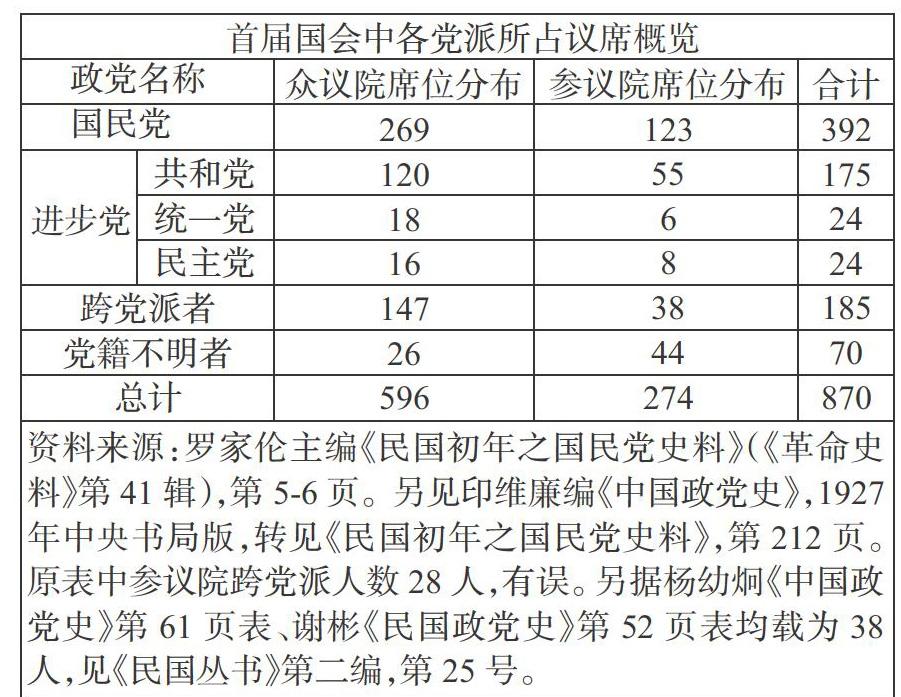
国民党成立的主要目的,即赢得国会大选,实现政党内阁。因此,在国民党各个基层组织成立伊始,立即展开各种活动,竞选国会议员。依据《中华民国国会组织法》与《参议院议员选举法》《众议院议员选举法》三大选举法大纲,规定国会由参议院和众议院组成,参议院议员由以下几个方面组成:(1)各省省议会选举十名;(2)蒙古选举会选举二十七名;(3)西藏选举会选举十名;(4)青海选举会选举三名;(5)中央学会选举八名①;(6)华侨选举会选举六名,合计推选议员274名,各省议员席位占全部名额的四分之三强。众议院以各地方人民选举议员组成,其名额由各省按人口比例,每80万人推选议员一名(人口不满八百万的,得选议员十名);蒙古、西藏、青海同参议院额数。同时规定众议院议员选举为“复选制”,即以县为初选选举区,合若干初选区组成复选,每省不超过八区,初选、复选均设选举监督,每省设选举总监督,得由各该地方长官充任,国会议员由省议员复选产生。……
