基因多态性检测对指导阿司匹林、氯吡格雷和西洛他唑应用于高危脑梗死治疗的有效性研究
2020-04-27江铮魏锋陈朋蒋小玲俞晓岚徐丽群黄美华
江铮 魏锋 陈朋 蒋小玲 俞晓岚 徐丽群 黄美华
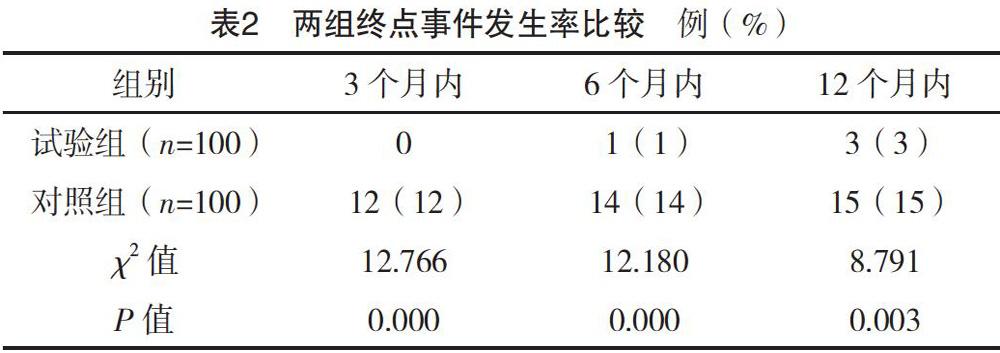
【摘要】 目的:探讨基因多态性检测对指导阿司匹林、氯吡格雷和西洛他唑对治疗高危脑梗死患者是否具有临床意义。方法:本研究选取2017年10月-2018年10月在福州市第二医院住院的高危脑梗死患者,随机分为试验组(100例)和对照组(100例)。试验组通过基因多态性检测后推荐的药物治疗,对照组用目前指南中推荐的用药方法,于3、6、12個月后各观察1次,比较两组终点事件的发生率。结果:试验组12个月内发生终点事件发生率为0、1%、3%,明显低于对照组的12%、14%、15%,两组比较差异有统计学意义(P<0.05)。结论:基因多态性检测对指导临床医师选择阿司匹林、氯吡格雷和西洛他唑这三种我国目前最常用抗血小板聚集药物治疗高危脑梗死患者具有重要意义。
【关键词】 基因多态性检测 脑梗死 指导 阿司匹林 氯吡格雷 西洛他唑
[Abstract] Objective: To investigate whether genetic polymorphism detection has clinical significance in guiding Aspirin, Clopidogrel and Cilostazol in the treatment of patients with high-risk cerebral infarction. Method: Patients with high-risk cerebral infarction (without cerebral embolism) admitted to Fuzhou Second Hospital from October 2017 to October 2018 were randomly divided into experimental group (100 cases) and control group (100 cases). The experimental group received the recommended drug treatment after the genetic test, and the control group used the recommended method of administration in the current guidelines. Observed once every 3 , 6 and 12 months later,and then compare the incidence of endpoint events between the two groups. Result: The incidence of end point events within 3, 6, 12 months in the experimental group were 0, 1%, 3%, significantly lower than 12%, 14%, 15% in the control group, the differences were statistically significant (P<0.05). Conclusion: According to the above experiments, the detection of gene polymorphism is of great significance in guiding clinicians to select Aspirin, Clopidogrel and Cilostazol, three drugs most commonly used in China to treat high-risk cerebral infarction patients.
我国是一个卒中大国,据估算,我国每年新发脑血管病患者有200万人之多,死于脑卒中的患者也高达150万人[1]。而缺血性卒中是最常见的脑卒中类型,约占全部脑卒中的60%~80%[2]。中国缺血性卒中复发率高,危害也更大。目前急性缺血性脑卒中病死率已跃居我国居民死因的首位[3]。有统计中国缺血性卒中患者1年整体复发率为16%,高危患者[采用卒中风险评分量表(Essen stroke risk score,ESRS)进行评价,3~9分为高危患者]为20%,而复发性卒中具有更高的致残率、更高的死亡率[4]。由于针对血管性疾病[如缺血性卒中(CVD),冠状动脉疾病(CAD),外周动脉疾病(PAD)]患者使用的抗血小板聚集药物治疗后可能出现的“抵抗”现象[5],抗血小板聚集药物不能完全防止患者发生血栓并发症,国内外研究发现[6-7]:基因的多态性(SNPs)与“抵抗”密切相关,由于“抵抗”现象存在,有部分患者在用药后仍然发生缺血性脑卒中、心肌梗死、猝死等不良事件。……
