转换性使用与版权侵权边界研究
2019-11-22冯晓青刁佳星
冯晓青 刁佳星
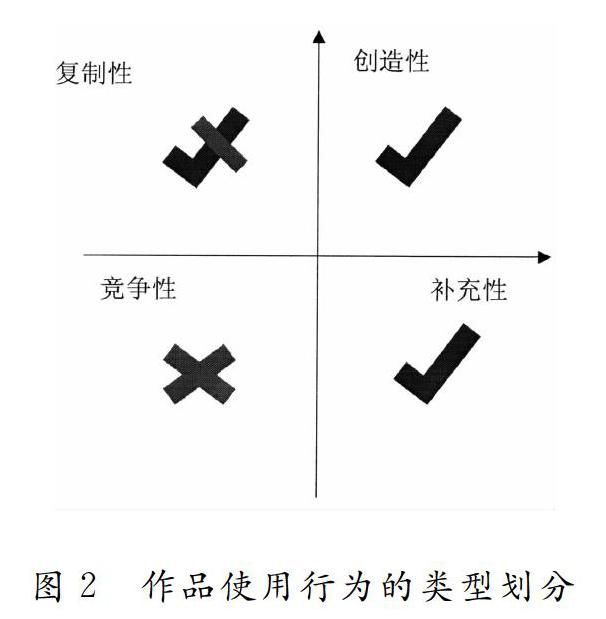
[摘 要]转换性使用理论在美国司法实践中的扩大适用模糊了版权这一专有权利的边界。从版权法功能主义与市场主义视角对“转换性使用理论”进行法律分析,可以刺破这一概念的朦胧面纱,更为清晰和客观地划定转换性使用行为与版权的边界。即在不存在市场失灵的情况下,由版权人与使用人进行私人缔约可以较好地解决知识产品的供给与需求问题。在存在市場失灵的情形下,有必要对其从市场(使用是竞争性抑或补充性的)与功能(使用是创造性抑或复制性的)两个视角考量,并以此探讨我国借鉴“转换性使用理论”的体系效应与制度收益。
[关键词]转换性使用;市场失灵;版权目标;合理使用
[中图分类号] DF523[文献标识码]A [文章编号]1008—1763(2019)05—0134—10
Abstract:The expanding application of transformative use in judicial practice of the USA blurs the boundaries of copyright. From functionalism of copyright law and marketism, we can pierce the veil of this concept and delineate the boundary between transformative use and copyright. That is to say, in the absence of market failure, private contracting between the copyright owner and the user can better solve the problem of supply and demand of knowledge. In the case of market failure, it is necessary to consider it from the perspectives of marketism (whether the use is competitive or complementary) and functionalism (whether the use is creative or reproductive), and explore its systemic effects and institutional benefits in China.
Key words: transformative use; market failure; copyright goals; fair use
美国版权法采用了“开放式”的路径判断作品使用行为的合理性,其“开放式”路径也因“模糊与不可预测性”而被指为“整个版权法中最模糊的学说”[1]。为应对“合理使用”标准的模糊性与不可预测性,美国司法与理论界形成了不同观点。前者,如发端于Sony案的“商业性使用说”、Campbell案的“转换性使用说”以及Harper & Row案的“市场侵蚀说” 。后者,如以Wendy Gordon为代表的“市场失灵说”[1],以Joseph P. Liu为代表的“二因素测试法” [2]等。导源于1994年Campbell案的“转换性使用”理论在涉及滑稽模仿、挪用艺术、搜索引擎等案件中得到了广泛应用并深刻影响当前美国联邦法院合理使用的司法判定。我国司法实践亦借鉴美国的“转换性使用理论”进行司法裁判,学理研究中也出现了“转换性使用理论”研究文章,如“用户创造内容”“重混创作”“同人小说”“游戏直播”等。……
