基于押金返还制度的闭环供应链
2019-07-21张扬杨俊
张扬 杨俊

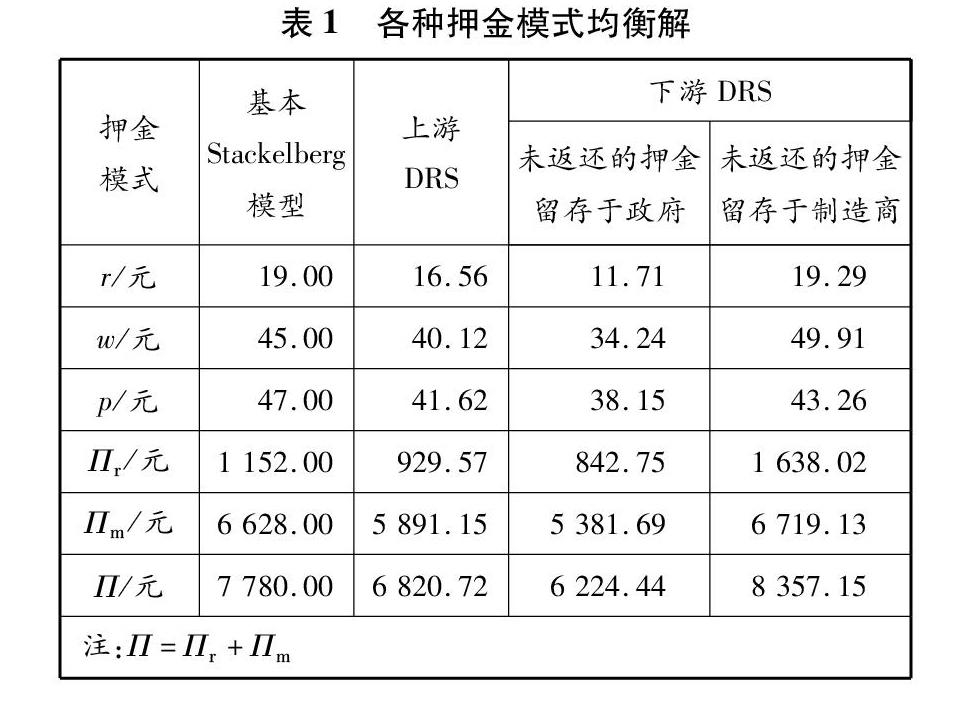
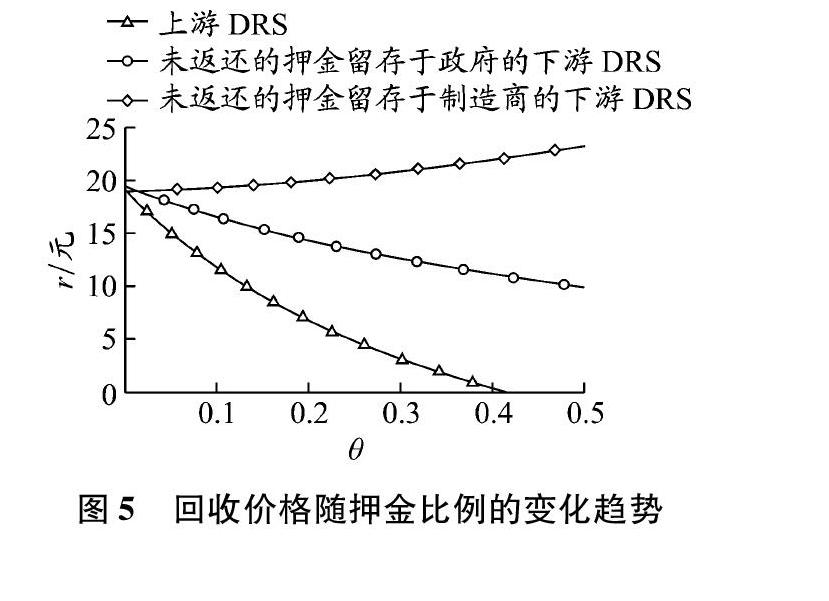
摘要:针对押金返还制度(deposit refund system, DRS)下制造商主导的闭环供应链决策问题,提出3种DRS,分别为未返还的押金留存于政府的下游DRS、未返还的押金留存于制造商的下游DRS和上游DRS,并比较各种制度下的最优决策。结果表明:未返还的押金留存于政府的DRS能赋予政府更多的灵活性来协调供应链;未返还的押金留存于制造商的DRS能最大限度地提高回收率并增加供应链利润,从而达到保护环境、节约资源的目的;上游DRS实际上相当于向消费者征收“环保税”,会降低消费者需求,减少供应链利润。
关键词:押金返还制度(DRS);闭环供应链;Stackelberg博弈;回收率
中图分类号:F274
文献标志码:A
Abstract:For the decision-making issue for closed-loop supply chains with dominant manufacturers under deposit refund systems (DRSs), three DRSs are proposed:the downstream DRS that the unreturned deposit is retained by the government, the downstream DRS that the unreturned deposit is retained by manufacturers, and the upstream DRS. The optimal decisions under three DRSs are compared. The results show that:the DRS that the unreturned deposit is retained by the government can give the government more flexibility to coordinate supply chains; the DRS that the unreturned deposit is retained by manufacturers can maximize the recovery rate and supply chain profits, thus achieve the purpose of environment protection and resource conservation; the upstream DRS is actually equivalent to levying “green tax” on consumers, which can reduce consumer demand and supply chain profits.
Key words:deposit refund system (DRS); closed-loop supply chain; Stackelberg game; recovery rate
收稿日期:2018-05-27
修回日期:2019-03-04
作者简介:
张扬(1972—),男,河南南阳人,博士,副教授,研究方向为交通运输管理,(E-mail)yangzhang@shmtu.edu.cn
0 引 言
近年来,能源与环境问题日益凸显,社会各界尤其是政府部门对此逐渐重视。在制造业领域,产品的回收与再制造成为关注的重点,如何对闭环供应链实施引导与激励也被纳入政府优先关注的范畴。
在国内外有关闭环供应链回收模式的研究中,SAVASKAN等[1]运用Stackelberg博弈模型,研究了制造商作为领导者时可以选择的不同产品回收模式,证明在其他条件相同时,回收商越接近消费者效率越高。HAMMOND等[2]运用古诺博弈模型,研究了制造商与消费者组成的闭环供应链在完全信息状态下达成的均衡。黄宗盛等[3]运用动态模型,研究了企业对逆向供应链的长期投资带来的收益率的变化,得出了对制造商回收渠道的投资比对零售商回收渠道的投资更有效率的结论。……