菲利普·罗斯:同时代人的声音
2018-09-18ByNelsonPressley
By Nelson Pressley
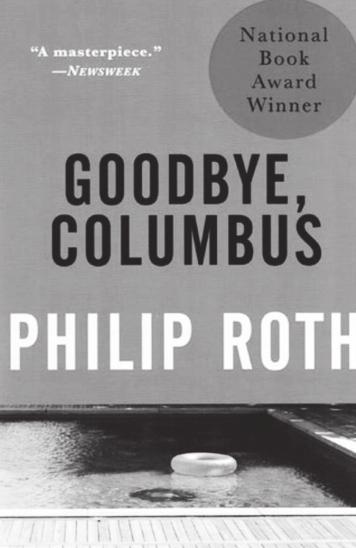
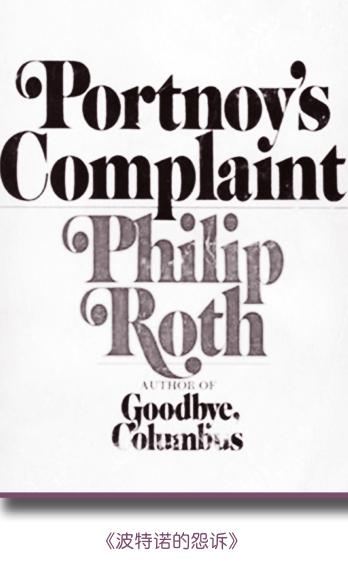
Philip Roth, whose comic novel Portnoys Complaint brought him literary celebrity after its publication in 1969 and who was eventually hailed1 as one of Americas greatest living authors for the blunt force and controlled fury of his dozens of later works, died May 22 at a hospital in Manhattan. He was 85.
His literary agent, Andrew Wylie, said the cause was congestive heart failure in confirming the death to the Associated Press.
Mr. Roths 1959 debut story collection, Goodbye, Columbus, earned him the first of two National Book Awards.2 He would publish 27 novels, two memoirs and several more story collections by the time he publicly retired from writing in 2012. His lifelong themes included sex and desire, health and mortality, and Jewishness and its obligations—arguably his most definitive subject, given the controversy surrounding his earliest works.
In later years, his focus shifted more frankly to the nation and its discontents, from the rise of Richard Nixon as a political figure in the early Cold War era to the sideshow of the Clinton-Lewinsky scandal in what became known as Mr. Roths “American Trilogy”: American Pastoral (1997), I Married a Communist (1998) and The Human Stain (2000).
“He at once talked about America and American-ness but filtered it through the history of the 20th century at large,” said Aimee Pozorski, an associate professor of English at Central Connecticut State University who had written extensively about Mr. Roth.
“He wrote about the American response to the Holocaust, but also about its effects in Israel and Central and Eastern Europe,” Pozorski said. “He could write about these international issues because he was truly cosmopolitan, a global citizen who was grounded by American culture.”
She called Mr. Roth “the voice of his generation.”
A 2006 survey by the New York Times Book Review of the best books since 1981 found an astonishing six of Mr. Roths novels among the top 22. Well into his senior years, he continued to win the highest laurels of his profession with new, evocative3 works. In 1993, his Operation Shylock: A Confession won the PEN/Faulkner prize; in 1995, Sabbaths Theater won the National Book Award; in 1997, American Pastoral won the Pulitzer Prize.4
His appeal was not limited to elite critical circles, drawing enthusiastic fans such as Bruce Springsteen, the rock musician. Speaking of Mr. Roths “American Trilogy,” Springsteen once observed, “To be in his 60s making work that is so strong, so full of revelations about love and emotional pain, thats the way to live your artistic life. Sustain, sustain, sustain.”
Philip Roth was born on March 19, 1933, to firstgeneration Americans—Herman Roth, an insurance salesman for Metropolitan Life, and his wife, the former Bess Finkel. They were Jews who “were and were not religious,” and they “didnt talk about the past. There was no remembering elsewhere,” he recalled in The Facts.
He winced5 when referred to as an American Jewish writer. “Growing up Jewish as I did and growing up American seemed to me indistinguishable,” he wrote, also in The Facts. “Id come from a small, safe, relatively happy provincial background—my Newark neighborhood in the thirties and forties was just a Jewish Terre Haute.”
Mr. Roth left Newark for Bucknell University in Pennsylvania mainly out of restlessness, to escape his familiar home town and his father.
“I wanted something difficult and dangerous to happen to me. I wanted a hard time. Well, I got it,”Mr. Roth said in 1984. (Explaining the notoriety6 of Portnoys Complaint and his own in an essay titled“Imagining Jews” for the New York Review of Books in 1974, Mr. Roth wrote, “Going wild in public is the last thing in the world that a Jew is expected to do.”)
At Bucknell, he edited the literary magazine, was elected to the Phi Beta Kappa honor society and conscientiously began to find his writers voice,7 ruthlessly critiquing a colleague in print and discovering “a flash of talent for comic destruction.”
After graduating from Bucknell in 1954, he received a masters degree in English the next year from the University of Chicago and served in the Army for a year (largely behind a desk in Washington). He then returned to Chicago and taught English at his alma mater while writing fiction. An early admirer was novelist and future Nobel laureate Saul Bellow8, who told an interviewer that Mr. Roths stories “showed a wonderful wit and great pace.”
When Goodbye, Columbus was accepted for publication in 1958, Mr. Roth resigned his teaching post and moved to Manhattan, but the friction with his antagonists9 wasnt over.
In 1962, Mr. Roth shared a panel with Invisible Man author Ralph Ellison and Italian novelist Pietro di Donato during a symposium at Yeshiva University. Again he was denounced10 by questioners who thought he was undermining Jews. Mr. Roth later recycled the incident in The Ghost Writer, and he frequently said the standoff was formative.11
In 1973, Mr. Roth explained the double-edged sword of those early attacks:
“I might turn out to be a bad artist, or no artist at all, but having declared myself for art—the art of Tolstoy, James, Flaubert, and Mann,12 whose appeal was as much in their heroic literary integrity as in their work—I imagined I had sealed myself off from being a morally unacceptable person, in others eyes as well as my own.
“I think now—I didnt then—that this conflict with my Jewish critics was as valuable a struggle as I could have had at the outset of my career… I resented how they read me, but I was never able to complain afterward that they didnt read me; I never felt neglected.”
“Theres always something behind a book to which it has no seeming connection, something invisible to the reader which has helped unleash the writers impulse,” Mr. Roth said of Portnoys Complaint in the 1984 collection Writers at Work. “Im thinking about the rage and rebelliousness that were in the air, the vivid examples I saw around me of angry defiance and hysterical opposition. This gave me a few ideas for my act.”
Portnoys Complaint drew criticism from Jewish groups for its perceived ethnic stereotyping and from others for its sexual explicitness. But it also won praise from prominent reviewers for being playful and moving, a masterpiece on guilt. Writing in the New York Times, author and screenwriter Josh Greenfeld called it a “deliciously funny book, absurd and exuberant, wild and uproarious.”13
The acclaim for the Ghost Writer trilogy—with the writer Zuckerman viewed as a very close stand-in for his creator through Zuckerman Unbound (1981) and The Anatomy Lesson (1983)—rescued Mr. Roth once and for all from the “Portnoys” reputation as a clown prince of sexual provocation14.
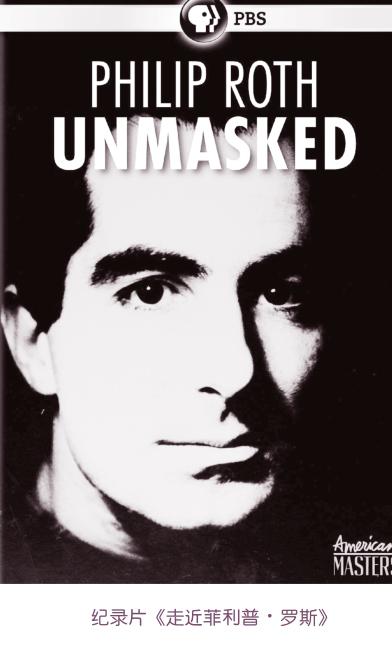
“When all of those books were taken together, you had my story,” he said in the 2013 PBS documentary Philip Roth: Unmasked.
Yet earlier he had said: “Nathan Zuckerman is an act. Making fake biography, false history, concocting15 a half-imaginary existence out of the actual drama of my life is my life. There has to be some pleasure in this job, and thats it. To go around in disguise. To act a character. To pass oneself off16 as what one is not. To pretend. The sly and cunning masquerade17.”
“Am I Lonoff18? Am I Zuckerman? Am I Portnoy?” Mr. Roth asked in a 1981 interview. “I could be, I suppose. I may be yet. But as of now I am nothing like so sharply delineated19 as a character in a book. I am still amorphous20 Roth.”
菲利普·羅斯,1969年出版的喜剧小说《波特诺的怨诉》让他享誉文学界,在之后的许多作品中,因其钝力和有节制的愤怒而逐渐被公认为美国在世的最伟大的作家之一。5月22日,菲利普·罗斯在曼哈顿一家医院逝世,享年85岁。
他的文学经纪人安德鲁·怀利向美联社证实了罗斯因充血性心力衰竭而辞世的消息。
罗斯凭借1959年出版的处女作小说集《再见,哥伦布》获得了美国国家图书奖,之后,他又获得过一次该奖。2012年封笔之前,罗斯共出版了27部小说、两本回忆录和数本小说集。他坚持一生的写作主题包括性和欲望、健康和死亡、犹太人身份和其责任,这些可以说是他作品中最明确的主题。罗斯的早期作品曾引起很大的争议。
在他的后期作品中,罗斯的关注点转向更坦诚地揭露国家事务及其阴暗面,从冷战初期理查德·尼克松作为政治新星的升起到克林顿-莱温斯基性丑闻事件,组成了罗斯的“美国三部曲”:《美国牧歌》(1997)、《我嫁给了共产党人》(1998)以及《人类的污秽》(2000)。
“他谈论美国和美国性,但是总体上用20世纪的历史过滤了,”中康涅狄格州立大学的副教授艾美·波佐斯基如是说。艾美写过很多关于罗斯的文章。
“他在作品中描写美国人如何看待二战期间德国纳粹对犹太人的大屠杀,同时也写大屠杀对以色列和中东欧造成的影响。”波佐斯基说,“罗斯之所以能在写作中驾驭这些国际问题,是因为他是真正的世界主义者,植根于美国文化的世界公民。”
她将罗斯称为“他那一代人的声音”。……