不同喂养方式与月龄婴儿缺铁性贫血的关系
2018-04-13卢隽滢卢红艳李玉勤
卢隽滢 卢红艳 李玉勤
【摘要】 目的 分析不同喂养方式与婴儿缺铁性贫血的关系。方法 665例婴儿, 根据母乳喂养情况分为母乳喂养组(447例)、混合喂养组(147例)和人工喂养组(71例)。分析三组贫血情况。
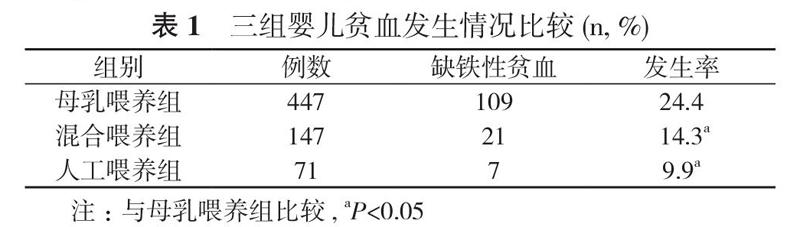
结果 6月龄婴儿缺铁性贫血发生率为20.6%(137/665), 其中中度贫血5例, 均来自母乳喂养组, 无重度和极重度贫血;母乳喂养组缺铁性贫血发生率为24.4%(109/447), 混合喂养组为14.3%(21/147), 人工喂养组为9.9%(7/71), 母乳喂养组缺铁性贫血发生率高于混合喂养组及人工喂养组, 差异有统计学意义(P<0.05)。结论 母乳喂养的婴儿缺铁性贫血患病率更高, 对婴儿尤其是纯母乳喂养儿适当补充铁剂、及时添加辅食, 是预防贫血发生的重要手段。
【关键词】 喂养方式;缺铁性贫血;婴儿
DOI:10.14163/j.cnki.11-5547/r.2018.10.013
【Abstract】 Objective To analyze the relationship between different feeding methods and iron deficiency anemia in 6 months old infants. Methods A total of 665 infants were divided by breast feeding condition into breast feeding group (447 cases), mixed feeding group (147 cases) and artificial feeding group (71 cases). The anaemia conditions in three groups was analyzed. Results 6 months old infants had iron deficiency anemia rate as 20.6% (137/665), including 5 cases of moderate anemia from breast feeding group, and there was no severe and extreme severe anemia. Breast feeding group had iron deficiency anemia rate as 24.4% (109/447), which was 14.3% (21/147) in mixed feeding group and 9.9% (7/71) in artificial feeding group. Breast feeding group had higher iron deficiency anemia rate than mixed feeding group and artificial feeding group, and their difference was statistically significant (P<0.05). Conclusion Breast feeding infants have a higher prevalence of iron deficiency anemia, and proper supplementation of infants, especially exclusively breastfeeding infants, and complementary food supplements are important means of preventing anemia.
【Key words】 Feeding methods; Iron deficiency anemia; Infants
缺铁性贫血(iron deficiency anemia, IDA)是全球尤其发展中国家面临的严重公共卫生问题[1], 是我国重点防治的小儿常见病, 6~24个月婴幼儿是其发生的高危人群[2]。婴儿早期的喂养方式与缺铁性贫血的发生密切相关, 本文分析了本院所辖社区体检婴儿的资料, 旨在为重点年龄阶段婴儿合理喂养和贫血的预防提供参考。报告如下。
1 资料与方法
1. 1 一般资料 选取2014年1月1日~2016年12月31日出生并于本院所辖社区进行健康体检的665例婴儿作为研究对象, 其中男336例, 平均出生体重(3.43±0.35)kg, 女329例, 平均出生体重(3.33±0.34)kg。所有婴儿均于6月龄后添加辅食, 根据母乳喂养情况分为母乳喂养组(447例)、混合喂養组(147例)和人工喂养组(71例)。
1. 2 排除标准 ①双胎或多胎;②早产儿、低出生体重儿或巨大儿;③出生时有重度窒息、产伤或严重先天性疾病;……