四川山丘区不同利用方式土壤磷吸附特性
2017-07-13高堃李乃稳肖薇
高堃 李乃稳 肖薇
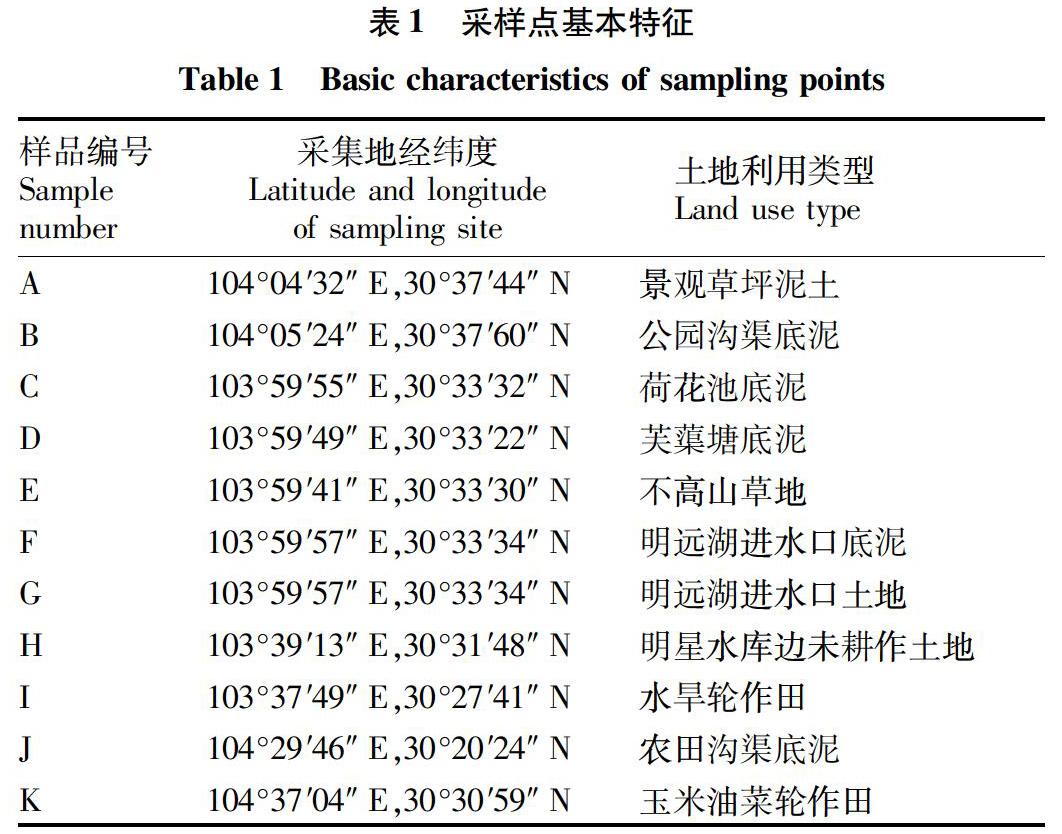
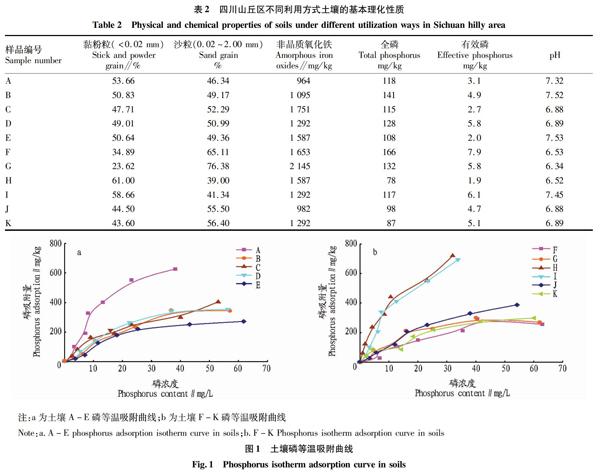
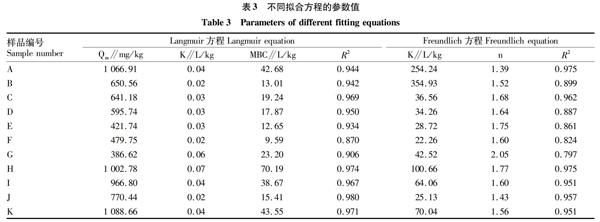
摘要[目的]研究四川山丘区11种不同利用方式土壤磷的吸附特性,为生态沟渠底质的选择提供科学依据。[方法]针对生态沟渠中的底质,选取四川山丘区11种不同利用方式的土壤为研究对象,对磷的吸附特性进行研究。[结果]等温吸附时,磷的最大吸附量Qm、吸附平衡常数K、最大缓冲容量MBC均与黏粉粒含量呈正相关,但K和MBC与pH呈负相关;适宜的淹水条件能增加土壤黏粉粒含量,促进非晶质氧化铁的形成,从而有利于土壤对磷的吸附。土壤磷吸附动力学试验表明,在接触时间2 h内吸附反应速率较快,这是磷向沟渠底质转移的主要阶段;去除水体中多余的磷素,应选取黏粉粒含量高的土壤作为生态沟渠的底质。[结论]该研究对生态沟渠底质的合理选择具有重要的实际应用价值。
关键词 土壤利用方式;磷;最大缓冲容量;吸附
中图分类号 S158 文献标识码 A 文章编号 0517-6611(2017)02-0137-06
Abstract[Objective] To study phosphorus adsorption characteristics of soils under different utilization ways in Sichuan hilly area, in order to provide scientific basis for the selection of ecological ditch substrate.[Method]Eleven kinds of soils with different utilization ways in Sichuan hilly area were chosen,and experimental research on the phosphorus adsorption characteristics was done.[Result] During isothermal adsorption, positive correlation existed between the maximum adsorption capacity Qm, adsorption equilibrium constant K, maximum buffer capacity MBC of phosphorus and clay, silt contents, but negative correlation existed between K, MBC and pH;Suitable flooding condition could increase the clay and silt contents of soil, promoted the formation of amorphous iron oxide and was suitable for the adsorption of soil for phosphorus;Experiment of soil phosphorus adsorption kinetics had shown that the adsorption reaction was rapid within 2 h of contact time, which was the main stage of phosphorus transferring to ditch substrate;Soil with high contents of clay and silt should be chosen as the substrate of ecological ditch to remove the extra phosphorus in water.[Conclusion] The research results have important practical application value for the reasonable selection of ecological ditch substrate.
Key words Soils utilization ways;Phosphorus;Maximum buffer capacity;Adsorption
农业面源污染是我国水体污染中氮、磷的主要来源,是引发江河、淡水湖泊水体富营养化的主要原因[1-3]。氮、磷等营养物质随着降雨而形成的地表径流进入水体,形成面源污染。对于面源污染,其控制途径有源头控制、中间过程控制和末端治理[4]。源头控制即减小农业氮肥、磷肥的施用量,但农田仍存在氮、磷的流失;而末端治理是指通过技术手段降低末端环境中污染物的含量,技术复杂,难以实现。中间过程控制则是阻断氮、磷等污染物向下游水體的迁移路径,从而极大地削减了进入下游水体的氮、磷等污染物的总量。……