针刺治疗对缺血性脑卒中患者静息态功能磁共振的影响
2017-07-13丁彩霞胡丹张兰坤李传游姜寒张晓浩盛蕾
丁彩霞 胡丹 张兰坤 李传游 姜寒 张晓浩 盛蕾


摘要:目的 觀察针刺对缺血性脑卒中患者静息态功能磁共振(fMRI)的影响,探讨针刺的中枢作用机制。方法 纳入缺血性脑卒中肢体偏瘫患者和健康受试者各10例。治疗组予抗血小板聚集、抗凝、营养脑细胞治疗。同时行针刺,取患侧肩髃、曲池、手三里、外关、合谷、足三里、丰隆、阳陵泉、三阴交、太冲,平补平泻,留针30 min,10 min行针1次,每日1次,每周5次,休针2 d,连续治疗30 d。健康组不进行治疗。采用BOLD-fMRI成像技术,基于RSET1.8软件,使用低频振幅(ALFF)方法观察患者治疗前后脑区活动参数,并与健康组比较。结果 治疗前,治疗组左侧尾状核、壳核、苍白球ALFF值较健康组降低,双侧中央前后回、左侧额上回、额中回、颞中回、楔叶ALFF值较健康组升高(P<0.05)。治疗后,治疗组尾状核、壳核、苍白球ALFF值较治疗前升高(P<0.05),左侧额上回、额中回、楔叶ALFF值较治疗前下降(P<0.05)。结论 静息状态下缺血性脑卒中患者运动功能损害的主要脑区为尾状核、壳核、苍白球,针刺对上述脑区具有调节作用,可能为治疗的中枢机制。
关键词:针刺;缺血性脑卒中;低频振幅;静息态功能磁共振
DOI:10.3969/j.issn.1005-5304.2017.07.008
中图分类号:R277.733 文献标识码:A 文章编号:1005-5304(2017)07-0032-04
Abstract: Objective To discuss the effects of acupuncture therapy on resting state functional magnetic resonance imaging (fMRI) in patients with ischemic stroke; To explore the central mechanism of acupuncture therapy. Methods Ten is chemic stroke patients with hemiplegia limbs and ten matched control subjects were included. Treatment group was given anti-platelet aggregation, anticoagulation, and nutrition brain cell therapy. At the same time, acupuncture therapy was given, taking Jianyu, Quchi, Shousanli, Waiguan, Hegu, Zusanli, Fenglong, Yanglingquan, Sanyinjiao, and Taichong, with even reinforcing-reducing method, and retaining the needle 30 min, manipulating needle every 10 min, once a day, 5 times a week, needle stopping for 2 d, for continuous 30 d. The health group did not undergo any treatment. BOLD-fMRI imaging technique was used, and based on RSET1.8 software, the parameters of brain activity before and after treatment were observed by amplitude of low frequency fluctuation (ALFF) method. The results were compared with healthy group. Results Before treatment, the ALFF value of left caudate nucleus, putamen and globus pallidus in the treatment group was lower than that in the health group, and the ALFF value of bilateral precentral and postcentral gyrus, left grus frontalis superior, gyrus frontalis medius, gyrus temporalis medius and precuneus was higher than the health group (P<0.05). After treatment, the ALFF value in left caudate nucleus, putamen and globus pallidus in the treatment group was higher than that before treatment, and the ALFF value in left gyrus frontalis superior, gyrus frontalis medius and precuneus decreased than before group (P<0.05). Conclusion In the resting state of the ischemic stroke patients with hemiplegia limbs, the principal injured brain regions are caudate nucleus, putamen and globus pallidus. Acupuncture has a regulatory role for these brain areas, presumably may be the central mechanism of efficacy.
Key words: acupuncture; ischemic stroke; ALFF; resting state functional magnetic resonance imaging
缺血性脑卒中发病率高,致残率高。针刺已广泛应用于治疗该病,疗效显著,但中枢作用机制尚不明确[1-3]。静息态功能磁共振(fMRI)具有无创、可定量、定性、动态观察等优点,为阐明针刺疗效的信息传导规律和中枢作用机制提供了新的研究手段[4]。本研究采用BOLD-fMRI成像技术,观察针刺治疗对缺血性脑卒中肢体偏瘫患者静息状态下低频振幅(ALFF)的影响,从ALFF角度揭示针刺治疗的中枢作用机制,为临床提供参考依据,现报道如下。
1 临床资料
1.1 一般资料
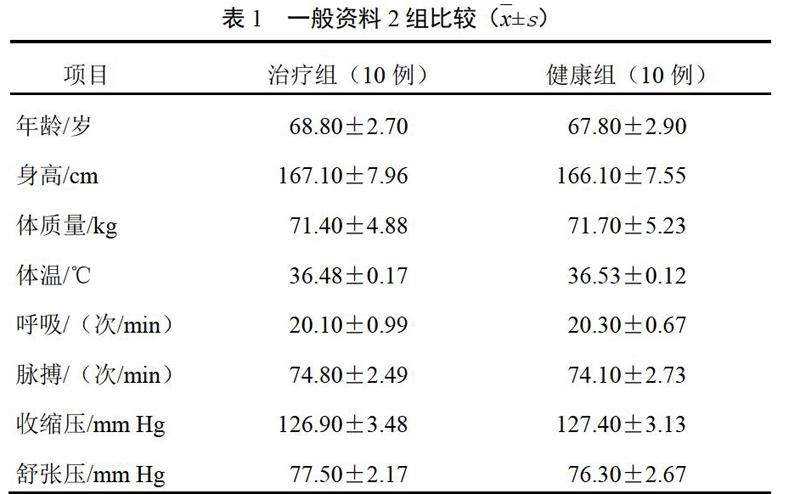
纳入本院脑病科2013年7月-2015年1月缺血性脑卒中住院患者10例,为治疗组,其中男性6例,女性4例。发病部位均为单纯左侧基底节区,右侧肢体运动障碍。……