酸性土壤改良剂与生防制剂协同防控香蕉枯萎病的效果
2017-05-30黄建凤张发宝逄玉万黄巧义付弘婷李苹杨苞梅唐拴虎
黄建凤 张发宝 逄玉万 黄巧义 付弘婷 李苹 杨苞梅 唐拴虎
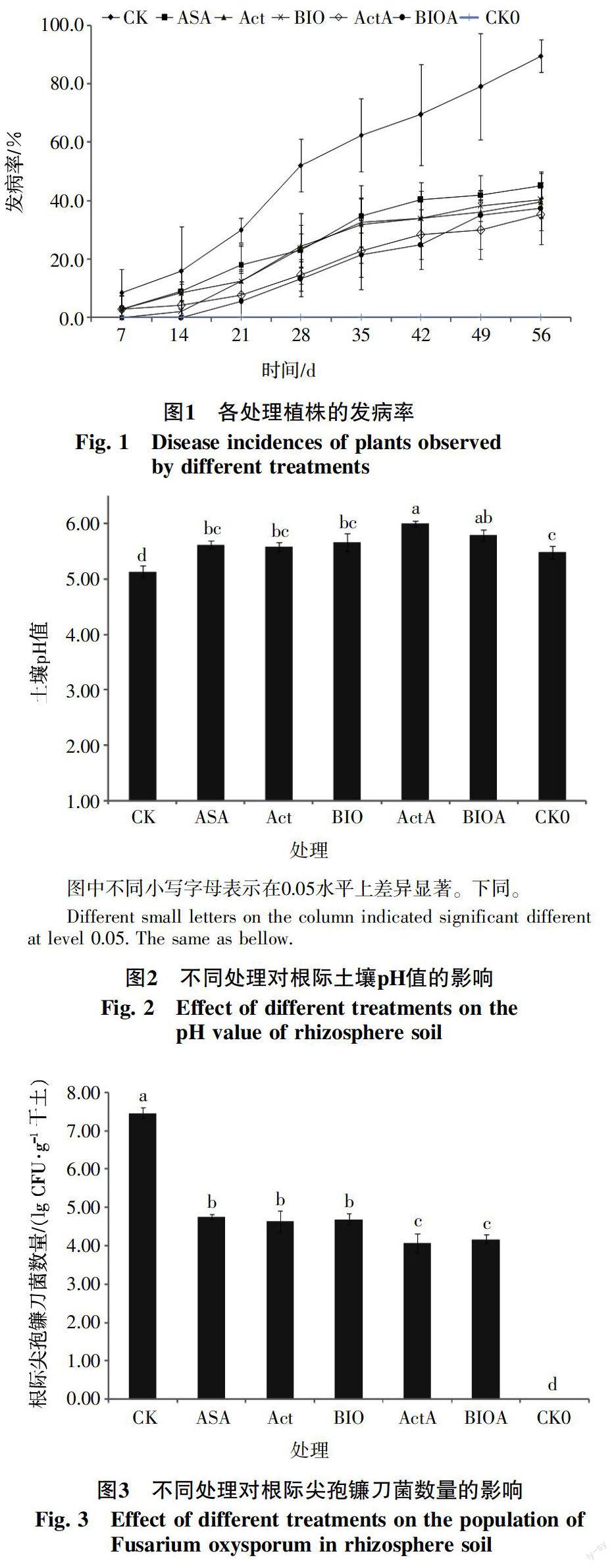
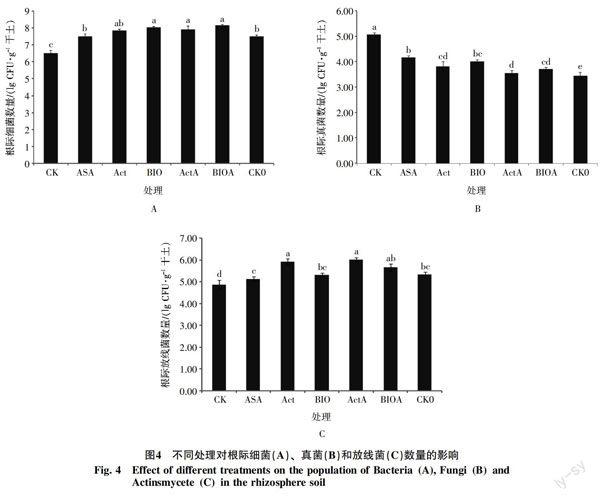
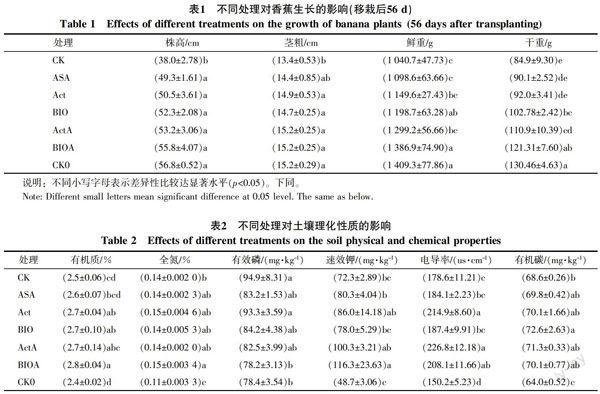
摘 要 将酸性土壤改良剂分别与生防制剂结合,通过温室盆栽试验研究其防控香蕉枯萎病的效果。酸性土壤改良剂分别与放线菌菌剂处理(ActA)和生物有机肥处理(BIOA)的协同防效(61.1%和58.3%)均高于单独施用酸性土壤改良剂(ASA)(49.7%)、放线菌菌剂(Act)(55.6%)和生物有机肥(BIO)的处理(52.8%)。至试验结束时,各处理土壤的pH值显著高于对照(CK)(p<0.05);Act和BIO處理显著降低了香蕉根际尖孢镰刀菌数量(p<0.05);ActA和BIOA处理能显著提高香蕉根际细菌和放线菌数量并降低真菌数量。各处理显著促进香蕉生长,且能提高土壤有机质、有机碳、全氮、速效钾含量和电导率。结果表明,酸性土壤改良剂和生防制剂可有效协同防控香蕉枯萎病。
关键词 香蕉枯萎病;生物防控;酸性土壤改良剂;生物有机肥;放线菌菌剂
中图分类号 S436.67 文献标识码 A
Abstract Fusarium wilt of banana is a lethality soil-borne disease and it is very important to control the threaten. Biocontrol efficacy on Fusarium wilt of banana was evaluated in this study based on greenhouse condition and physiological and biochemical analyzation, and the biocontrol materials were acid soil ameliorant collaborated with bioorganic fertilizer and actinomycetes agents. The results were listed as follows: treatments of collaborative of acid soil ameliorant and biocontrol materials(ActA and BIOA)showed higher biocontrol efficacy(61.1% and 58.3%)than those of Act(55.6%)and BIO(52.8%), respectively. The soil pH value of ASA, Act, BIO, ActA and BIOA increased to some degree, and significantly higher than that of CK(5.13)(p<0.05)at the end of experiment(56 days after transplanting). Application of biocontrol materials could significantly reduce the population of F. oxysporum in banana rhizosphere soil(p<0.05)and the collaborative of acid soil ameliorant strengthened this effect. Treatments ActA and BIOA could also significantly increase bacteria population, while decrease fungi population. Compared with CK, the stem diameter, length and biomass of banana plant in all treatments increased significantly and the organic matter, organic carbon, total nitrogen, available potassium and electric conductivity also increased.
Key words Fusarium wilt of banana; biological control; acid soil ameliorant; bioorganic fertilizer; actinomycetes agents
doi 10.3969/j.issn.1000-2561.2017.03.025
香蕉枯萎病(Fusarium oxysporum f. sp. cubense)又名香蕉巴拿马病和黄叶病,是由古巴尖孢镰刀菌侵染引起的一种由土壤和苗木传播的毁灭性土传真菌病害,该病害的防控已迫在眉睫。目前植物病害的生物防控因其环境友好型等特征已成为研究热点。国内外已有很多研究者筛选到如非致病性尖孢镰刀菌、木霉、放线菌、芽孢杆菌和假单胞菌等有益微生物,这些微生物均表现出一定的生防效果[1-3]。为保障拮抗菌在植株根际定殖,将有机载体与生防菌结合应用是一项有效措施。已报道的载体包括有机液肥、香蕉茎秆和动物粪便堆肥产品、菜粕堆肥和氨基酸有机肥等;与拮抗菌的结合方式有吸附和二次发酵,两种方式获得的产品在防效上存在差异,后者效果更好[4-7]。
长期连作香蕉的土壤易出现土壤酸化严重、植株营养失衡和枯萎病流行严重的现象[8]。有研究表明,连作土壤环境因子中,土壤pH值对尖孢镰刀菌在土壤中增殖的影响非常显著,随着酸化程度的增加,尖孢镰刀菌增殖速率显著增加,因此,土壤酸化可能是造成连作枯萎病高发的重要原因[9-10]。……