G550高强冷弯薄壁槽钢受弯构件力学性能与设计方法
2016-11-30赵金友王钧董俊巧
赵金友 王钧 董俊巧
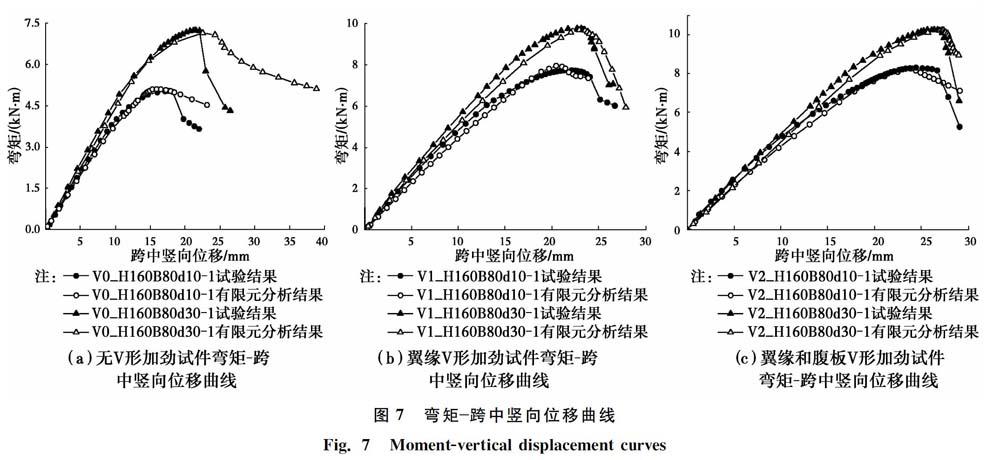

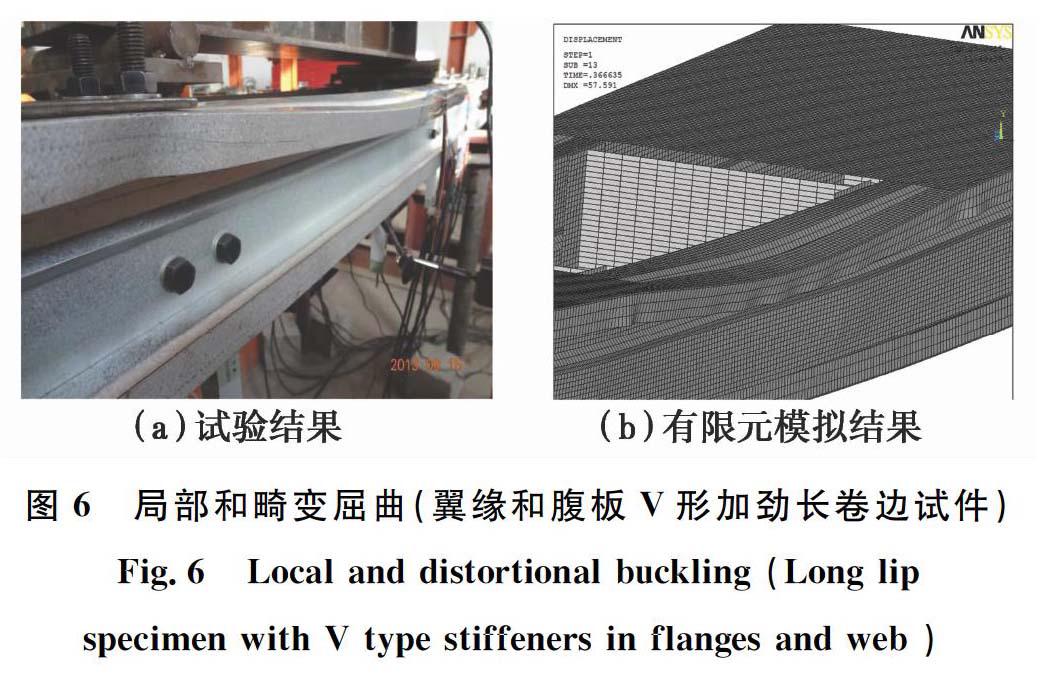
摘 要:为了研究高强冷弯薄壁槽钢受弯构件的力学性能和设计方法,对3种板件加劲形式的G550高强冷弯薄壁型钢槽形截面受弯构件进行了试验研究和有限元参数分析。结果表明,板件加劲形式对高强冷弯薄壁槽钢受弯构件屈曲模式和受弯承载力有显著影响,翼缘V形加劲比腹板V形加劲能够更有效地提高构件抗弯承载力,构件抗弯承载力的变化规律与屈曲模式有关。根据有限元参数分析结果,在已有直接强度法基础上回归出适用于高强冷弯薄壁槽钢受弯构件的直接强度法修正公式。
关键词:高强冷弯薄壁槽钢;受弯构件;力学性能;直接强度法;抗弯承载力
中图分类号:TU392.1
文献标志码:A文章编号:1674-4764(2016)05-0099-09
Abstract:Static test and finite element analysis of high strength cold-formed thin-walled channel flexural members with three types of stiffeners in the flanges and the web were conducted respectively to investigate the mechanical properties and design method of G550 high strength cold-formed thin-walled channel flexural members. The results showed that stiffener type had a significant effect on the members bending strength and buckling modes. V type stiffeners in the flanges could increase the bending strength more significantly than V type stiffeners in the web. The change law of the bending strength was related to the buckling mode. Based on the existing direct strength method (DSM) formulas as standard, the revised DSM formulas of high strength cold-formed thin-walled channel flexural members were established according to finite element analysis results.
Keywords:high-strength cold-formed thin-walled channel steel; flexural members; mechanical properties; direct strength method; bending strength
G550高强钢材的力学性能与传统的Q235和Q345钢材有较大区别。中国《冷弯薄壁型钢结构技术规范》(GB50018—2003)对屈服强度高于Q345、板厚小于2 mm的构件尚无明确的设计条款。Yang等[1]、Young[2]、周天华等[3]和李元齐等[4]学者相继开展了G550高强冷弯薄壁型钢受压构件稳定性能与设计方法的试验与理论研究。目前,对G550高强冷弯薄壁型钢受弯构件的研究报道尚不多见[5-6]。
直接强度法(Direct Strength Method,简称DSM)是Schafer和Pekz提出的新的冷弯薄壁型钢构件设计方法[7-8],它摒弃了传统有效截面法的计算方法,把整个截面作为一个对象来考虑,大大简化了计算过程,并且将畸变屈曲进行了单独计算[9-10]。但是直接强度法关于受弯构件设计公式的试验数据仅来自屈服强度较低的冷弯薄壁型钢C形和Z形截面[11],对于屈服强度较高的冷弯薄壁型钢受弯构件承载力计算的直接强度法尚需进一步开展试验研究与理论分析[12]。……