Process analysis and experimental verification of compact J-T cryocooler in liquid helium temperature region
2016-06-01ZhouZhenjunLiuYanjieWangJuan
Zhou Zhenjun Liu Yanjie Wang Juan
(1Key Laboratory of Space Energy Conversion Technologies,Technical Institute of Physics and Chemistry,Chinese Academy of Science,Beijing 100190,China)(2State Key Laboratory of Technologies in Space Cryogenic Propellants,Beijing 100028,China)
Process analysis and experimental verification of compact J-T cryocooler in liquid helium temperature region
Zhou Zhenjun1,2Liu Yanjie1Wang Juan1
(1Key Laboratory of Space Energy Conversion Technologies,Technical Institute of Physics and Chemistry,Chinese Academy of Science,Beijing 100190,China)(2State Key Laboratory of Technologies in Space Cryogenic Propellants,Beijing 100028,China)
A compact4He Joule-Thomson(J-T)cryocooler using two-stage GM cooler as pre-cooling stages has been successfully designed and developed. The GM refrigerator cools the incoming helium gas to 91 K at the first stage and 14K at the second stage. The J-T system consists of three tube-in-tube heat exchangers(HEX), two spiral heat exchangers and one J-T orifice. Experiments with open loop and closed cycle were carried out respectively. A new J-T compressor with single cylinder and check valves is used in the closed cycle to provide high pressure gas. The curves of throttling are given and the cooling power is measured. In open loop the no-load temperature of 3.4 K and the cooling power of 30 mW@4.5 K are obtained, while in closed cycle 4.27 K and 5 mW@4.5 K are obtained respectively.
4He J-T;cryocooler;heat exchanger
1 Introduction
In the fields of astronomy and atmospheric science, some electronic detectors should be cooled to 4 K level to improve its sensitivity and reduce the background noise[1-3]. Mechanical cryocooler is a very important technology for the future space science missions, and compact cryocooler relying on the expansion of helium gas through a fixed orifice has some advantages such as no moving parts at low temperature and the cooling power can be transmitted to several meters away[4-6]. In some developed countries, the technology utilizing expansion of helium gas producing J-T effect to obtain low-temperature is mature and applied to the fields of aerospace[7-8], our research in this area is in the early stage,and demands on this technology is growing. A J-T cryocooler that can achieve 4 K level and produce 30 mW at 4.5 K has been designed and tested in this article.
In order to reach the liquid helium temperature, helium gas is used as the refrigerant. The transition temperature of helium gas is about 40 K, below which the helium gas can produce positive J-T effect[9-10]. A GM cryocooler is chosen as pre-cooler to provide cooling power to the incoming helium gas at present. In order to achieve the characters of miniaturization and compactification of the J-T cryocooler, the GM pre-cooler will be replaced by pulse tube cryocooler in near future. This paper shows the no-load temperature and cooling capacity in open loop and closed cycle respectively, and a new compressor is introduced and discussed.
2 System flow diagram
The helium gas flow diagram of the cryogenic system is shown in Figure 1.The major components of J-T system are J-T compressor, gas filter, heat exchangers, evaporator and J-T orifice. Besides offering cooling power to the incoming gas, the GM cryocooler cools two shields which reduce heat radiation to the J-T system.

Figure 1 System flow of 4He J-T cooler
The high pressure gas flows through filter and three tube-in-tube heat exchangers before expansion at J-T orifice. The filter can absorb impurities in the gas flow in order that the J-T orifice is not blocked. It is in HEX1 that the high pressure gas is cooled from the room temperature to about 90 K by the returning low pressure gas. This is followed by a heat exchanger at the first stage of the GM pre-cooler. The second heat exchanger(HEX2)cools the high pressure gas from 90 K to about 14 K, followed by the third heat exchanger(HEX3)where the high pressure gas is cooled to the low temperature before J-T orifice by the returning gas. Then high pressure gas cooled by the preceding three heat exchangers expands at J-T orifice to become saturated helium.
3 Design of cryogenic J-T system
3.1 J-T compressor
In the J-T system, a new compressor with single cylinder is selected, which consumes less power than that has two pistons. The compressor is improved based on the model that has two opposite pistons mounted on a drive shaft linearly, suction and exhaust valves are mounted at the front of the piston to provide a one-way flow of helium gas, gas storages at inlet and outlet of the compressor are used to obtain stable flow. The gas from the low pressure gas storage flows into the compressor through the suction valve when the piston moves backwards, and then the gas is compressed when the piston moves towards outside, and at last the compressed helium gas exhausted to the high pressure gas storage through exhaust valve.
3.2 Heat exchangers
Heat exchangers are very important parts of the system and there are two types of heat exchanger in the J-T cooler. The first type is tube-in-tube heat exchanger that includes HEX1, HEX2 and HEX3, resembling hampson heat exchanger that characterized by large heat transfer area and effectiveness. The high pressure gas flows in the inner tube while the returning low pressure gas flows in the opposite direction in the space between the two tubes to cool the incoming gas. The diameters of the inner tube are 1 mm and 2 mm respectively, the inner diameter of the outer tube is 3.5 mm, as the designed efficiency of the heat exchanger is 97%, the length of the three heat exchangers are 0.75 m, 1.3 m and 1.0 m respectively. The second type of heat exchanger is coil type that attached spirally on the two cold stages of the GM cooler to transfer cooling power from the pre-cooler to the incoming helium gas. It is copper and the inner diameter is 1mm, its role is.
4 Experiments and discussions
In this part, the experiments of open loop and closed cycle are carried out. The J-T system we designed is verified to be effective in the open loop experiment, and then the J-T compressor is added to the system to build a complete closed cyrocooler. The closed cycle system is tested and some preliminary valuable results are obtained.
4.1 Open loop experimernt
In the open loop J-T system, the high pressure helium gas is provided by gas cylinder. The whole pre-cooling process lasts about 12 hours when the incoming helium gas at the inlet of HEX3 is precooled to 14 K by a GM cooler, and simultaneously the temperatures before and after J-T orifice are precooled to about 16K from room temperature. Then the charging pressure is adjusted to an appropriate value to generate significant throttling effect. Figure 2 shows the temperature curves when the returning helium gas flows directly to the atmosphere, while Figure 3 shows the temperatures change at different charging pressures when the returning helium gas is pumped by vacuum pump. The liquid helium temperature can be reached when the high pressure is adjusted to 0.47 MPa, and the temperature after J-T orifice drops to 3.4 K when the vacuum pump works. It can be seen from the both pictures that the temperature after J-T orifice rises with the increasing of the charging pressure, which is caused by the rising of the corresponding pressure to the temperature after J-T orifice.

Figure 2 Cool-down of 4He J-T cooler in open loop
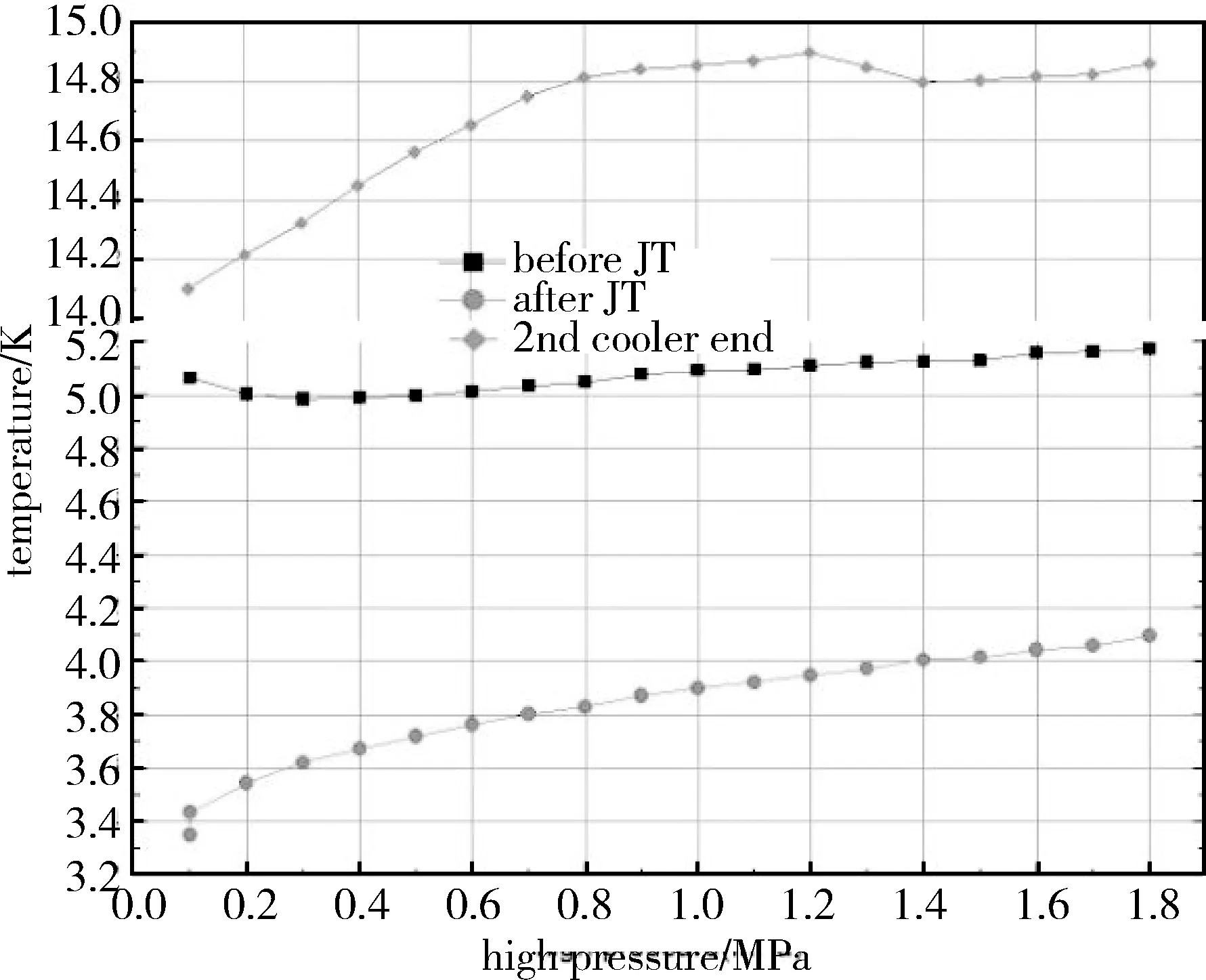
Figure 3 J-T effect at different charging pressures
Then the second stage of the pre-cooler is heated to 20 K to test the efficiency of HEX3, as seen in Figure 4, the temperature after J-T orifice drops to 16 K from 21 K when the charging pressure is 0.6 MPa, and the no-load temperature of the J-T cooler reaches 4 K when the charging pressure is adjusted to 1.22 MPa, which illustrates that the tube-in-tube heat exchanger is efficient.

Figure 4 Cool-down when temperature of 2nd stage of pre-cooler is 20 K
Figure 5 shows that the maximum cooling capacity of the J-T cooler becomes larger with the increase of the charging pressure. 30 mW@4.5 K is obtained at different high pressure, and 70 mW@5.3 K can be achieved when the high pressure is 1.0 MPa.
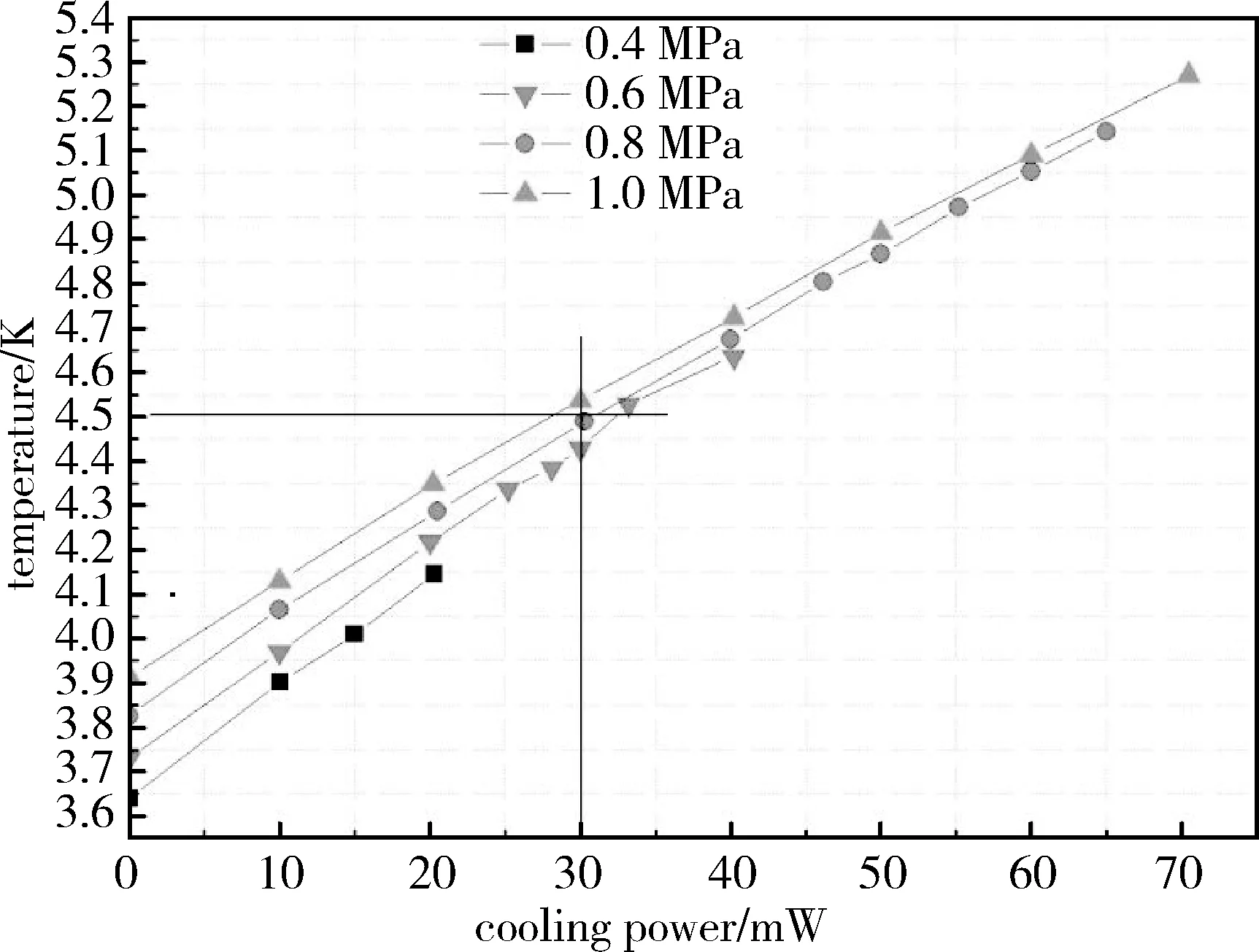
Figure 5 Cooling capacity at different charging pressures
4.2 Closed cycle experiment
In the closed cycle experiment, the gas cylinder is replaced by a new J-T compressor with single cylinder and check valves. Figure 6 shows the cool-down of4He J-T cooler. When HEX3 is pre-cooled to about 15K, the charging pressure of J-T compressor is adjusted to 0.3 MPa. With the temperatures before and after J-T orifice decrease continuously, the compressor power drops to 20W. As shown in the picture, the no-load temperature reaches 4.27 K finally when the frequency of the compressor is 50 Hz.
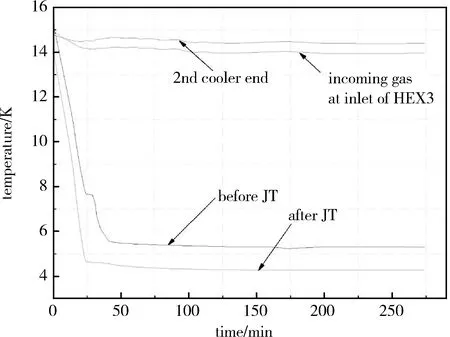
Figure 6 Cool-down of 4He J-T cooler in closed cycle
The cooling capacity of the J-T cryocooler in closed cycle is shown in Figure 7. The power of J-T compressor is 19 W, and the high and low pressure of the J-T compressor are 0.35 MPa and 0.1 MPa respectively when the no-load temperature is 4.2 K. The compressor power increases slightly when the evaporator is heated, which is caused by the evaporation of the liquid helium. The cooling capacity of 5 mW@4.5 K and 10 mW@4.7 K are obtained.
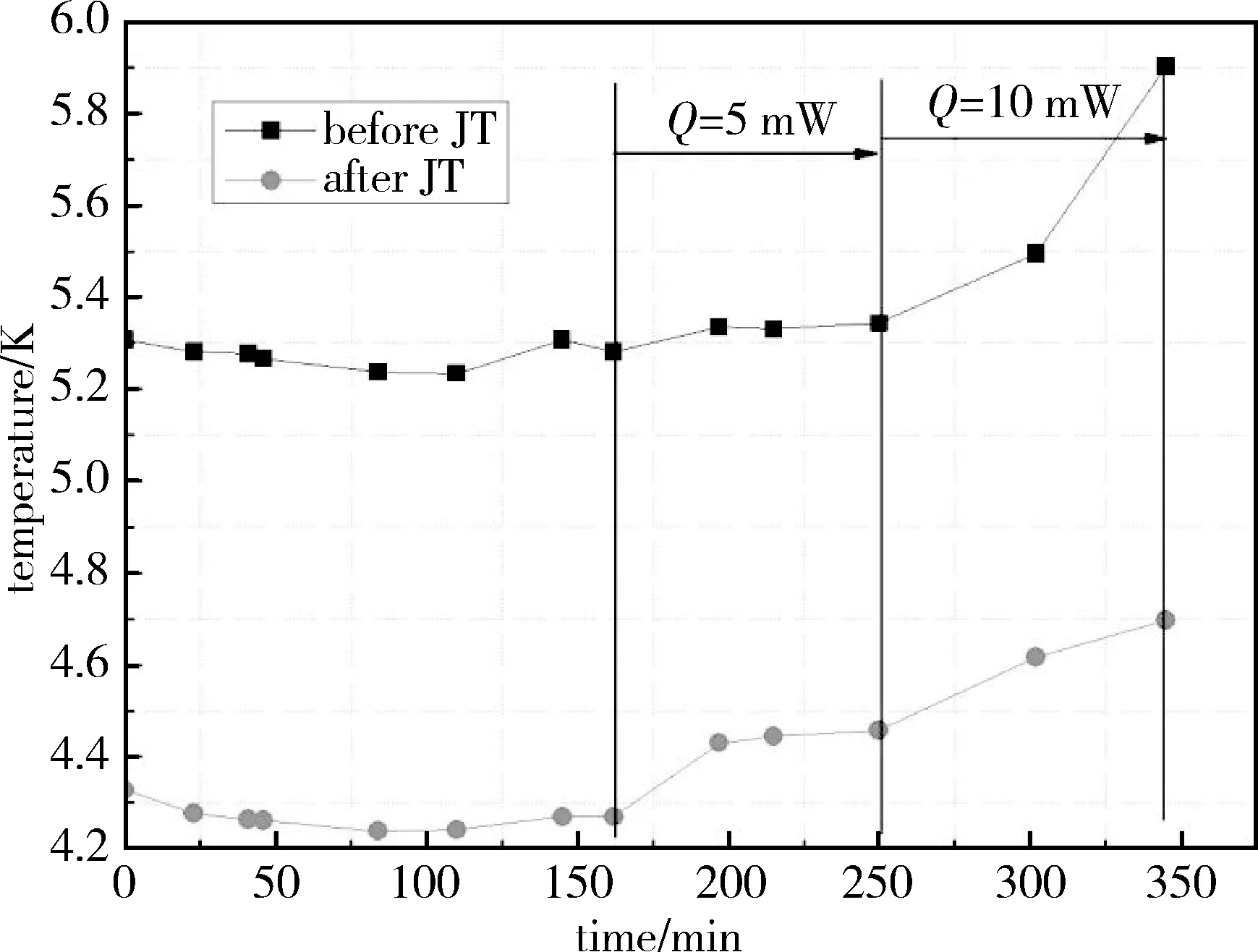
Figure 7 Cooling capacity in closed cycle
5 Conclusion
A prototype of4He J-T cryocooler has been successfully designed, assembled and tested, which is the first compact Joule-Thomson cryocooler in helium temperature region reported in China so far with4He. Experiments have been carried out in the forms of open loop and closed cycle, respectively. In the experiment of open loop, the no-load temperatures at different charging pressures are tested. The no-load temperature is 3.4 K when the charging pressure is 0.1 MPa, and it rises when we increase the charging pressure. About 30 mW@4.5 K is obtained at various charging pressures. It proved that the designed heat exchanger is efficient when the temperature of second stage of pre-cooler is raised to 20 K.
In the closed cycle experiment, a new J-T compressor improved based on the model that has two opposite pistons in our lab is introduced to provide high and low pressures helium gas for the J-T cycle. The no-load temperature of 4.2 K and the cooling capacity of 5 mW@4.5 K is obtained. At last the optimum operating frequency of J-T compressor is tested and it comes to a conclusion that the no-load temperature is lower when the J-T compressor operates at 50 Hz than at other frequencies.
The compact J-T cryocooler in liquid helium temperature region has achieved preliminary results, a4He J-T cryocooler of closed cycle with two stages J-T compressor improved based on the existing system is under assembled and tested which could provide greater cool-ing power. Compact cryocoolers utilizing the throttling effect of4He at low temperature could offer reliable low temperature environment and greater cooling power for the electronic devices on future astronomy science and space exploration missions.
1 Shinozaki K,Sugita H,Sato Y,et al. Developments of 1-4K class space mechanical coolers for new generation satellite missions in JAXA[J].Cryocoolers 11:1-8,2011.
2 Inatani J,Noguchi T,Shi S C,et al. A submillimeter SIS receiver cooled by a compact stirling-JT refrigerator[R]. Eighth International Symposium on Space Terahertz Technology,1997:273-280.
3 Ng K C,Xue H,Wang J B. Experimental and numerical study on a miniature Joule-Thomson cooler for steady-state characteristics[J]. International Journal of Heat and Mass Transfer,2002,45:609-618.
4 Lnatani J,Narasaki K,Tsunematsu S,et al. Mechanical cooler and cryostat for submillimeter SIS mixer receiver in space[R].Proceedings of SPIE,2001,4540,September 2001.
5 Orlowska A H,Bradshaw T W. Closed cycle coolers for space applications[J].Space Science Reviews,1992,61:233-240.
6 Bruce Swinyard,Takao Nakagawa. The space infrared telescope for cosmology and astrophysics:SPICA A joint mission between JAXA and ESA[J].Exp Astron,2009,23:193-219.
7 Takao Nakagawa and SPICA team. The next-generation infrared space mission:spica.EDP Sciences,2009.
8 Glaister D S,Gully W J,Wright G P,et al. A 10K cryocooler for space applications[J].Cryocoolers,2001,11:505-511.
9 Ross R G Jr. A study of the use of 6K ACTDP cryocoolers for the MIRI instrument on JWST[J].Cryocooler,2004,13:15-24.
10 Ross R G Jr,Boylet R F,Key R W,et al. NASA advanced cryocooler technology development program[M].International Society of Optical Engineering (SPIE) Conference,2002.
11 周振君,雷刚,刘彦杰. GM制冷机预冷的氦节流制冷机流程研究[J]. 低温工程,2015(4):57-61.
Zhou Zhenjun,Lei Gang,Liu Yanjie. Investigation on scheme of helium J-T cryocooler pre-cooled by GM cooler[J].Cryogenics,2015(4):57-61.
TB651、TB661
A
1000-6516(2016)02-0066-05
2015-11-30;
2016-02-29
周振君,男,29岁,博士、助理研究员。
液氦温区节流制冷机流程分析及实验验证
周振君1,2刘彦杰1王 娟1
(1中国科学院理化技术研究所空间功热转换技术重点实验室 北京 100190)(2航天低温推进剂技术国家重点实验室 北京 100028)
设计研制了采用两级GM预冷的小型节流制冷机,GM制冷机在两级将氦气分别预冷至91 K和14 K。开展了开式和闭式两种形式的实验,闭式中采用带有单项阀的压缩机为循环提供高压气源。实验给出了节流降温曲线并测量了制冷量,开式和闭式实验中最低无负载温度分别为3.4 K和4.27 K,4.5 K时制冷量分别为30 mW和5 mW。
节流 制冷机 换热器