高温低温度梯度场下UO2芯块气孔迁移计算研究
2016-05-30张晓宇
张晓宇
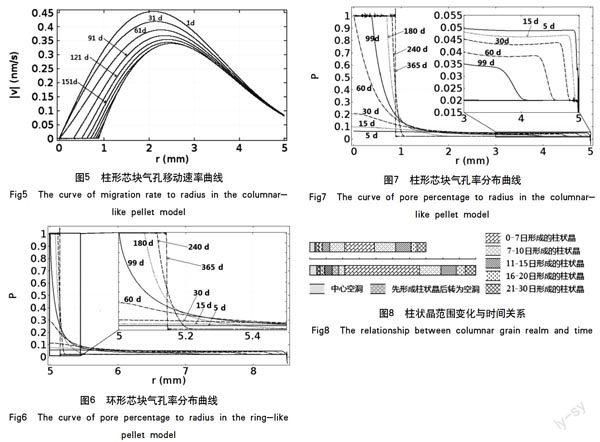
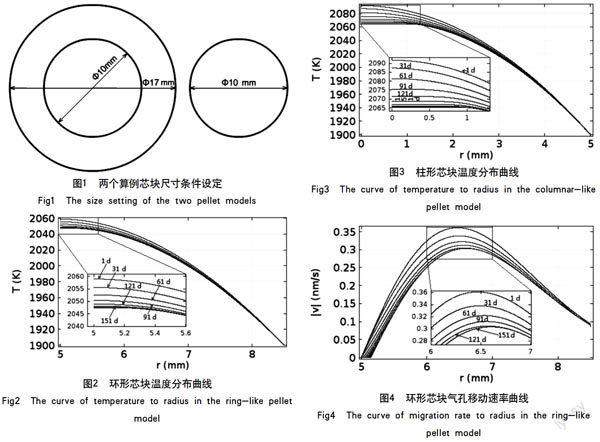
摘 要:该文综合已有气孔迁移理论,借助有限元软件对空间核动力反应堆燃料元件芯块中的原始气孔率迁移进行了建模分析,计算了一年时间内温度场、气孔迁移速度、气孔率和柱状晶区范围随时间和位置的变化关系,并辨析了这些数值与快堆芯块重结构中气孔演化特点的区别。计算结果显示:芯块重结构使芯块整体温度降低,芯块内侧降低更明显;气孔迁移速率从内侧向边缘先增加后减少,最大速率约0.4 nm/s;气孔率内侧增加至1同时外侧降低至最小值;柱状晶从距内侧约2/5厚度处开始形成;柱状晶范围变化及气孔率达到稳定时间尺度与已有的实验结果相似。
关键词:高温燃料元件 芯块 气孔迁移 低温度梯度
中图分类号:TM62 文献标识码:A 文章编号:1674-098X(2016)04(b)-0039-05
Abstract:Aid by finite element software, this work analyzed the pore migration of the original pore in the pellets of fuel elements of space nuclear power reactors, made a model consulting the contemporary pore migration theory, and computed the relationship of temperature field, pore migration rate, pore percentage and columnar grain distribution with position and time, as well as compared the data with the pore develop character of fast reactor. The result comes out as: The integral temperature fall, and is more obvious in the inner side; the slope of the absolute value of pore migration rate to radius is positive near the center and negative near the edge, and the uppermost rate is about 0.4nm/s; the pore percentage rise to 1 in the inner side and decline to the base line in the outer side at the same time; the columnar grain form from about 2/5 thickness length from the cavity; the scale of time of columnar grain transformation and pore percentage stabilizing is agree with existing laboratory findings.
Key Words:High temperature fuel element; Pellet; Pore migration; Low temperature gradient
快堆电站、空间核动力等高温反应堆燃料元件的二氧化铀芯块在辐照、高温的共同作用下,芯块的几何结构、微观组织和物化特性等都发生一系列的变化,芯块出现严重的重结构、芯块中心孔扩大、芯块体积肿胀等现象[1-4],这将直接影响燃料元件的性能。空间核反应堆使用的热离子燃料元件,运行工况下芯块整体温度在2 100 K左右。经对使用后的热离子燃料元件的辐照后检验发现,燃料芯块出现一些独特的组织结构,发生严重的重结构现象,并伴随有严重的轴向质量迁移,在燃料包壳内表面生成拱顶(Crown)组织等[5]。
目前普遍认为,二氧化铀燃料芯块的重结构主要由高温和芯块径向温度梯度共同作用下,芯块内原始的气孔迁移引起的。……
